
Call Us
+86-18962820095

 Español
Content
- 1 How a PVC Tarp Is Made: Layer by Layer Construction
- 2 PVC Tarp Weight Grades: Choosing the Right GSM for Your Application
- 3 Key Performance Properties of PVC Tarps Explained
- 4 PVC Tarp vs. Other Tarp Materials: A Practical Comparison
- 5 What Are PVC Tarps Used For? Major Application Areas
- 5.1 Construction and Building Sites
- 5.2 Transportation: Truck Curtains and Cargo Covers
- 5.3 Agriculture: Crop and Equipment Protection
- 5.4 Industrial Storage and Equipment Protection
- 5.5 Marine and Waterfront Applications
- 5.6 Event Structures: Tents, Marquees, and Shade Structures
- 5.7 Military and Civil Emergency Applications
- 5.8 Swimming Pool and Pond Covers
- 6 PVC Tarp Colors, Sizes, and Custom Fabrication Options
- 7 How to Choose the Right PVC Tarp: A Practical Buying Guide
- 8 Care, Maintenance, and Storage of PVC Tarps
- 9 Sustainability and Environmental Considerations for PVC Tarps
- 10 About Tarpaulin.cn: Specialist PVC Tarp Manufacturer
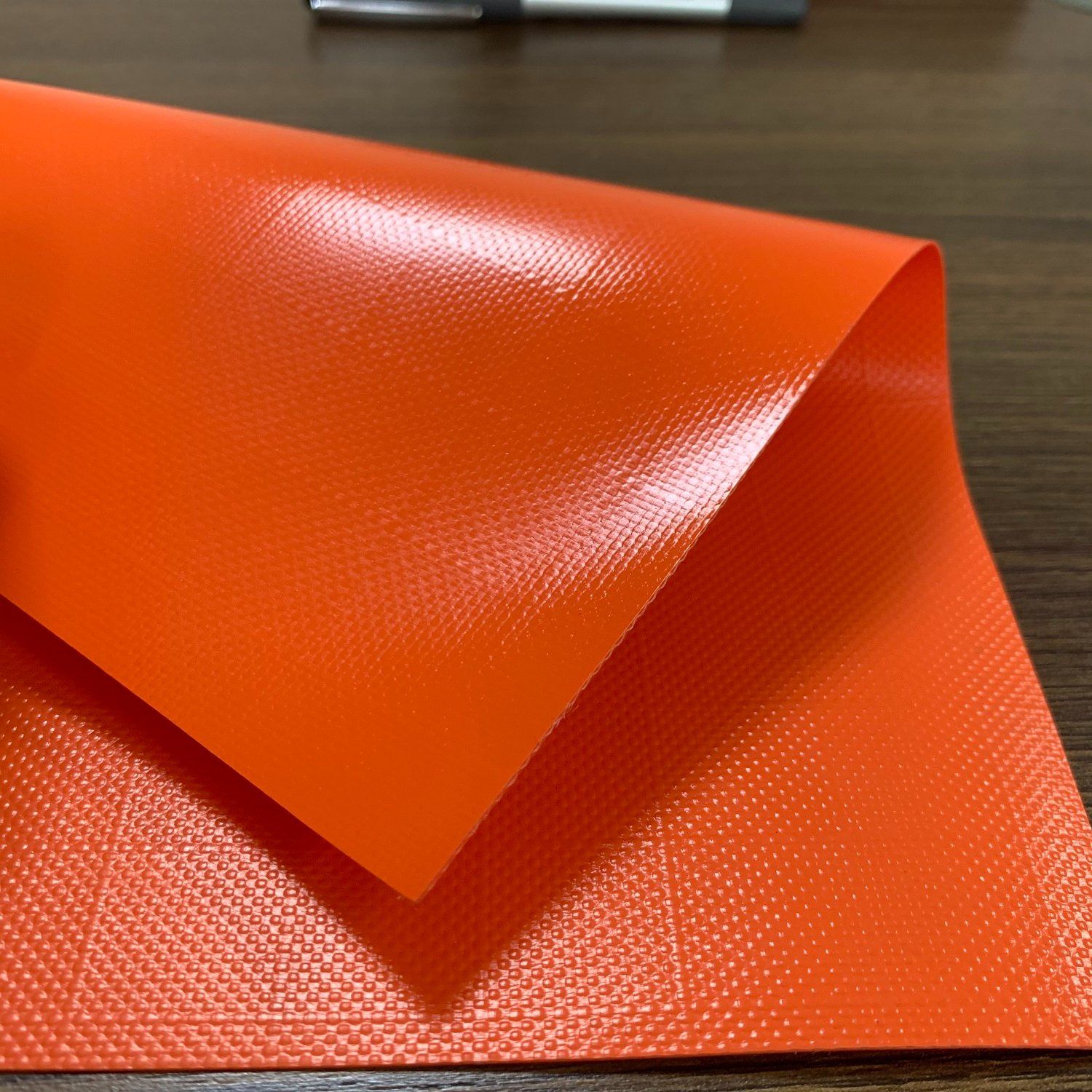
A PVC tarp is a heavy-duty protective sheet made by laminating or coating a woven polyester or nylon base fabric with polyvinyl chloride (PVC) polymer on one or both sides. The result is a composite material that combines the dimensional stability and tear resistance of the woven scrim with the waterproofing, chemical resistance, and UV protection of the PVC coating. PVC tarps are among the most versatile and widely used industrial covering materials in the world, deployed across construction, transportation, agriculture, marine, military, and event industries wherever durable, weatherproof protection is required.
Unlike basic polyethylene (PE) tarps, which are extruded from a single thermoplastic material, PVC tarps are engineered composites with clearly defined layers — making them significantly stronger, longer-lasting, and more resistant to temperature extremes, UV radiation, oil, and mechanical abrasion. A standard heavy-duty PVC tarp can last 5 to 10 years in continuous outdoor use, compared to 1 to 3 years for an equivalent PE tarp under comparable conditions (Source: Industrial Fabrics Association International, Protective Fabrics Performance Standards, 2022).
The weight of a PVC tarp — expressed in grams per square meter (GSM) — is the primary indicator of its durability, load-bearing capacity, and intended application tier. Lightweight PVC tarps from 300 to 450 GSM suit temporary covers and event applications; mid-weight tarps from 500 to 650 GSM are the workhorses of construction and transport; heavy-duty tarps from 700 to 900 GSM and above serve industrial, military, and long-term outdoor storage applications. This guide covers every dimension of PVC tarp selection, construction, application, and care in practical detail.
How a PVC Tarp Is Made: Layer by Layer Construction
Understanding the construction of a PVC tarp helps explain why different products perform so differently in field conditions — and why construction quality is often more important than weight alone. The cross-sectional structure of a standard PVC tarp consists of three functional layers working together as a composite system.
The Base Fabric (Scrim)
The core of every PVC tarp is a woven base fabric — the scrim — typically manufactured from high-tenacity polyester yarns (less commonly nylon or a polyester-polyethylene blend). The scrim is woven in a plain or basket weave pattern, and its thread count (yarns per inch in warp and weft directions) directly determines the tarp's tensile and tear strength. A standard industrial PVC tarp scrim has a thread count of 12x12 to 18x18 yarns per inch, with breaking strengths ranging from 1,800 to over 4,500 N per 5cm strip width (Source: ISO 1421:2016, Rubber- or Plastics-Coated Fabrics — Determination of Tensile Strength and Elongation at Break). Higher thread counts and heavier yarn deniers produce proportionally stronger and more tear-resistant tarps.
The scrim's primary role is to carry mechanical loads — the pulling forces at tie-down points, the weight of wind and rain on a spanning cover, the tension imposed by cargo straps — that the PVC coating alone could not sustain. Without the scrim, the PVC coating would stretch, creep, and eventually tear under sustained loading. The scrim is the tensile skeleton; the PVC is the barrier skin.
The PVC Coating Layers
PVC compound is applied to both faces of the scrim through one of two primary manufacturing processes: calendering (where the PVC is rolled onto the fabric under heat and pressure between precision rollers) or knife-over-roll coating (where liquid PVC paste is spread by a precision blade across the moving fabric web). Calendering produces more consistent coating thickness and better penetration into the scrim's weave structure — a key factor in the adhesion between PVC and scrim that determines delamination resistance over the product's life.
The PVC compound used in quality tarps is formulated with:
- Plasticizers — typically DOP (di-octyl phthalate) or its low-VOC alternatives DINP or DPHP — which keep the PVC flexible at low temperatures and prevent cold-crack failure
- UV stabilizers — organotin or hindered amine light stabilizers (HALS) — which absorb and dissipate UV radiation to slow PVC degradation and color fading
- Heat stabilizers — calcium-zinc or lead-free stabilizer packages — which prevent PVC degradation during high-temperature processing and in-service heat exposure
- Pigments — inorganic or organic colorants that provide the tarp's visible color and may contribute additional UV absorption
- Flame retardants — antimony trioxide with halogenated compounds, or phosphate esters for low-smoke variants — in tarps that require fire resistance certification
The Top Finish Coat
Many quality PVC tarps receive a final surface treatment — a lacquer, acrylic, or PVC top coat — that provides additional UV resistance, improves surface cleanability, reduces friction (allowing tarps to slide more easily over cargo), or provides a matte finish that reduces solar heat gain. Anti-fungal treatments may be incorporated in the top coat for tarps used in humid tropical environments where mold and mildew growth on stored PVC is a concern.
Edge Reinforcement and Hem Construction
The edges and corners of a PVC tarp are the highest-stress points — where tie-down forces concentrate and where fraying would begin without reinforcement. Quality PVC tarps feature:
- Folded and RF-welded or sewn hem edges that add 2 to 4 layers of material at the tarp perimeter
- Reinforced corner patches — typically 3 to 4 layers of PVC fabric — heat-welded or sewn over the corner point where stress concentration is highest
- Metal grommets (eyelets) — brass, stainless steel, or galvanized steel — spaced at 60 to 100cm intervals along the hem for tie-down attachment
- D-ring or sewn loop attachments at corners and mid-edges for applications requiring higher attachment forces than standard grommets can sustain
The grommet spacing and material specification directly affect the tarp's usable tie-down capacity. A stainless steel grommet in a reinforced hem can sustain pull-out forces of 500 to 1,500 N depending on grommet diameter and hem construction, compared to 150 to 300 N for a plain grommet in an unreinforced edge (Source: ASTM D4533, Standard Test Method for Trapezoid Tearing Strength of Geotextiles; applied by analogy to tarp edge testing).
PVC Tarp Weight Grades: Choosing the Right GSM for Your Application
Weight in GSM (grams per square meter) is the most universally used specification for comparing PVC tarp durability tiers. The table below provides a practical reference for GSM grade selection across common applications:
| GSM Grade | Typical Weight Range | Scrim Thread Count | Primary Applications | Expected Outdoor Life |
|---|---|---|---|---|
| Lightweight | 300 to 450 GSM | 12x12 to 14x14 | Temporary covers, event tents, light cargo | 1 to 3 years |
| Standard | 500 to 650 GSM | 14x14 to 16x16 | Construction, truck curtains, agriculture, storage | 3 to 6 years |
| Heavy-Duty | 700 to 900 GSM | 16x16 to 18x18 | Industrial covers, scaffolding, mining, long-term | 5 to 10 years |
| Extra Heavy-Duty | 900 to 1,200 GSM | 18x18 and above | Military, marine, pit covers, crane pads, extreme-duty | 8 to 15 years |
It is important to note that GSM alone does not fully define quality. Two tarps at the same GSM can differ significantly in performance if their PVC compound quality, scrim yarn strength, coating adhesion, and manufacturing process differ. The best single-document quality reference for a PVC tarp is its compliance with a recognized standard such as EN 1876 (Europe), AS 4380 (Australia), or equivalent national standards, which specify test methods and minimum performance thresholds for breaking strength, tear strength, cold flex, and waterproofness rather than just weight.
How to Calculate the Right Size and Weight for Coverage
When selecting a PVC tarp for a specific covering application, add at least 300mm (12 inches) of overhang on each side of the area to be covered to allow for tie-down without exposing the protected surface at the tarp edges. For pitched or angled coverage (such as over a roof under repair), increase the overhang to 500mm or more to account for water runoff clearance. For an open-top container or skip bin, ensure the tarp dimensions exceed the container opening by at least 400mm per side to allow secure fastening without stress concentration at the rim.
Key Performance Properties of PVC Tarps Explained
When evaluating a PVC tarp for a specific application, several performance properties beyond weight determine whether the product will deliver the required protection over the intended service life. The following sections explain each property and what specification values to look for.
Waterproofness
PVC tarps are inherently waterproof at the face level — the PVC coating itself is impermeable to liquid water. The critical waterproofness test for tarps is hydrostatic pressure resistance, measured in millimeters of water column (mm H2O) or kilopascals (kPa). A quality standard-grade PVC tarp should achieve a hydrostatic pressure resistance of at least 1,500 mm H2O (approximately 15 kPa); heavy-duty grades typically achieve 3,000 to 5,000 mm H2O or above (Source: ISO 811:2018, Textiles — Determination of Resistance to Water Penetration). This means the tarp can sustain a standing water column of that height before water begins to seep through seams or pinholes — well above any practical rain or standing water scenario.
UV Resistance
UV radiation from sunlight is the primary aging mechanism for PVC tarps in outdoor use. UV degradation attacks the PVC polymer chains and plasticizer molecules, causing the tarp to stiffen, chalk, crack, and lose tensile strength over time. UV stabilizer packages — measured in percentage by weight of the PVC compound — extend UV resistance significantly. Tarps with HALS (hindered amine light stabilizer) UV packages retain over 80% of their original tensile strength after 2,000 hours of accelerated UV weathering testing, whereas tarps without UV stabilization may lose 40 to 60% of strength in the same test period (Source: ASTM G154, Standard Practice for Fluorescent UV Exposure of Plastics; QUV accelerated weathering test correlation to outdoor exposure).
Tensile and Tear Strength
Tensile strength — the force required to break a strip of tarp — and tear strength — the force required to propagate a tear from a nick or cut — are the two most important mechanical properties for tarps under load. Standard test methods are ISO 1421 (tensile) and ISO 4674 (tear). For a standard 500 GSM PVC tarp, expect tensile strength values of 2,500 to 3,500 N per 5cm strip and tear strength of 250 to 400 N. Heavy-duty 800 GSM tarps typically achieve 4,000 to 5,500 N tensile and 400 to 700 N tear strength. High tear strength is particularly important in applications where the tarp may be punctured by sharp objects (scaffold poles, cargo corners) or where tie-down forces concentrate at grommet holes — a propagating tear from a single damaged point can destroy a tarp that would otherwise remain serviceable for years.
Cold Flexibility
Standard PVC compounds begin to stiffen below -10 degrees C and can become brittle enough to crack when flexed at temperatures below -20 degrees C. For applications in cold climates — northern Europe, northern North America, high-altitude environments — cold-flex formulated PVC tarps are essential. Cold-flex tarps use modified plasticizer packages that maintain flexibility down to -30 or even -40 degrees C. EN 1876-2 specifies a cold flex test at -25 degrees C for tarps intended for European climate use (Source: EN 1876-2:1997, Rubber- or Plastics-Coated Fabrics). Attempting to fold, unroll, or tension-load a standard PVC tarp at temperatures below its rated cold-flex threshold can cause cracking damage that is not immediately visible but significantly weakens the material.
Fire Resistance
Untreated PVC is inherently more fire-resistant than polyethylene because PVC is a chlorinated polymer — when burned, the released hydrogen chloride acts as a flame inhibitor that limits flame spread. However, for applications where formal fire resistance certification is required — event structures, construction site covers subject to Hot Work regulations, transportation of certain hazardous cargo — tarps must be tested and certified to specific fire standards. Common standards include:
- DIN 4102 B1 — German standard for fire-retardant building materials; widely referenced in European construction
- BS 7837 — UK standard for inherently flame-retardant fabrics used in marquees and tents
- NFPA 701 — North American standard for flame-retardant textiles used in tents and air-supported structures
- M2 (France) — French classification for fabric fire reaction, required for temporary structures and events
Chemical Resistance
PVC provides good resistance to a wide range of chemicals including dilute acids, alkalis, oils, and fuels — making PVC tarps suitable for covering chemical storage, use as secondary containment bunding liners, and protection of equipment in industrial chemical environments. However, PVC is attacked by ketones (such as acetone), chlorinated solvents (such as methylene chloride), tetrahydrofuran (THF), and concentrated strong acids. For applications involving these chemicals, specialist coated fabrics such as PTFE, Hypalon, or NBR-coated textiles should be evaluated instead.
PVC Tarp vs. Other Tarp Materials: A Practical Comparison
Buyers comparing tarp materials for the first time often encounter PE (polyethylene), canvas, HDPE, and PVDF-coated fabrics alongside PVC. Understanding how PVC compares on the dimensions that matter most for practical applications helps make an informed selection decision.
| Property | PVC Tarp | PE Tarp (Standard) | Canvas / Cotton | HDPE Woven | PVC-PVDF (Premium) |
|---|---|---|---|---|---|
| Waterproofness | Excellent | Good | Poor (absorbs water) | Good (laminated) | Excellent |
| Tensile Strength | High | Moderate | Moderate | Moderate | Very High |
| Tear Resistance | High | Low to Moderate | Moderate | Moderate | Very High |
| UV Resistance | Good to Excellent | Moderate | Poor | Good | Excellent |
| Temperature Range | -20 to +70 degrees C (std) | -10 to +60 degrees C | -20 to +80 degrees C | -20 to +60 degrees C | -30 to +80 degrees C |
| Chemical Resistance | Good (most chemicals) | Good | Poor | Good | Excellent |
| Repairability | Excellent (RF weld or patch) | Poor | Good (sewn patch) | Moderate | Good |
| Service Life (outdoor) | 3 to 10 years | 1 to 3 years | 2 to 5 years (treated) | 2 to 5 years | 10 to 20 years |
| Weight (typical) | 400 to 900 GSM | 100 to 200 GSM | 400 to 700 GSM | 100 to 200 GSM | 700 to 1,100 GSM |
| Relative Cost | Moderate | Low | Moderate | Low to Moderate | High |
| Environmental Profile | Recyclable (specialist) | Recyclable | Biodegradable | Recyclable | Recyclable (specialist) |
The comparison shows clearly that PVC tarps occupy the sweet spot of the market for demanding outdoor applications: they outperform PE tarps on every durability metric while costing significantly less than premium PVDF-coated fabrics. Canvas offers competitive performance in moderate climates but absorbs water and supports mold growth in wet conditions — making it a poor choice for prolonged outdoor exposure without frequent drying. HDPE woven tarps are lightweight and inexpensive but tear easily at grommet points and have limited UV life without lamination.
What Are PVC Tarps Used For? Major Application Areas
The combination of waterproofness, strength, chemical resistance, UV durability, and repairability makes PVC tarps applicable across an exceptionally broad range of industries and use cases. The following sections detail the most significant application areas and the specific tarp specifications that best serve each.
Construction and Building Sites
Construction sites are the single largest user category for PVC tarps globally. Applications include covering materials stockpiles (cement, aggregates, timber, insulation) to protect against rain and UV degradation, wrapping scaffolding structures to contain dust and debris within the construction zone, creating temporary weatherproof enclosures for year-round working, and protecting freshly poured concrete from frost, rain, and rapid drying. European and UK construction regulations require dust and debris containment on scaffolding structures in most urban environments, creating a mandatory market for scaffold sheeting PVC tarps (Source: UK Health and Safety Executive, Construction Site Safety Guidance, HSG 150, 2021). Standard-grade 500 to 650 GSM fire-retardant PVC tarps (DIN 4102 B1 or BS 7837 certified) are the dominant specification for scaffold sheeting in regulated markets.
Transportation: Truck Curtains and Cargo Covers
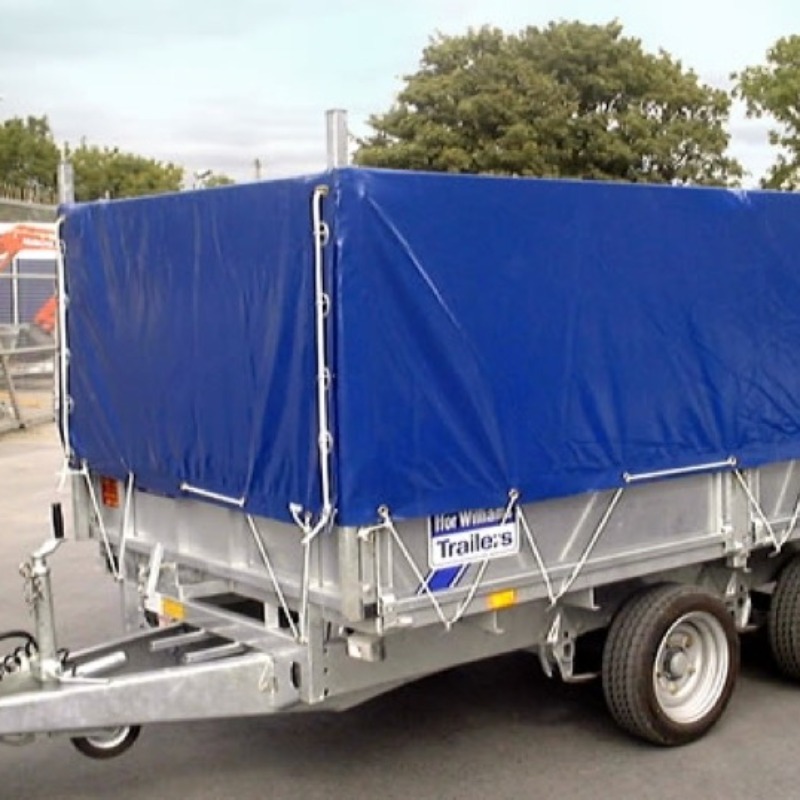
Curtainsider trucks — the semi-trailers with sliding side curtains that constitute a large proportion of European and Australian road freight — use 650 to 850 GSM PVC-coated fabric as the structural curtain material. These curtains must simultaneously protect cargo from rain and wind, resist the mechanical abrasion of loading and unloading operations, display advertising graphics, and meet specific strength requirements to satisfy road transport regulations regarding cargo containment. The European EN 12641 standard for vehicle body covers specifies that curtainsider fabrics must achieve a minimum tensile strength of 3,000 N per 50mm width and a seam strength of at least 90% of the fabric tensile strength (Source: EN 12641-2:2019, Curtainsider Vehicles — Code of Practice). Flat cargo covers for flatbed trailers and open rail wagons use similar or heavier PVC tarps, typically 500 to 900 GSM depending on cargo weight and tie-down method.
Agriculture: Crop and Equipment Protection
Agricultural applications for PVC tarps span crop protection covers (protecting harvested grain, hay, silage, and produce from rain and UV), equipment shelter (covering tractors, implements, and machinery stored outdoors during off-seasons), and agricultural building cladding (using PVC tarp panels as weather cladding for open-sided barns and feed stores). Post-harvest storage losses in developing markets due to inadequate weatherproof covering are estimated at 10 to 30% of total crop value (Source: Food and Agriculture Organization of the United Nations, Post-Harvest Loss Assessment Report, FAO, 2021). Durable, affordable PVC tarp covers play a direct role in reducing these losses. Agricultural tarps prioritize UV resistance and cold-flex performance over fire resistance, as exposure to UV over multi-year storage periods is the primary durability challenge.
Industrial Storage and Equipment Protection
Industries from mining to manufacturing use heavy-duty PVC tarps to protect capital equipment stored outdoors, cover raw material stockpiles, create temporary workshops or storage areas, and provide secondary containment under chemical storage tanks. Mining applications are particularly demanding: abrasion from mineral dust, mechanical damage from plant operation nearby, and the need to cover large stockpiles (sometimes hundreds of meters across) under tethered PVC tarp systems require the highest-grade materials available. Custom-fabricated PVC tarp panels, RF-welded to precise dimensions with engineered anchorage systems, are the standard solution for large-area industrial covers.
Marine and Waterfront Applications
Boat covers, marina canopies, dock shelters, and waterway management structures (such as floating silt curtains and turbidity barriers) all use PVC tarp materials. Marine-grade PVC tarps are formulated with enhanced resistance to salt spray, biological growth (anti-fungal and anti-algal additives), and the cyclic wet-dry exposure characteristic of waterfront environments. Mildew and algae growth on PVC surfaces in humid marine environments is a cosmetic rather than structural problem if the PVC compound quality is adequate — but biocide-treated PVC tarps maintain a cleaner appearance and reduce surface degradation significantly in these conditions.
Event Structures: Tents, Marquees, and Shade Structures
Large event tents, festival structures, and commercial marquees use PVC-coated fabric as the primary weather-barrier membrane. The fabric must simultaneously be waterproof, fire-retardant (NFPA 701 or BS 7837 certified for public assembly structures), translucent (to allow natural light transmission), and structurally capable of spanning the distances between tent poles and frames. Translucent white PVC tent fabric typically transmits 5 to 20% of incident daylight, providing bright, naturally lit interior spaces while maintaining rain exclusion and fire safety (Source: Tensile Structure Industries Standard, IFAI, 2022). For permanent or semi-permanent shade structures, UV-stabilized colored PVC tarps in 600 to 800 GSM are standard, with design life requirements of 5 to 10 years in direct sun.
Military and Civil Emergency Applications
Military-specification PVC tarps are used for vehicle covers, temporary shelter systems, field hospital structures, ammunition and supply covers, and camouflage systems (with specialized surface textures and near-infrared reflective formulations). Civil emergency applications include disaster relief shelter panels, flood defense temporary bunding, and emergency waste containment. Military and emergency-grade tarps typically require compliance with MIL-DTL specifications or national defense procurement standards, specifying minimum performance levels for tensile strength, tear strength, hydrostatic resistance, UV aging, and chemical agent resistance.
Swimming Pool and Pond Covers
PVC tarp materials are widely used as swimming pool winter covers, protecting pool water from debris, evaporation, and frost damage during closed periods. Pool covers require specific chemical resistance to the chlorine, pH-adjusting chemicals, and algaecides used in pool water maintenance. Pond liners for decorative water features, agricultural irrigation reservoirs, and aquaculture ponds also use heavy-gauge PVC membrane (typically 0.5mm to 1.5mm thick, unreinforced) for their combination of waterproofness, chemical resistance, and conformability to irregular ground shapes.
PVC Tarp Colors, Sizes, and Custom Fabrication Options
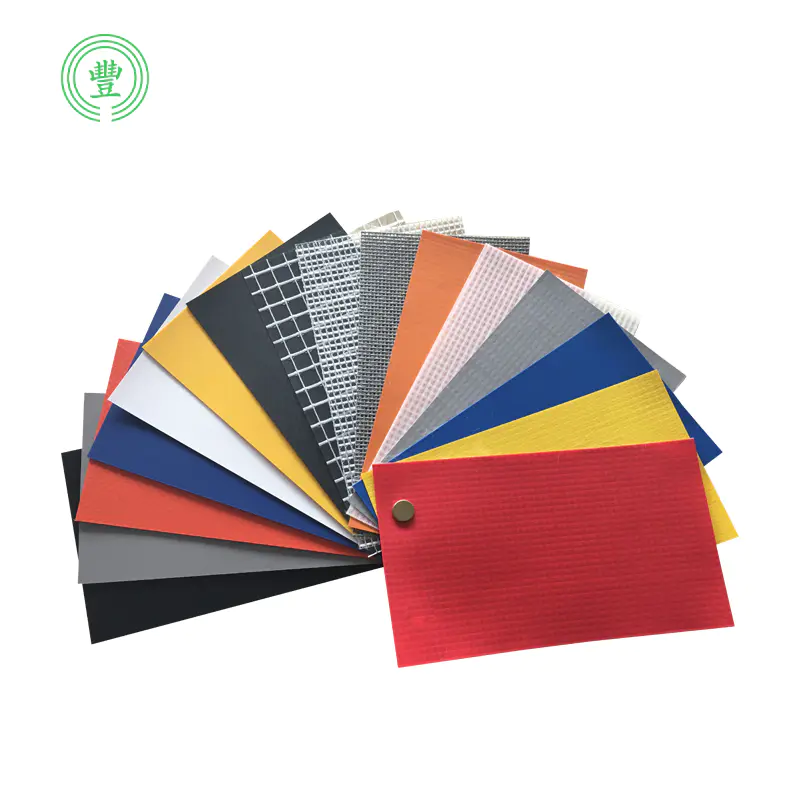
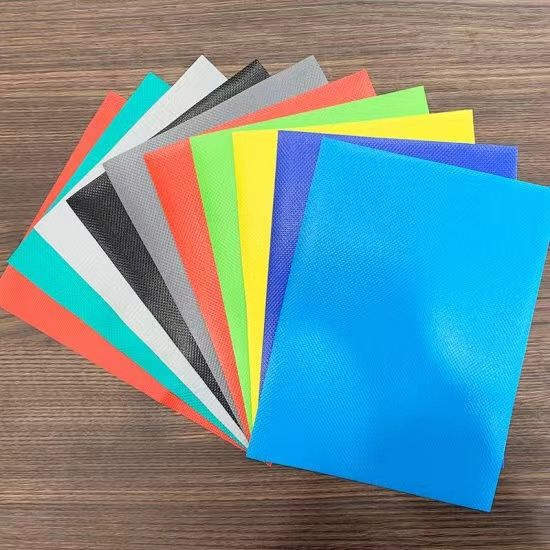
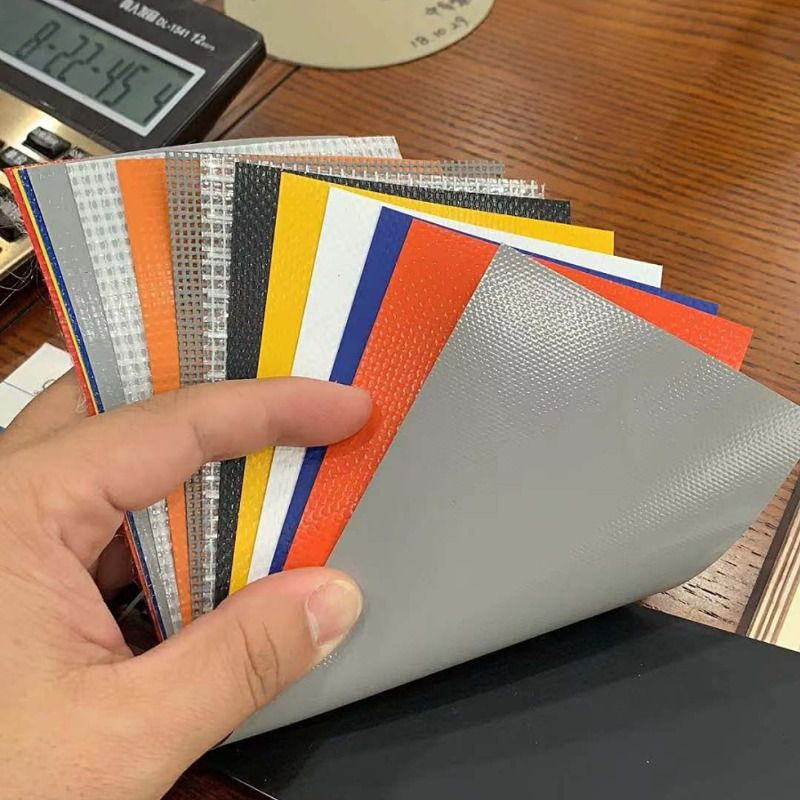
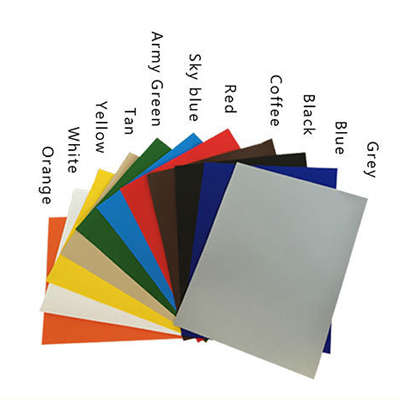
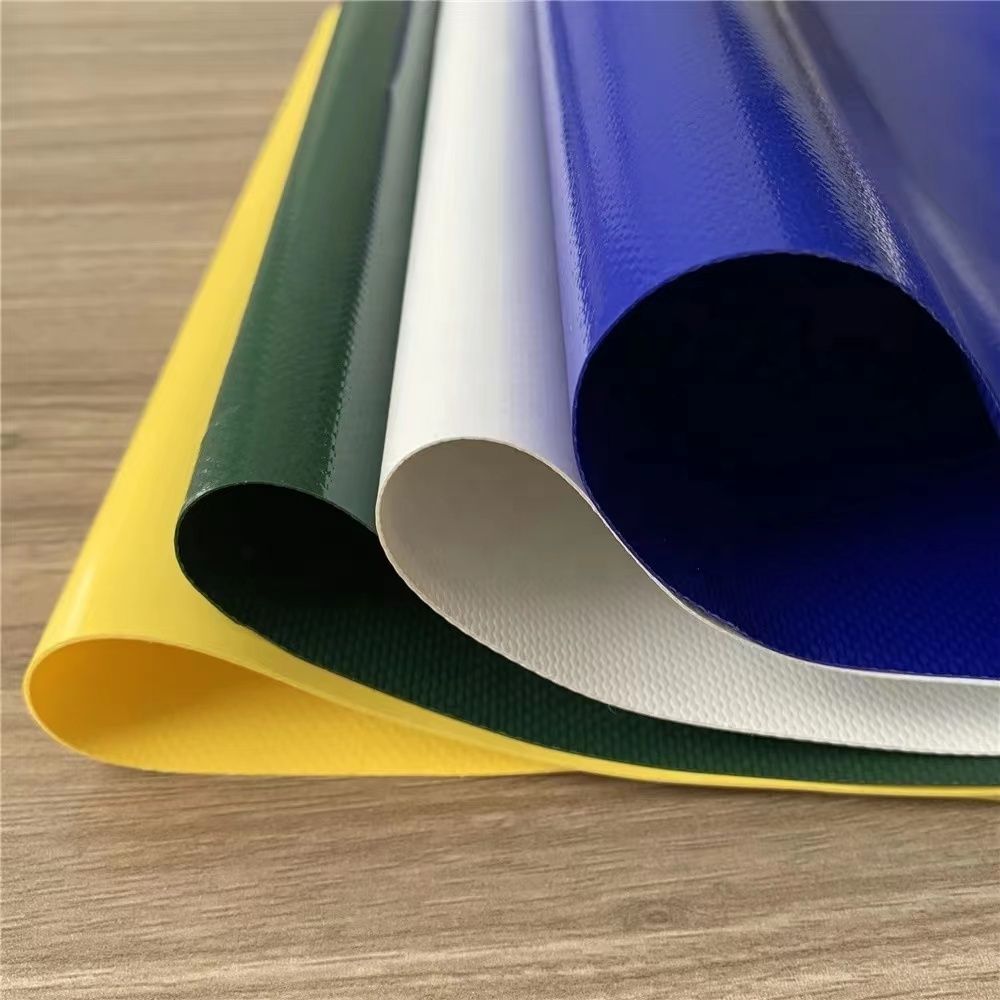
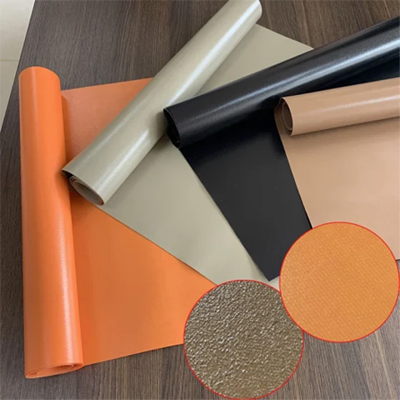
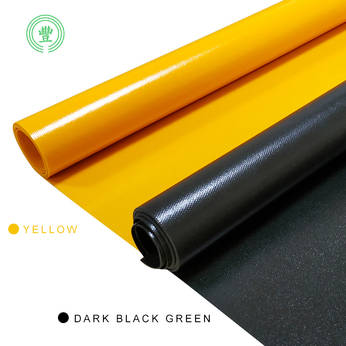
Standard PVC tarps are available in a range of colors that are chosen for functional rather than purely aesthetic reasons. Color selection affects heat absorption, UV performance, visibility, and light transmission through the tarp material.
Standard Color Options and Their Functions
| Color | Solar Heat Gain | Common Application | Notes |
|---|---|---|---|
| White / Light Grey | Low — reflects sunlight | Event tents, food storage, agricultural covers | Translucent options available for natural light transmission |
| Blue | Moderate | General construction, cargo covers, temporary shelters | Most common standard stock color globally |
| Green | Moderate | Agriculture, landscaping, garden, military | Blends with natural environments; popular for |
| Orange / Yellow | Moderate to High | Safety and visibility covers, construction perimeter | High visibility for safety marking of covered hazards |
| Black | Very High | Blackout enclosures, weed suppression, light barriers | Absorbs heat significantly — not suitable for heat-sensitive |
| Dark Grey / Charcoal | High | Industrial and mining covers, scaffolding | Professional appearance; used in urban construction environments |
| Custom RAL / Pantone | Variable | Branded event structures, corporate covers, advertising | Available from specialist PVC tarp manufacturers on minimum |
Standard Roll Widths and Custom Fabricated Sizes
PVC tarp base fabric is manufactured in roll widths of 1.0m to 5.0m, with 1.83m (72 inches), 2.0m, 2.5m, and 3.0m being the most common standard widths. Tarps wider than the standard roll width are produced by RF (radio frequency) welding multiple panels together — a process that produces seams stronger than the base fabric when executed correctly. RF-welded PVC seams achieve 90 to 110% of the parent material tensile strength, making multi-panel fabrications structurally equivalent to single-piece material (Source: Leister Technologies, RF Welding of PVC Technical Application Note, 2022). This allows the fabrication of PVC tarps and covers in essentially any size — from a 2m x 3m garden cover to a 50m x 100m stockpile cover for a mining operation — without structural compromise at the seams.
Custom fabrication options available from specialist manufacturers include:
- Non-standard grommet spacing and sizes (including heavy-duty D-rings and webbing loops for high-load tie-down applications)
- Integrated load straps and tensioning systems sewn or welded into the tarp face
- Access hatches, zipper panels, and drawstring closures cut and welded into the tarp body
- Digital or screen-printed branding and graphics on the tarp surface
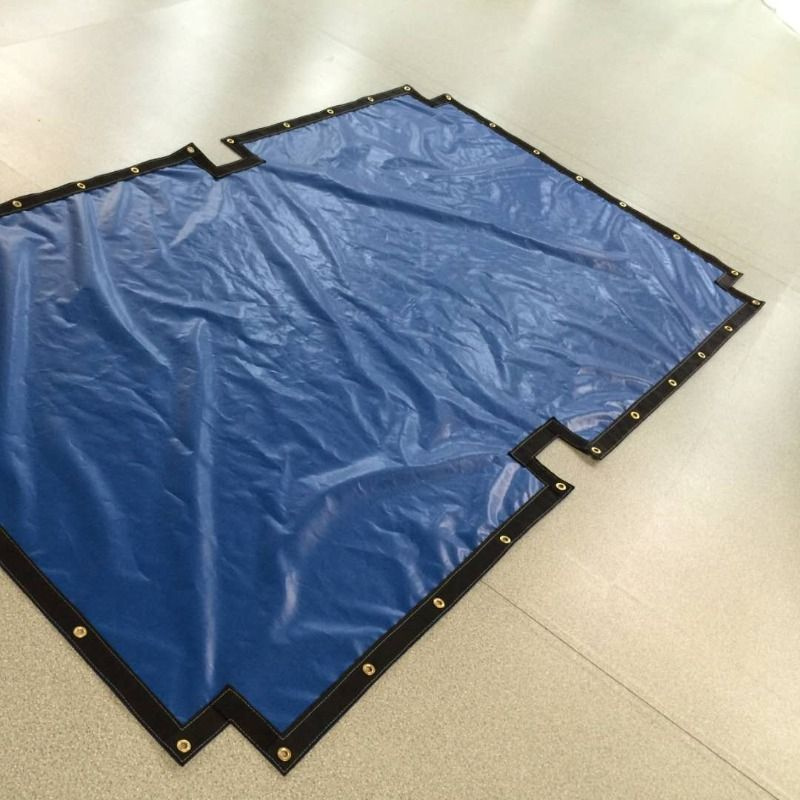
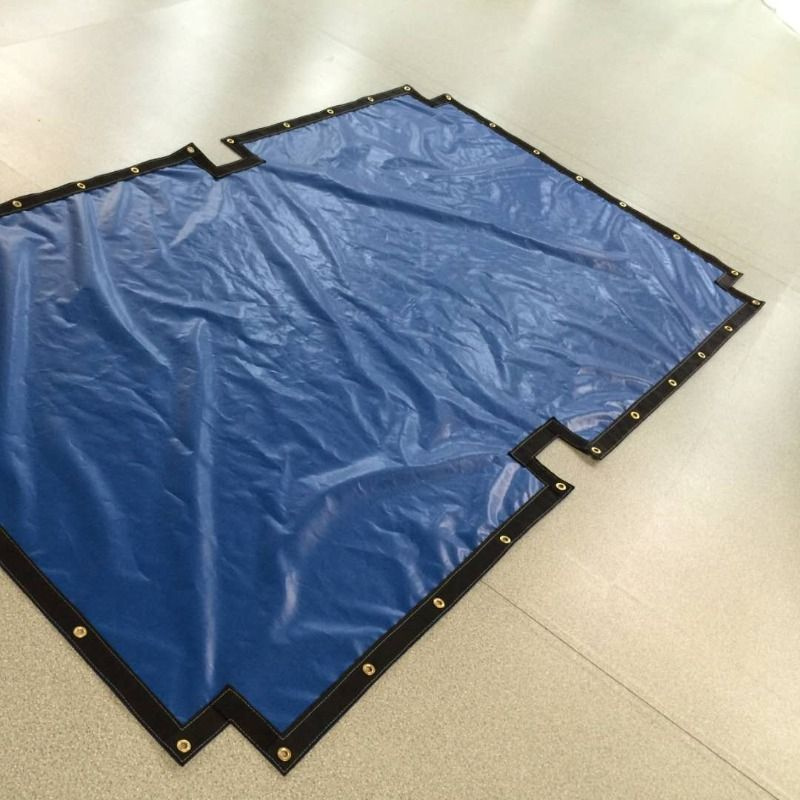
- Shaped tarps with non-rectangular outlines, curved edges, or built-in pockets for structural pole insertion
- Rope-reinforced perimeters where additional edge strength is required for high-wind or long-spanning applications
For projects requiring custom-dimensioned, high-specification PVC tarps, working directly with a dedicated tarp manufacturer is essential. The PVC tarp range at Tarpaulin.cn includes standard stock sizes across multiple GSM grades as well as custom fabrication services for non-standard dimensions, specialty constructions, and large-volume orders with specific technical requirements.
How to Choose the Right PVC Tarp: A Practical Buying Guide
Selecting the correct PVC tarp for a given application requires working through a structured set of requirements. The following decision framework helps narrow the specification to the right product efficiently.
Step 1: Define the Primary Function
Is the primary purpose of the tarp weatherproofing (rain and UV protection), dust containment, privacy screening, cargo restraint, fire safety, or a combination of these? The primary function determines which performance properties to prioritize:
- Weatherproofing: Prioritize hydrostatic resistance, UV stability, seam quality, and edge reinforcement
- Cargo containment and transport: Prioritize tensile and tear strength, seam strength, EN 12641 compliance, and grommet pull-out resistance
- Fire safety compliance (events, construction): Prioritize fire test certification (DIN 4102 B1, NFPA 701, BS 7837); weight is secondary
- Long-term industrial storage: Prioritize GSM weight (700 GSM or above), UV stabilizer quality, and cold-flex specification for the installation climate
- Chemical containment or exposure: Verify specific chemical compatibility of the PVC formulation with the chemicals involved before committing to purchase
Step 2: Assess Environmental Conditions
The installation environment determines several key specification parameters:
- Wind exposure: High-wind coastal or elevated sites require heavier GSM, closer grommet spacing, and reinforced edges to resist flutter fatigue
- Temperature range: Cold climates (below -10 degrees C) require cold-flex formulated PVC; very hot climates (above 50 degrees C ambient) require heat-stable plasticizer packages to prevent premature plasticizer migration
- UV intensity: High-altitude and tropical locations receive significantly higher UV doses than temperate climates — specify tarps with documented HALS UV stabilization for these environments
- Humidity and biological exposure: Marine, tropical, or continuously wet environments benefit from anti-fungal PVC formulations to prevent mold and algae surface growth
Step 3: Specify the Required Service Life
Match the tarp grade to the required service life to optimize value for money:
- Under 12 months temporary use: 300 to 450 GSM standard PVC is cost-optimal; avoid over-specifying
- 1 to 3 years medium-term use: 500 to 600 GSM with documented UV stabilization
- 3 to 7 years long-term use: 650 to 800 GSM heavy-duty with HALS UV stabilization and reinforced edges
- 7 years and above: 900 GSM and above, extra-heavy-duty construction, rope-reinforced perimeters, stainless grommet hardware
Step 4: Verify Certification and Documentation
For regulated applications (construction, events, transport, food contact), always request the relevant test certificates from the supplier before purchase:
- Fire resistance test certificates (DIN 4102 B1, NFPA 701, BS 7837, M2) from accredited test laboratories
- EN 12641 curtainsider compliance test reports for transport applications
- REACH compliance declarations for RoHS-sensitive markets (EU, UK)
- ISO 9001 quality management system certification of the manufacturing facility
- Food-contact compliance (EC Regulation 10/2011 or FDA 21 CFR) for tarps contacting food or agricultural produce
Buying Decision Summary Table
| Application | Recommended GSM | Key Specification | Grommet Spacing |
|---|---|---|---|
| Garden / residential cover (temporary) | 300 to 450 GSM | UV stabilized, waterproof | 100 cm |
| Construction scaffold sheeting | 500 to 650 GSM | DIN 4102 B1 fire-rated | 60 to 80 cm |
| Truck cargo cover (flatbed) | 600 to 750 GSM | EN 12641 compliant; high tear strength | 50 to 70 cm |
| Agricultural long-term storage | 650 to 800 GSM | HALS UV stabilized; cold flex to -25 degrees C | 80 to 100 cm |
| Event tent / marquee | 550 to 750 GSM | NFPA 701 or BS 7837; translucent option | 60 to 80 cm |
| Industrial stockpile cover | 750 to 1,000 GSM | High tensile; rope hem; UV stabilized | 40 to 60 cm |
| Marine / boat cover | 500 to 700 GSM | Anti-fungal; UV stabilized; salt-resistant | 60 to 80 cm |
| Military / emergency shelter | 800 to 1,200 GSM | Military-spec or civil defense standard | 50 cm with D-rings |
Care, Maintenance, and Storage of PVC Tarps
A high-quality PVC tarp represents a meaningful capital investment, and correct care and storage practices significantly extend its service life. The following maintenance guidance applies to standard PVC tarps in general outdoor use.
Cleaning PVC Tarps
PVC tarps are easy to clean compared to canvas or polyester fabrics because the smooth, non-porous PVC surface does not absorb dirt or staining liquids. For routine cleaning:
- Brush off loose dry debris (leaves, dust, dried mud) with a soft-bristle brush before wetting the surface
- Rinse with clean water using a garden hose or low-pressure washer to remove surface dirt
- For stubborn stains (grease, oil, bird droppings), apply a mild detergent solution (pH-neutral washing-up liquid in warm water) with a soft cloth or sponge and agitate gently
- Rinse thoroughly to remove all detergent residue — detergent residue attracts dirt and can attack plasticizers over time if left on the surface
- Allow to air dry completely before folding and storing — folding a wet or damp tarp promotes mold growth in the folded layers
Do not use high-pressure washers above 100 bar, solvents (acetone, paint thinner, MEK), bleach solutions, or abrasive scrubbers on PVC tarps, as these can remove UV stabilizers from the surface, swell and attack the PVC coating, or physically abrade the coating surface, reducing UV and weathering performance.
Folding and Storage
Correct folding and storage prevent the wrinkle-fatigue cracking and plasticizer migration that reduce PVC tarp life during off-season or between-use storage periods:
- Fold clean, dry tarps loosely rather than tightly — tight, sharp folds create stress concentrations at fold lines that can crack the PVC coating over time, particularly in cold storage environments
- Roll tarps on a tube or cylinder for longer-term storage rather than folding if space allows — rolling distributes any flexural stress uniformly and avoids repeated flexure at the same fold lines
- Store in a cool, dry location out of direct sunlight — UV exposure during storage accelerates surface degradation even when the tarp is not under load
- Store away from heat sources — temperatures above 50 degrees C accelerate plasticizer migration and can cause adjacent layers to block (stick together) if stored under compression
- Protect from rodents — rats and mice will chew through PVC tarpaulins stored in barns or agricultural buildings; use rodent-proof storage containers or elevated shelving
Repairing Damaged PVC Tarps
One of the significant advantages of PVC tarps over PE alternatives is repairability. Small tears, punctures, and grommet failures can all be repaired in the field, extending the tarp's useful life considerably:
- Small punctures and tears (under 50mm): Use a self-adhesive PVC repair patch, cut from compatible PVC tarp material, applied to both sides of the damaged area for a permanent watertight repair. Clean the surface with isopropyl alcohol before applying the patch to ensure adhesion.
- Larger tears (over 50mm): RF welding a compatible PVC patch provides the strongest repair — equivalent to the parent material strength. Cold welding with PVC cement and compatible fabric is a field alternative where RF welding equipment is not available.
- Grommet failure: Failed grommets can be removed with a grommet punch and new grommets re-set using a setting tool. For high-load applications, reinforce the hem with an additional patch before re-setting the grommet.
- Seam delamination: Delaminating seams can be re-welded using a hand-held hot-air welder with appropriate pressure roller, or repaired with compatible PVC tape applied over the delaminated area.
Sustainability and Environmental Considerations for PVC Tarps
PVC as a material has faced environmental scrutiny primarily related to plasticizer chemistry, chlorine content, and end-of-life recyclability. A balanced assessment of PVC tarp sustainability involves considering both the challenges and the significant improvements the industry has made over the past two decades.
Plasticizer Evolution: From DOP to Low-Impact Alternatives
Traditional PVC tarps used DOP (di-octyl phthalate, also known as DEHP) as the primary plasticizer. DEHP was classified as a Substance of Very High Concern (SVHC) under the EU REACH Regulation due to endocrine disruption concerns, and its use in many applications has been restricted or eliminated. Modern quality PVC tarps use DINP (di-isononyl phthalate), DPHP (di-propylheptyl phthalate), or non-phthalate alternatives such as DOTP (di-octyl terephthalate), all of which have significantly better toxicological profiles. The transition from DEHP to low-impact plasticizers across the European PVC tarp industry was substantially complete by 2020, with REACH compliance now standard from quality manufacturers (Source: European Council for Plasticisers and Intermediates, ECPI Plasticiser Industry Report, 2022).
Recyclability of PVC Tarps
End-of-life PVC tarps are recyclable through specialist PVC recycling streams. Unlike mixed-material waste, PVC tarp material is a relatively homogeneous input to recycling processes and can be recovered into secondary PVC compounds used for non-critical applications. Several European and North American tarp take-back schemes collect used PVC tarpaulins and curtainsider fabrics for recycling rather than landfill. The European PVC industry's commitment under the VinylPlus voluntary program has achieved recycling of over 780,000 tonnes of PVC annually by 2022, across various product categories (Source: VinylPlus, Progress Report 2023). Tarp users can contribute to this by segregating used tarps from mixed waste and contacting local PVC recycling specialists for collection.
Long Service Life as a Sustainability Factor
The extended service life of high-quality PVC tarps — 5 to 10 years or more versus 1 to 3 years for PE alternatives — represents a significant sustainability advantage when assessed over a product's lifecycle. A tarp that lasts 8 years requires 4 to 8 times fewer replacement cycles than a PE tarp, dramatically reducing the total material, energy, and transport embedded in providing equivalent coverage protection over that period. Lifecycle assessment (LCA) studies consistently show that the environmental impact per year of service is substantially lower for durable PVC tarps than for cheaper, shorter-lived alternatives when the full manufacturing and disposal cycle is included (Source: PlasticsEurope, LCA of PVC Products, 2022).
About Tarpaulin.cn: Specialist PVC Tarp Manufacturer
Tarpaulin.cn is a professional manufacturer specializing in high-quality PVC tarpaulin products for industrial, commercial, agricultural, and event applications. With extensive production capability across a full range of GSM grades, color options, and custom fabrication services, the company serves customers in construction, transportation, agriculture, marine, and industrial sectors across global markets.
The PVC tarp range at Tarpaulin.cn includes standard stock sizes for immediate delivery as well as full custom fabrication — RF-welded multi-panel covers, fire-rated scaffold sheets, transport curtains, agriculture covers, and specialty industrial tarps with engineered anchorage systems. Technical data sheets, fire test certificates, and material compliance documentation are available for all product lines. Contact the Tarpaulin.cn technical team for specification support on custom or large-volume projects.
15+ Years Manufacturing
60+ Countries Supplied
100+ Product Specifications