
Call Us
+86-18962820095

 Español
Content
- 1 Why PVC Coated Tarpaulin Outlasts Other Tarpaulin Types
- 2 Expected Lifespan By GSM Weight And Application
- 3 How UV Radiation Degrades PVC Coated Tarpaulin Over Time
- 4 Factors That Shorten PVC Coated Tarpaulin Lifespan
- 5 Maintenance Practices That Extend Service Life
- 6 Signs That A PVC Coated Tarpaulin Has Reached End Of Life
- 7 Choosing A PVC Coated Tarpaulin Built For Long Service Life
A PVC Coated Tarpaulin typically lasts between 5 and 15 years depending on its GSM weight, UV stabilizer quality, base fabric denier, and how it is used and stored. Light-duty tarps used intermittently last 1 to 2 years; standard heavy-duty 600 to 700 GSM tarps in continuous trucking or construction service last 3 to 5 years; and premium high-GSM tarps with superior UV stabilizers used in less severe conditions or stored when not in service can remain fully functional for 10 years or more (Source: Zjhanlong, PVC Coated Tarpaulins Guide: Durability and Uses). PVDF-coated architectural membranes at the extreme top of the quality range can extend to 20 to 30 years in permanent installations (Source: pvctarpaulin.com, How Long Does PVC Tarpaulin Last in Sunlight). The single most controllable factor in PVC coated tarpaulin lifespan is specification quality at the point of purchase, since a correctly GSM-rated and UV-stabilized tarpaulin will consistently outlast a cheaper alternative by a factor of three to five in real-world conditions.
Why PVC Coated Tarpaulin Outlasts Other Tarpaulin Types
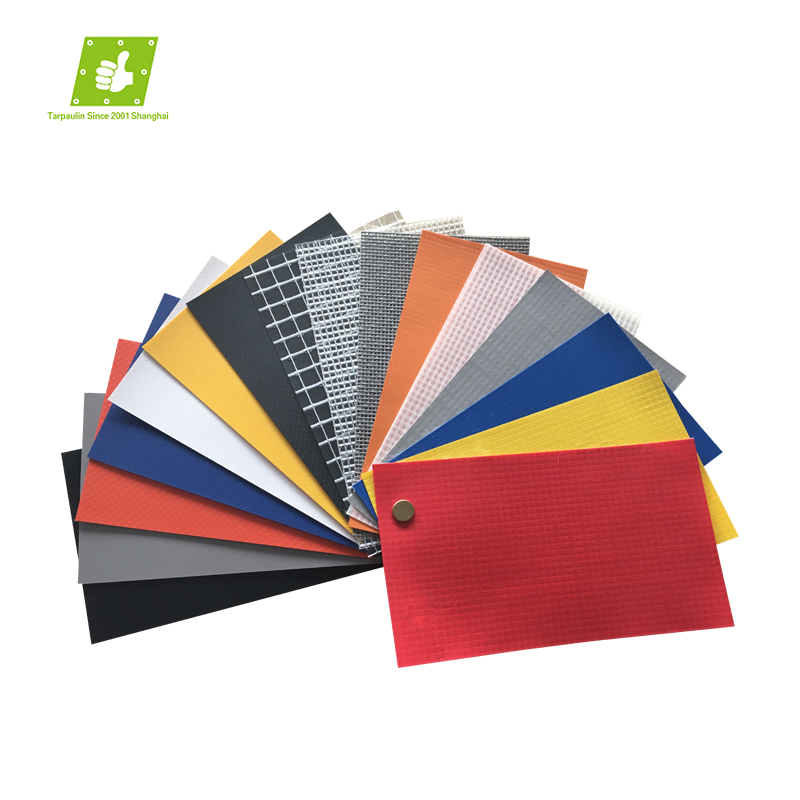
PVC coated tarpaulin is a composite structure: a high-tenacity polyester scrim bonded on both sides with a PVC coating layer that is compounded with plasticizers, stabilizers, and UV-protective additives. This structure is fundamentally different from polyethylene tarpaulin, which is a single-material film without the mechanical reinforcement of a woven scrim, and from canvas tarpaulin, which absorbs water and is susceptible to rot and mold.
Zjhanlong's durability guide explains the structural advantage: the PVC coating creates a non-porous, monolithic barrier that prevents water penetration entirely, which is a key differentiator from polyethylene or canvas, which can eventually seep or wick moisture under pressure or over time (Source: Zjhanlong, PVC Coated Tarpaulins Guide). Yatai Textile adds that the PVC layer acts as a protective barrier against UV rays, water, and wind, while the high-quality polyester base fabric provides the mechanical strength that allows the tarpaulin to maintain its integrity under heavy use (Source: Yatai Textile, How Durable Is PVC Coated Tarpaulin).
The lifespan comparison with the nearest alternatives is substantial. Hubei Jinlong confirms that PE tarps usually last 1 to 3 years while PVC can last 5 to 15 years, and that canvas, while sturdy, is not fully waterproof and tends to rot without treatment (Source: Hubei Jinlong, How Long Does PVC Tarpaulin Last).
Expected Lifespan By GSM Weight And Application
GSM weight, which stands for grams per square meter, is the most direct proxy for how much PVC coating is present in the tarpaulin structure. More coating means more UV stabilizer distributed through the material, more abrasion resistance before the base fabric is exposed, and higher tensile and tear strength throughout the product's life.
| GSM Range | Category | Typical Application | Expected Lifespan |
|---|---|---|---|
| 300 to 450 GSM | Light duty | Temporary event covers, camping, light storage | 1 to 3 years |
| 450 to 600 GSM | General purpose | Protected storage, general covers | 3 to 5 years |
| 600 to 850 GSM | Heavy duty | Trucking, construction, industrial covers | 5 to 10 years |
| 900 to 1300 GSM | Ultra heavy duty | Mining, permanent installations, extreme conditions | 10 to 15+ years |
SKP Material's heavy-duty guide notes that the relationship between GSM and durability is not linear: a 900 GSM tarp is often 2 to 3 times as durable as a 600 GSM tarp because the additional PVC provides greater abrasion resistance, higher tensile strength, longer UV-fade resistance through more stabilizer chemicals distributed through the coating, and better seam reinforcement around grommets (Source: SKP Material, Heavy Duty PVC Tarpaulin: GSM Weight Guide). The practical implication is that step changes in GSM can have outsized impacts on service life.
How UV Radiation Degrades PVC Coated Tarpaulin Over Time
UV degradation is the primary mechanism by which outdoor PVC tarpaulins fail, and understanding its chemistry explains both why UV stabilizers matter and how to choose tarps rated for the expected exposure level.
pvctarpaulin.com's technical analysis explains the mechanism: UV photon energy exceeds the bond energy of the PVC molecular chain's C-Cl bond at 79 kcal per mol, breaking molecular chains and causing visual effects including chalking with gloss loss exceeding 60 percent after 200 hours of QUV testing, and color fading with delta E greater than 5, alongside mechanical decline including tensile strength reduction and elongation-at-break reduction of more than 50 percent that makes the material brittle (Source: pvctarpaulin.com, How Long Does PVC Tarpaulin Last in Sunlight).
The Role Of UV Stabilizers
Modern PVC coated tarpaulins engineer UV resistance through chemical additives compounded into the PVC coating at the manufacturing stage. Unitarp's technical documentation describes the two-component protection system: UV absorbers such as benzophenones or benzotriazoles absorb UV energy and release it as harmless heat, while Hindered Amine Light Stabilizers (HALS) neutralize the free radicals formed during photo-oxidation, stopping the degradation chain reaction before it propagates through the polymer structure (Source: Unitarp, The Ultimate Guide to Outdoor Durability: Weather Resistance of PVC Tarpaulin).
Tytarp.com's UV-resistant tarpaulin guide confirms that UV-stabilized tarpaulin at 3 to 5 percent inhibitor concentration typically delivers 2 to 4 years of outdoor lifespan in temperate climates, and that higher stabilizer concentrations extend service life significantly with a 5 to 7 percent package considered standard for tropical agricultural applications (Source: Tytarp.com, UV-Resistant Tarpaulin: A Manufacturer's Guide to Specifications, Lifespan and Sourcing).
Climate Accelerates UV Degradation
The same tarpaulin does not age at the same rate in every climate. pvctarpaulin.com's regional analysis provides a striking illustration: in tropical regions such as Southeast Asia and the Middle East, aging can be 30 to 50 percent faster than in temperate zones, and the thermal effect compounds this, since the PVC oxidation rate increases 3.8 times per 10 degrees Celsius rise above 60 degrees Celsius (Source: pvctarpaulin.com, How Long Does PVC Tarpaulin Last in Sunlight). This means a tarpaulin rated for 5 years in a temperate European climate may reach the end of its service life in as few as 3 to 3.5 years in a Middle Eastern or tropical deployment.
Factors That Shorten PVC Coated Tarpaulin Lifespan
Beyond UV exposure and climate, several operational and specification factors consistently reduce service life below the potential of the tarpaulin's base materials.
- Insufficient GSM for the application: using a 400 GSM tarp for continuous truck cover service where a 650 to 850 GSM specification is appropriate subjects the lighter material to stress levels it was not designed to sustain, accelerating wear at seams, grommets, and surface abrasion points
- Over-tightening during installation: excessive mechanical tension concentrates stress at grommets and hem edges, causing tear propagation that begins at stress concentration points rather than from surface wear; Hubei Jinlong confirms that improper tension is one of the primary avoidable causes of premature failure (Source: Hubei Jinlong, How Long Does PVC Tarpaulin Last)
- Contact with sharp edges: covering objects with sharp projections subjects the underside of the tarpaulin to concentrated point loads that create pinholes and tears well before the surface UV degradation becomes significant
- Storage while wet: storing a tarpaulin folded while damp traps moisture in the fold areas, promotes plasticizer migration, and creates conditions for biological growth that breaks down the PVC surface; pvctarpaulin.com notes that humidity promotes plasticizer migration, which reduces flexibility and accelerates cracking (Source: pvctarpaulin.com, How Long Does PVC Tarpaulin Last in Sunlight)
- Repeated folding at the same crease lines: folding a tarpaulin at identical fold lines every time concentrates flex stress at those points, eventually causing the PVC coating to crack along the crease even when the surrounding material remains intact
- Low-quality base fabric: Tytarp confirms that a 1000D 20x20 PVC tarpaulin used for truck covers is far more durable than a lighter 500D tarp used for temporary event tents, and that the base fabric denier and weave density determine how well the structure resists tear propagation once a surface damage initiates (Source: Tytarp.com, UV-Resistant Tarpaulin Guide)
Maintenance Practices That Extend Service Life
The gap between a tarpaulin that lasts 5 years and one that lasts 10 years under the same conditions is largely determined by the maintenance approach applied throughout its service.
Regular Cleaning
Surface dirt, debris, and chemical deposits accelerate degradation by trapping moisture against the PVC surface and by providing abrasive contact surfaces when the tarpaulin flexes in wind. Hubei Jinlong's maintenance guidance recommends cleaning with mild soap and water to remove dirt and pollutants that could break down the coating (Source: Hubei Jinlong, How Long Does PVC Tarpaulin Last). Yatai Textile confirms that cleaning the surface to remove dirt and debris, checking for signs of wear, and repairing any damages promptly are the three core maintenance practices that ensure continued effective performance over years of use (Source: Yatai Textile, How Durable Is PVC Coated Tarpaulin).
Prompt Repair Of Minor Damage
Small tears and pinholes that are left unrepaired grow progressively under wind load and mechanical stress, with each stress cycle extending the damage from a manageable repair to a replacement-level failure. Quora's trucking industry practitioners confirm this maintenance principle: periodic checking for tears and pinholes and repairing them promptly is the most effective maintenance action for achieving 10 to 30 years of service from premium PVC tarps (Source: Quora, How Does PVC Tarpaulin Perform in Terms of UV Resistance). Repair kits using compatible PVC welding tape or two-part PVC adhesive patches are widely available and should be part of any long-term tarpaulin maintenance program.
Correct Storage
When not in use, PVC coated tarpaulins should be cleaned, allowed to dry completely, rolled rather than folded if possible, and stored in a cool, dry location away from direct sunlight and UV exposure. Zjhanlong's guide confirms that premium high-GSM tarps stored when not in use can remain functional for 10 years or more, and that storage conditions directly affect how much of the UV stabilizer budget is consumed between active deployments (Source: Zjhanlong, PVC Coated Tarpaulins Guide). Tytarp.com adds that loosening the tarp to avoid folding at one fixed point and avoiding undue tightening during storage both preserve material integrity between uses (Source: Tytarp.com, The Ultimate Guide to PVC Tarpaulin Lifespan).
Signs That A PVC Coated Tarpaulin Has Reached End Of Life
Recognizing when a tarpaulin has reached the end of its serviceable life prevents reliance on compromised covering during critical weather events or cargo protection situations.
- Chalking or whitening of the surface, indicating that UV degradation has consumed the stabilizer layer and exposed the underlying PVC structure to direct radiation
- Visible color fading or patchy discoloration, where UV damage has been uneven due to inconsistent coating application or differential exposure across the tarpaulin surface
- Cracking or brittleness in the PVC coating, where plasticizer migration has removed the compounds that keep the PVC flexible, causing the surface to fracture under flex loading (Source: Hubei Jinlong, How Long Does PVC Tarpaulin Last)
- Tensile strength reduction: pvctarpaulin.com documents that UV degradation reduces tensile strength by 30 to 50 percent within 2 to 3 years under high UV exposure, making the material unsuitable for high-stress applications such as truck covers or warehouse sheets (Source: pvctarpaulin.com, How Long Does PVC Tarpaulin Last in Sunlight)
- Tears, punctures, or holes that compromise waterproofing at multiple locations across the surface, where the extent of damage has moved beyond the capacity of individual repairs
- Weak, loose, or torn-out grommets: grommet failure indicates that the reinforcement material around the eyelet has degraded to the point where the mechanical attachment system is no longer reliable under load
Choosing A PVC Coated Tarpaulin Built For Long Service Life
Specification decisions made at the point of purchase determine the ceiling of achievable service life. The following criteria distinguish tarpaulins that will approach their rated lifespan from those that will fall well short of it.
- Match GSM to the application: specify a minimum of 650 GSM for continuous heavy industrial use, 900 GSM or above for extreme conditions, and never underspecify to save initial cost since the replacement cycle cost will exceed any saving within the first service period (Source: SKP Material, Heavy Duty PVC Tarpaulin: GSM Weight Guide)
- Request the UV stabilizer specification: ask for the UV inhibitor percentage and the accelerated weathering test result in QUV hours per ASTM G154 or ISO 4892; a supplier unable to provide this data cannot verify the UV resistance claim (Source: Tytarp.com, UV-Resistant Tarpaulin Guide)
- Verify base fabric denier and weave count: 1000D 20x20 base fabric is the specification for heavy-duty truck and industrial applications; 500D or lighter base fabric limits the mechanical strength regardless of PVC coating weight
- Check grommet quality: brass or stainless steel grommets securely riveted with reinforcing washers on the back face; cheap grommets tear out under load and create failure points that compromise the entire tarpaulin (Source: SKP Material, Heavy Duty PVC Tarpaulin Guide)
- Verify coating uniformity: request documentation of the manufacturing method, with knife coating recommended for heavy-duty applications and lamination acceptable for budget applications; coating thin spots identified in inspection indicate areas of reduced UV and mechanical protection
The Tarpaulin.cn PVC Coated Tarpaulin range is manufactured to address these specification criteria, combining correctly rated GSM weights, compounded UV stabilization systems, high-denier polyester base fabrics, and quality hardware across product grades designed for the full spectrum of industrial, agricultural, transportation, and construction applications.