
Call Us
+86-18962820095

 Español
Content
- 1 Complete and Durable Waterproofing
- 2 High Strength-to-Weight Ratio
- 3 Long Outdoor Service Life and UV Resistance
- 4 Superior Weldability: Strong, Waterproof Seams Without Adhesive
- 5 Chemical and Biological Resistance
- 6 Flame Retardancy Options and Fire Safety Compliance
- 7 Versatility Across an Extreme Range of Weights and Applications
- 8 Excellent Printability for Graphic and Branding Applications
- 9 Low-Temperature Flexibility
- 10 Cost-Effectiveness Over Total Service Life
- 11 Advantages Summary: PVC Fabric vs Key Alternatives
The advantages of PVC fabric can be summarized in six core strengths that explain why it dominates so many industrial and commercial markets: outstanding waterproofing, high tensile and tear strength relative to weight, excellent UV and weathering resistance, superior weldability, broad chemical resistance, and low cost per year of service life. No single alternative material delivers all six of these properties simultaneously at a comparable cost point -- which is why PVC-coated fabric remains the preferred choice for truck tarpaulins, advertising banners, inflatable structures, industrial curtains, agricultural shelters, and dozens of other applications where a material must protect, endure, and perform reliably outdoors over years of continuous use. This article examines each advantage in technical depth, with test data and real-world benchmarks to quantify the claims.
Complete and Durable Waterproofing
Waterproofing is the most fundamental advantage of PVC fabric and the primary reason it is chosen over untreated textiles in outdoor and industrial applications. The continuous PVC polymer film bonded to both faces of the base fabric creates a non-porous barrier with no natural pathways for liquid penetration. Water cannot pass through the fabric body -- it can only enter through seams, eyelets, or edge finishes where the PVC surface is interrupted, making seam design the critical waterproofing variable in any PVC fabric product rather than the fabric itself.
Hydrostatic resistance -- the standard measure of waterproof performance -- is tested by applying an increasing water column to one face of the fabric until the first drop penetrates. Standard commercial PVC tarpaulin fabric exceeds 5,000 mm H2O of hydrostatic resistance under ISO 811 testing. For context, heavy sustained rainfall exerts approximately 2 to 5 mm H2O of pressure on a horizontal surface, and a standard tent fabric is considered waterproof at 1,500 mm H2O. PVC fabric at 5,000+ mm H2O provides a safety margin of more than 1,000 times the practical rainfall pressure load (source: ISO 811:2018, Textiles -- Determination of Resistance to Water Penetration).
This waterproofing performance is not temporary. Unlike durable water repellent (DWR) treatments applied to technical outdoor textiles that degrade after 20 to 30 wash cycles or UV exposure, the PVC coating of a quality-formulated fabric retains its full waterproofing function for the entire service life of the material. There is no re-treatment requirement and no degradation of the water barrier over time under normal outdoor conditions.
| Material Type | Hydrostatic Resistance (mm H2O) | Water Barrier Durability |
|---|---|---|
| PVC coated fabric (standard tarpaulin) | Greater than 5,000 | Permanent -- no degradation over service life |
| PE coated fabric (woven poly tarp) | 1,500-3,000 | Moderate -- seams may delaminate after 1-3 years outdoor use |
| DWR-treated technical textile | 1,500-3,000 (new) | Temporary -- degrades to below 800 mm after 20-30 wash cycles |
| Untreated polyester canvas | Less than 300 | None -- absorbs water; dries slowly |
High Strength-to-Weight Ratio
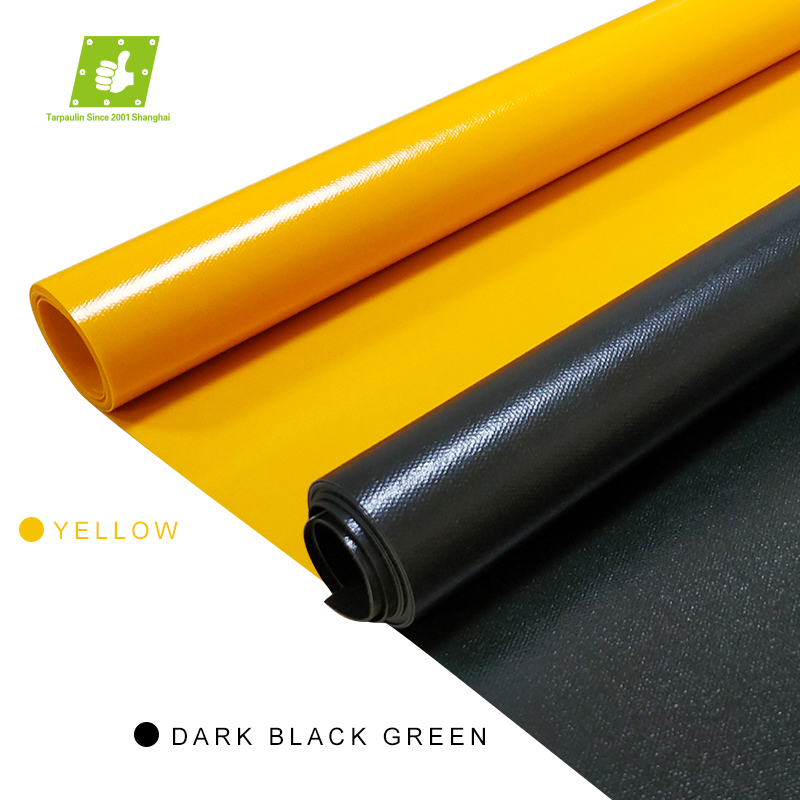
PVC fabric achieves high absolute strength at relatively modest weight because the mechanical load is carried almost entirely by the woven scrim -- a grid of high-tenacity polyester or nylon yarns embedded within the PVC coating -- while the coating itself adds protection rather than dead weight. This composite structure is fundamentally more efficient than a single-material design: the scrim yarns carry tension loads along their fiber axis (where polymer chains are most efficient), while the PVC matrix protects those yarns from moisture, abrasion, and UV without contributing to the structural weight budget.
A standard 650 gsm PVC tarpaulin fabric -- roughly equivalent in weight to two layers of standard denim -- achieves tensile strength of 3,000 to 4,500 N per 5 cm strip width in both warp and weft directions under ISO 1421 testing. Tear resistance (trapezoid method, ISO 4674-1) typically reaches 250 to 400 N. For comparison, a natural canvas tarpaulin of similar total weight achieves tensile strength of approximately 800 to 1,200 N/5 cm and tears easily once a cut initiates (source: ISO 1421:2016, Rubber or Plastics-Coated Fabrics -- Determination of Tensile Strength and Elongation at Break).
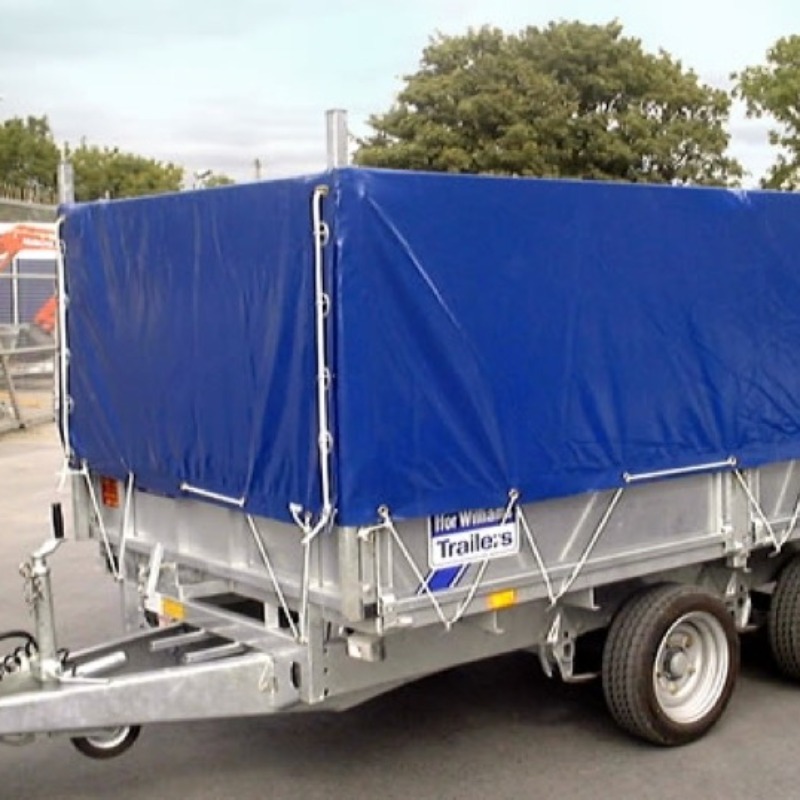
The practical implication of this strength advantage is that PVC fabric products can be designed to handle wind loads, cargo loads, and tension from lashing points that would destroy lighter or weaker alternatives. A truck curtainsider running at highway speed in crosswind conditions experiences dynamic wind loads of 15 to 25 kg/m2 continuously -- a load that a standard 750 gsm PVC truck curtain fabric handles with a safety factor exceeding 5:1 relative to its rated tensile strength.
Long Outdoor Service Life and UV Resistance
Outdoor durability is one of the most economically significant advantages of quality PVC fabric. UV radiation is the primary cause of polymer degradation in outdoor materials -- it breaks polymer chains through photooxidation, causing surface chalking, color fading, loss of flexibility, and eventually cracking and structural failure. PVC fabric addresses this through a combination of UV-absorbing and UV-scattering additives compounded directly into the PVC polymer matrix -- not applied as a surface coating that will wear off.
Standard commercial PVC tarpaulin fabric with a conventional UV stabilizer package achieves 500 to 1,000 hours of Xenon arc UV aging per ISO 4892-2 before failing the color fastness and mechanical retention criteria. Premium grades used in architectural membranes and long-term outdoor structures are stabilized to 3,000 to 5,000 hours -- equivalent to approximately 10 to 15 years of central European outdoor exposure under continuous open-sky conditions (source: ISO 4892-2:2013, Plastics -- Methods of Exposure to Laboratory Light Sources -- Part 2: Xenon-Arc Lamps).
In practical service life terms, a correctly specified PVC tarpaulin in temperate climate conditions has an expected service life of 5 to 12 years depending on UV exposure, mechanical loading, and maintenance. A polyethylene woven tarpaulin of comparable price typically reaches end of life in 1 to 3 years of outdoor use due to UV-induced embrittlement of the PE film interlayer. The total cost of ownership advantage of PVC fabric over the product lifetime therefore substantially outweighs the higher initial purchase cost relative to cheaper alternatives.
| Material | Xenon Arc Rating (ISO 4892-2) | Expected Outdoor Service Life | UV Degradation Mode |
|---|---|---|---|
| PVC fabric (standard UV stabilized) | 500-1,000 hours | 5-8 years outdoor | Gradual surface chalking; color shift; eventual embrittlement |
| PVC fabric (premium UV stabilized) | 3,000-5,000 hours | 10-15 years outdoor | Minimal degradation within rating period |
| PE woven tarpaulin (standard) | Less than 300 hours | 1-3 years outdoor | Rapid embrittlement and tearing from photooxidation |
| Canvas (cotton or polyester, untreated) | Not rated | 1-4 years outdoor (varies widely) | Fiber degradation; mold growth; rot (cotton) |
| PTFE coated glass fiber membrane | Greater than 10,000 hours | 25-35 years outdoor | Minimal -- PTFE is extremely UV stable |
Superior Weldability: Strong, Waterproof Seams Without Adhesive
The weldability of PVC fabric is one of its most practically important and commercially distinctive advantages. Because PVC is a thermoplastic polymer, two surfaces of PVC fabric can be fused together under heat and pressure to form a continuous, molecularly bonded joint -- a weld -- that is waterproof, extremely strong, and permanent. This is fundamentally different from seaming alternatives that rely on adhesive bonding, mechanical sewing, or tape sealing, all of which introduce potential failure modes that PVC welding avoids.
High-Frequency (HF) Welding Strength
High-frequency welding uses a 27.12 MHz electromagnetic field to heat PVC molecules directly at the joint interface, creating a fusion bond within 2 to 8 seconds of electrode contact. The weld zone achieves tensile strength of 85 to 95% of the surrounding parent fabric -- meaning the weld seam itself is rarely the weakest point in a correctly designed PVC fabric structure. Pull-apart testing of HF-welded joints in 650 gsm tarpaulin fabric typically produces fabric tearing adjacent to the weld rather than weld delamination, confirming that the weld is stronger than the fabric it joins (source: IFAI Coated Fabrics Fabrication Manual, 2020).
This strength advantage is critical for applications with sustained load on seams -- inflatable boat tubes that must hold internal pressure continuously, truck curtains where lashing loads are transmitted through welded attachment seams, or banner frames where tension is applied at welded corner patches. Adhesive-bonded or sewn-and-sealed seams in these applications require more conservative design safety factors precisely because the joint strength is lower and more variable than a welded joint.
No Consumables, No Residue
HF and hot-air welding require no adhesive, no thread, and no tape -- the PVC polymer itself forms the joint. This means fabricated PVC fabric products have no adhesive failure risk (delamination from solvent attack, aging, or temperature extremes), no thread rot risk (a failure mode in sewn outdoor covers), and no residue that can contaminate food contact, pharmaceutical, or cleanroom applications. The clean, flat weld seam also contributes to the professional appearance of printed banners, trade show displays, and architectural membranes where seam visibility affects product quality perception.
Comparison With Other Coated Fabrics
Most alternative coated fabric materials cannot be high-frequency welded. PTFE-coated glass fiber membranes, silicone-coated fabrics, and many PU-coated fabrics require adhesive bonding for seaming -- a process that is slower, more sensitive to surface preparation quality, and produces joints with lower strength and less consistent waterproofing than HF or hot-air welding. This weldability advantage is a primary reason PVC fabric continues to be used in inflatable structures, liquid containment, and truck curtains even where alternative materials might otherwise be considered.
Chemical and Biological Resistance
PVC fabric resists a broad range of chemicals, biological agents, and environmental contaminants that would degrade untreated textiles, many natural materials, and some alternative polymer coatings. This resistance comes from the inherent chemical inertness of the PVC polymer combined with the physical barrier effect of the continuous coating surface.
- Dilute acids and alkalis: PVC resists most dilute inorganic acids (sulfuric, hydrochloric, nitric at concentrations below 30%) and dilute alkalis without surface attack, swelling, or loss of mechanical properties. This makes it suitable for chemical plant curtains, acid splash guards, and agricultural chemical storage covers where occasional chemical contact is expected.
- Salt water and marine environments: PVC is not degraded by salt water or the chloride-rich atmosphere in coastal and marine environments. Canvas and polyester fabrics treated with DWR coatings lose their water repellency rapidly in salt spray; PVC fabric retains full waterproofing and structural integrity. This makes PVC fabric the standard material for boat covers, marina awnings, and harbor shelter structures.
- Mold, mildew, and biological growth: PVC does not provide a nutrient source for mold or mildew. Quality PVC fabric formulations include anti-fungal additives that actively prevent biological growth on the surface. Natural canvas and untreated synthetic textiles accumulate mold in damp conditions, causing staining, odor, and eventual fiber degradation. PVC fabric stored damp does not mold in the way that canvas or untreated polyester does -- a significant practical advantage for transport and temporary structure applications where covers cannot always be stored dry.
- Fuel and oil splash: Standard PVC fabric resists petroleum fuels, mineral oils, and common lubricants at typical splash concentrations. Extended immersion in hydrocarbon solvents will eventually cause plasticizer extraction and swelling, but brief contact -- the level encountered in agricultural machinery covers, workshop curtains, and transport covers -- does not damage the fabric or its properties.
- Cleaning agents: PVC fabric can be washed with most commercial cleaning agents, pressure washers, and disinfectants without surface damage. This cleanability is important for food processing curtains, medical facility barriers, and public event structures where hygiene standards require regular cleaning.
Source: European Coated Fabrics Association, Chemical Resistance Guide for PVC Coated Fabrics, 2021.
Flame Retardancy Options and Fire Safety Compliance
PVC is inherently more flame-resistant than polyethylene, polypropylene, or untreated natural fiber textiles because its chlorine content suppresses combustion chemistry -- chlorine radicals interfere with the radical chain reactions that sustain burning. A standard PVC fabric self-extinguishes when the ignition source is removed, even without additional flame retardant additives. This base-level flame resistance can be enhanced to meet specific fire safety standards through the addition of flame retardant compounds to the PVC formulation.
PVC fabrics with certified fire ratings are required by regulation in many building and event applications:
- DIN 4102-B1 (Germany): Classifies materials as normally flammable (B2) or flame retardant (B1). PVC fabric certified to B1 is required for temporary structures, exhibition stands, and event tents in Germany and many other German-speaking markets.
- EN 13501-1 Class B or C (European Union): The harmonized European reaction-to-fire classification. Architectural PVC membrane structures are typically required to achieve Class B (very limited contribution to fire) or Class C (limited contribution to fire) with supplementary smoke (s) and burning droplet (d) ratings.
- NFPA 701 (United States): The North American standard for flammability of textiles used in public occupancy buildings. PVC fabrics certified to NFPA 701 are accepted for theatre curtains, event draping, and commercial awnings throughout the US and Canada.
- M2 and M1 classification (France): French building regulation fire classifications used for event and exhibition fabric. M1 (non-combustible) and M2 (low combustibility) PVC fabrics are widely available from European manufacturers.
The practical value of this fire certification capability is that PVC fabric is one of the very few flexible textile materials that can be certified to the most stringent flame retardancy classifications required for public building use. Many alternative flexible materials -- including most PU-coated fabrics, polyethylene tarps, and untreated canvas -- cannot achieve equivalent certifications without compromising other performance properties.
Versatility Across an Extreme Range of Weights and Applications
A single material technology delivering products from 200 gsm lightweight banner fabric to 1,500 gsm heavy industrial curtaining -- a 7.5-fold weight range -- is unusual in technical textiles. PVC fabric's versatility across this range is an advantage in itself: a single fabricator can work with one material type and one welding technology across a wide product portfolio, simplifying procurement, stock management, and staff training.
The weight range corresponds to a capability range that covers virtually all flexible barrier and cover applications:
- 200-350 gsm: Lightweight banner and signage fabric; indoor event draping; blackout curtains; medical privacy screens
- 350-550 gsm: Outdoor advertising banners; light-duty agricultural covers; inflatable promotional products; pool and spa covers
- 550-750 gsm: Standard tarpaulins; truck curtains; construction site protection; temporary shelters; awnings and canopies
- 750-1,000 gsm: Heavy-duty tarpaulins; inflatable rescue and industrial equipment; liquid containment liners; flood protection barriers
- 1,000-1,500 gsm: Industrial strip curtains; foundry curtains; heavy machinery covers; protective linings for containers and silos
Beyond weight, the same PVC fabric manufacturing platform can produce transparent grades for see-through dividers and windows, translucent grades for light-diffusing roof panels, and fully opaque grades for privacy and blackout applications -- simply by adjusting the pigment content and coating thickness without changing the fundamental material system.
Excellent Printability for Graphic and Branding Applications
PVC fabric is the dominant substrate for large-format digital printing in the outdoor advertising, events, and retail display industries. Its printability advantages over alternative substrates are substantial and commercially significant.
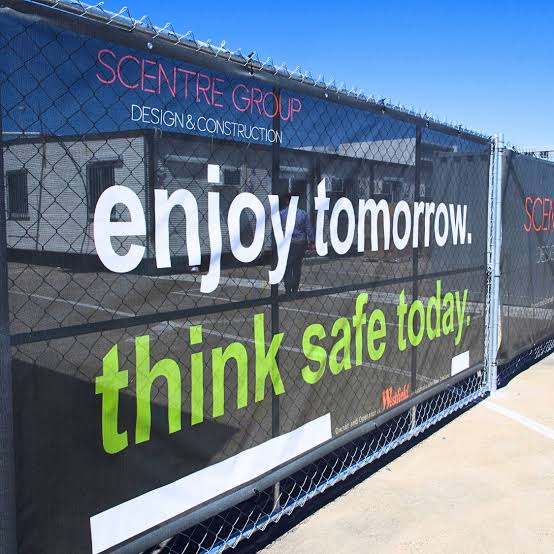
The PVC coating surface can be formulated with a print-compatible topcoat -- typically a lacquer-based acrylic or polyurethane system -- that provides excellent ink adhesion for solvent, UV-curable, and latex digital inks. White banner-grade PVC fabric achieves a whiteness (L*) value of 90 to 95 and a smooth surface roughness of 1 to 3 microns, both of which are critical for maximum color gamut and print sharpness in photographic-quality large-format graphics (source: FESPA Digital Printing Technical Report, Substrate Specifications, 2022).
Outdoor printed PVC banners maintain their printed image quality for 2 to 5 years of direct outdoor exposure when UV-resistant inks are used, because the UV-stabilized PVC substrate provides a stable base that does not yellow or degrade behind the ink layer. This outdoor print durability is not achievable on paper, fabric textiles, or most plastic film substrates without specialized UV-laminate overcoating that adds cost and complexity.
PVC fabric is also uniquely compatible with high-frequency welding of printed panels -- graphics printed on separate pieces can be welded edge-to-edge or overlapped to create large-format displays of virtually any size, a fabrication capability that sewn or adhesive-bonded alternative substrates cannot match with the same seam quality.
Low-Temperature Flexibility
PVC fabric with correctly formulated plasticizer content remains flexible and handleable at temperatures well below freezing -- a practical requirement for tarpaulins, truck curtains, and covers used in cold-climate regions. Cold flexibility is tested under ISO 4675 by folding the fabric through 180 degrees at a defined low temperature and inspecting for surface cracking.
Standard commercial PVC tarpaulin fabric passes cold flexibility testing at -20 degrees C; premium cold-climate formulations are rated to -30 to -40 degrees C. At these temperatures, the fabric can be folded, rolled, unrolled, and installed without cracking or surface damage. This contrasts with low-cost polyethylene tarps, which become brittle and prone to cracking in folds at temperatures below -10 to -15 degrees C, and with some PU-coated fabrics that stiffen significantly at temperatures below -15 degrees C even without cracking (source: ISO 4675:2021, Rubber or Plastics-Coated Fabrics -- Low-Temperature Tests).
For operators in Scandinavia, Canada, Russia, or high-altitude regions where cover materials are regularly used and deployed at temperatures well below freezing, this low-temperature flexibility advantage is operationally critical -- a tarpaulin that cracks when unfolded at -25 degrees C is effectively unusable for its intended purpose regardless of its performance at ambient temperature.
Cost-Effectiveness Over Total Service Life
The purchase price of PVC fabric is higher than polyethylene woven tarpaulin or basic canvas for equivalent dimensions, but the total cost of ownership over the product's useful life almost always favors PVC. The economic calculation involves four factors:
- Service life: A 650 gsm UV-stabilized PVC tarpaulin in European outdoor conditions has an expected service life of 5 to 10 years. A PE woven tarpaulin of similar external dimensions reaches end of life in 1 to 3 years due to UV embrittlement. Over a 10-year period, 3 to 10 PE tarps are consumed per 1 PVC tarp, eliminating the apparent cost advantage of the cheaper material (source: ECFA Total Cost of Ownership Guidance for Technical Fabrics, 2022).
- Replacement labor and downtime: In agricultural or construction applications where covers are large and handling is labor-intensive, tarpaulin replacement is a significant cost beyond the material itself. Replacing 3 to 5 PE tarps versus 1 PVC tarp over a decade represents a measurable labor cost differential.
- Repairability: PVC fabric can be field-repaired with hot-air welding guns or self-adhesive PVC repair tape -- a torn section of fabric does not necessarily mean the whole cover must be replaced. PE and canvas tarps have very limited field repair options; a tear typically means replacement of the entire piece.
- Waste and disposal: Fewer replacement cycles per decade means less total waste generated. PVC fabric is also recyclable through specialist streams (the VinylPlus program collected 739,525 tonnes of PVC across all categories in 2022), while PE tarpaulin film is often landfilled due to contamination and mixed-material construction (source: VinylPlus Progress Report, 2023).
A life-cycle cost analysis for truck tarpaulin covers -- one of the most commercially important applications -- consistently shows that PVC truck curtain fabric at a typical weight of 650 to 800 gsm delivers a lower annualized cost than any lighter or less durable alternative when all replacement, labor, and downtime costs are included over a standard fleet operating cycle of 7 to 10 years.
Advantages Summary: PVC Fabric vs Key Alternatives
| Advantage | PVC Fabric | PE Woven Tarpaulin | Canvas (Polyester) | PU Coated Fabric |
|---|---|---|---|---|
| Waterproofing | Excellent (greater than 5,000 mm H2O) | Moderate (1,500-3,000 mm H2O) | Poor (less than 300 mm H2O untreated) | Excellent |
| Tensile strength (650 gsm) | 3,000-4,500 N/5 cm | 800-1,500 N/5 cm | 800-1,200 N/5 cm | 2,000-3,500 N/5 cm |
| Outdoor service life | 5-12 years | 1-3 years | 2-5 years (treated) | 3-7 years |
| HF weldability | Excellent | None | None | Limited (some grades) |
| Mold and biological resistance | Excellent | Good | Poor (cotton); moderate (polyester) | Good |
| Fire retardancy certification | B1, EN B, NFPA 701, M1/M2 | Very limited | Specialist grades only | Available in some grades |
| Digital print quality | Excellent (L* 90-95, solvent/UV/latex) | Poor | Moderate | Good |
| Cold flexibility | To -20 to -40 degrees C | Brittle below -10 to -15 degrees C | Stiff below -10 degrees C | To -30 to -40 degrees C |
| 10-year lifecycle cost | Low (1-2 replacement cycles) | High (3-8 replacement cycles) | Moderate (2-4 replacement cycles) | Low to moderate |
Our PVC fabric range is manufactured to capture all of the advantages described in this article -- with UV stabilizer packages, fire certification grades, cold climate formulations, and print-optimized banner grades available across the full weight spectrum from 300 to 1,100 gsm. Full ISO test data certificates are available for every product grade, enabling buyers to verify the specific property values relevant to their application before committing to a purchase.