
Call Us
+86-18962820095

 Español
Content
- 1 Fireproof Tarpaulin and Fire Retardant Tarpaulin Are Not the Same Claim
- 2 Where the Fire Retardant Chemistry Sits in the Fabric
- 3 Which Fire Test Standard Do You Actually Need
- 4 Specification Lines That Separate Real FR Fabric from a Labelled Roll
- 5 Applications Where the FR Requirement Is Written into the Contract
- 6 Cost, MOQ and Delivery Questions Worth Asking
- 7 Storage, Cleaning and Repair Without Destroying the Rating
Here is the short answer before the detail: almost nothing sold as fireproof tarpaulin is literally fireproof. What you are actually buying is a fire retardant PVC tarpaulin, a coated or laminated fabric that resists ignition, stops burning once the flame source is removed, and does not drip flaming plastic onto whatever sits underneath it.
That difference matters at the purchase order stage, not in the product photo. A tarpaulin built with a genuine fire retardant formulation can pass a named standard such as NFPA 701 or EN 13501-1 and stay flexible for years. A roll that merely carries an FR mark on the label may self extinguish on a small swatch and still fail badly as a full panel, because the additive loading is too low, the plasticizer migrates, or the coating weight was cut to reach a price target. For a scaffolding wrap, a tent roof or a truck cover sitting close to hot exhaust parts, the second type is a liability rather than a saving.
Fireproof Tarpaulin and Fire Retardant Tarpaulin Are Not the Same Claim
Fireproof implies the material cannot burn at all. No flexible polymer sheet meets that description, and any supplier who promises it is using the word loosely. PVC is a reasonable starting point because close to half of its weight is chlorine, which interferes with combustion chemistry. Unfortunately the plasticizers that make the sheet soft and workable also make it easier to ignite, so the compound needs help from additives.
In practice, a fire retardant tarpaulin is expected to do four things:
- Limit flame spread across the surface, so a small ignition source stays small.
- Self extinguish once the burner or spark is removed, usually within seconds under lab conditions.
- Produce no flaming drips, which is the failure mode that actually sets cargo, roofs and netting alight.
- Keep char length and afterglow inside the limits set by the standard being quoted.
Equally important is what FR treatment does not do. It is not a heat shield, it does not stop the sheet from softening or distorting at high temperature, and it does not last forever in strong sun. Treat the rating as a defined performance level, not as a permanent guarantee.
Where the Fire Retardant Chemistry Sits in the Fabric
Every FR tarpaulin starts with two ingredients: a woven polyester scrim, normally 500D to 1300D, and a PVC compound that is either coated onto the cloth or laminated to it as a film. The two routes behave differently under fire testing. Coating, done by spreading PVC plastisol across the scrim and fusing it in an oven, allows a higher loading of flame retardant additives and anchors them through the coating. Lamination uses a pre made film, which gives tighter thickness tolerance and a cleaner surface but limits how much additive the film can carry before the process becomes unstable.
Behind the label sits a formulation choice. Antimony trioxide combined with a brominated flame retardant is the classic high efficiency system and is common in tarpaulin that has to pass NFPA 701. Phosphate ester plasticizers can carry part of the load and keep the sheet soft, but they are mobile and may migrate over the years. Aluminum trihydrate is cheap and works by releasing water, yet it needs heavy loading, which costs tensile strength and cold flexibility. This is exactly why two rolls both described as 600 gsm FR tarpaulin can behave completely differently on the same burner test.
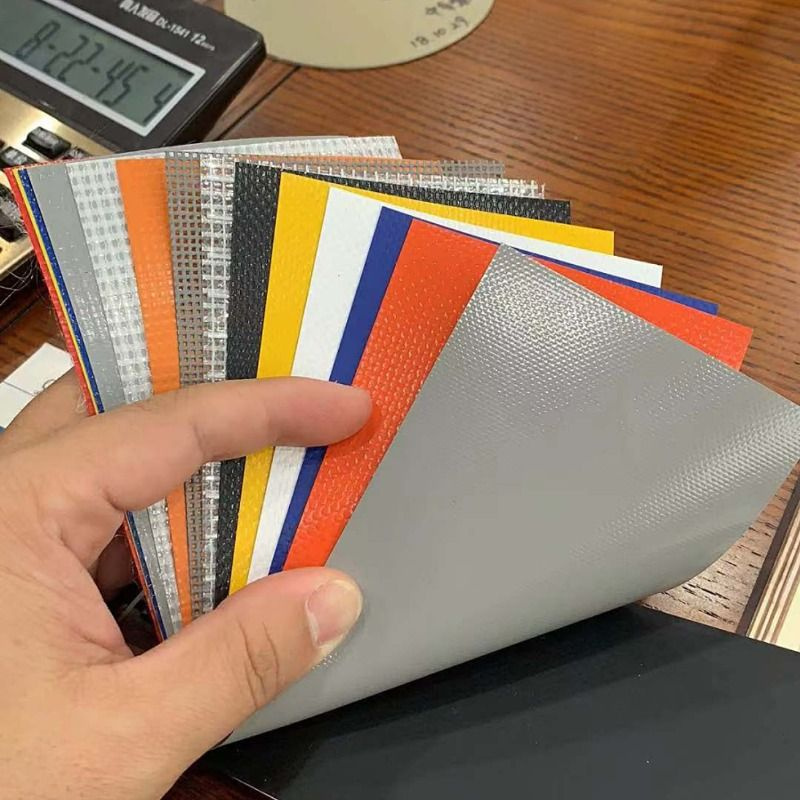 Flame Resistant PVC Tarpaulin Category for Heavy-Duty Outdoor CoversReview flame-retardant PVC tarpaulin options and formulation, standard, and application considerations before specifying industrial truck, trailer, or outdoor covers.View Product →
Which Fire Test Standard Do You Actually Need
The word fireproof means nothing in a technical conversation until it is tied to a standard, a specimen size and a test method. Buyers who name the standard before requesting a price get far fewer surprises than buyers who describe the application and hope for the best.
| Standard | Main market | What it evaluates | Documentation to request |
|---|---|---|---|
| NFPA 701 | United States | Flame spread of fabrics, small and large scale specimens | Report naming the fabric, weight and testing laboratory |
| CPAI-84 | North America, camping and tent industry | Flammability of camping tentage and similar structures | Report with the specification number of the exact style |
| EN 13501-1 | European Union | Reaction to fire for construction products, with smoke and droplet classes | Classification report from a notified body |
| DIN 4102 B1 | Germany and parts of Europe | Building material fire behaviour | Certificate that references the product code |
| ASTM E84 and GB 8624 B1 | United States, China, export projects | Surface burning characteristics and national building classification | Class A or Class B report, or a GB 8624 B1 certificate |
One detail is easy to miss: some standards apply to the finished article rather than to the roll. A tent or a welded cover may need its own test, because seams, hardware and ventilation openings all change how a fire behaves.
Specification Lines That Separate Real FR Fabric from a Labelled Roll
When a quotation arrives, read it the way a factory engineer would. A trustworthy FR quotation normally answers these points:
- Base cloth: denier of the polyester yarn and the yarn count, not just the word polyester.
- Weight: 550, 600 or 650 gsm, or 18 oz per square yard on imperial sheets, plus the tolerance. A five percent shortfall on 600 gsm is 30 gsm of missing polymer.
- Coating route: coated, laminated or coated on both sides, since the FR loading ceiling differs.
- Strength: tensile and tear figures in N per 5 cm, with the test method named.
- FR package: which additive system is used, and whether the test report covers that weight, colour and finish.
- UV package: hindered amine stabilizers and UV absorbers, because a sheet that chalks in its first summer is also losing plasticizer and fire performance.
- Cold flexibility: northern markets care about cracking at low temperature, so ask for a cold bend figure.
- Seam method: high frequency or hot air welding is the normal choice for finished covers, while stitched seams leave needle holes and a thread that can itself burn.
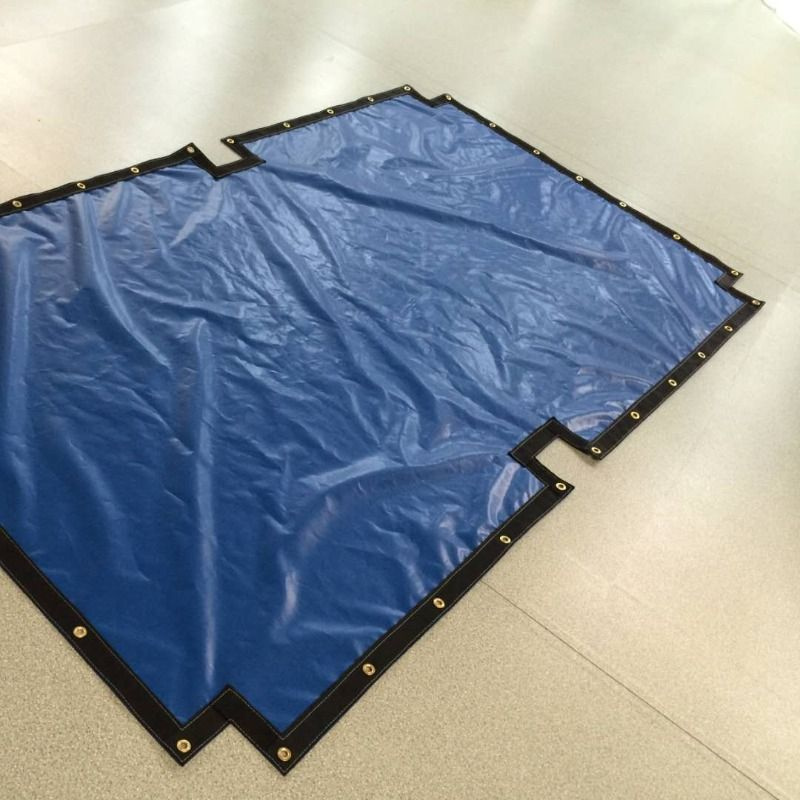
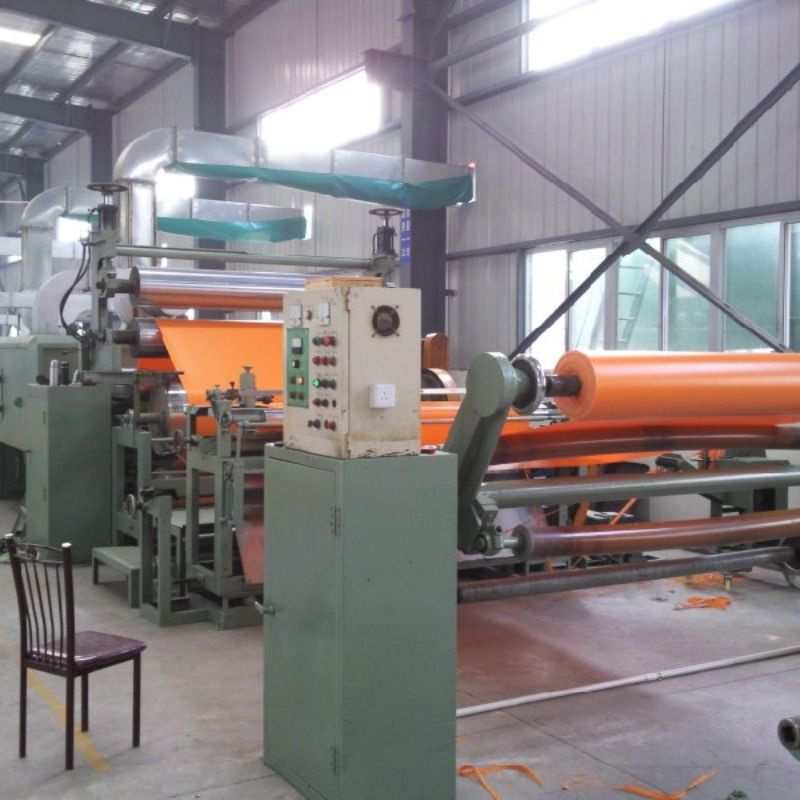 18oz 600gsm Flame-Retardant PVC Coated Polyester TarpaulinInspect this waterproof heavy-duty PVC tarpaulin for truck trailer curtains and outdoor covers where flame resistance, tear strength, and site rules matter.View Product →
Applications Where the FR Requirement Is Written into the Contract
Fire retardant tarpaulin is specified wherever a flame source, a hot surface or a strict site rule meets a large flexible cover. The most common cases are:
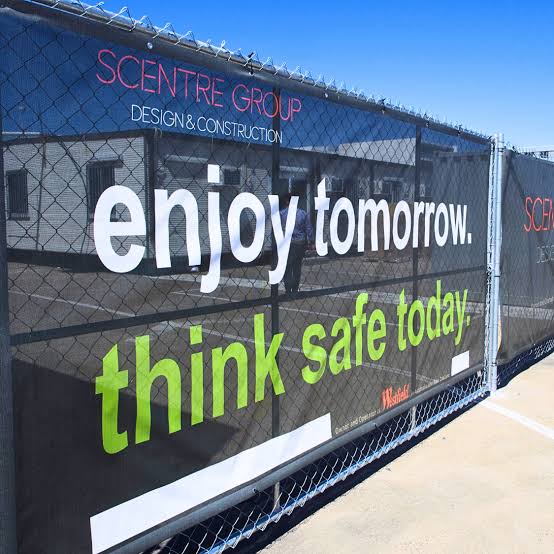
- Scaffolding enclosures and debris netting on high rise sites, where open mesh keeps wind load down and FR is a site safety condition.
- Tents, marquees and event structures, which are frequently tested as complete assemblies.
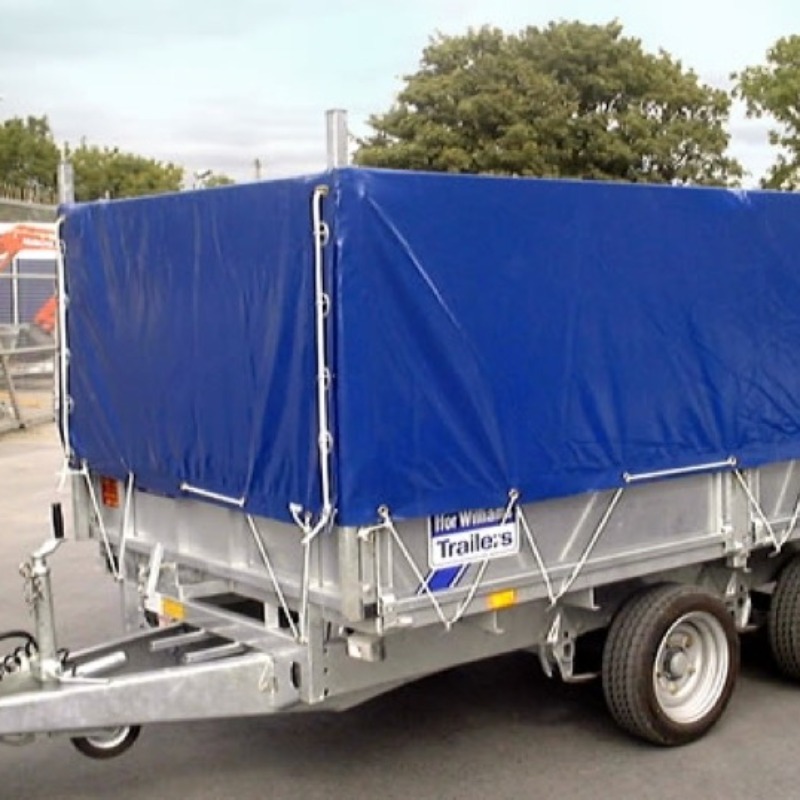
- Truck, trailer and container covers, especially where cargo or exhaust parts can reach high temperatures.
- Welding screens, curtains and machinery covers used near sparks and hot work.
- Temporary storage, warehouse separation and equipment protection in industrial halls.
- Agricultural covers and fruit picking bags that sit close to running machinery.
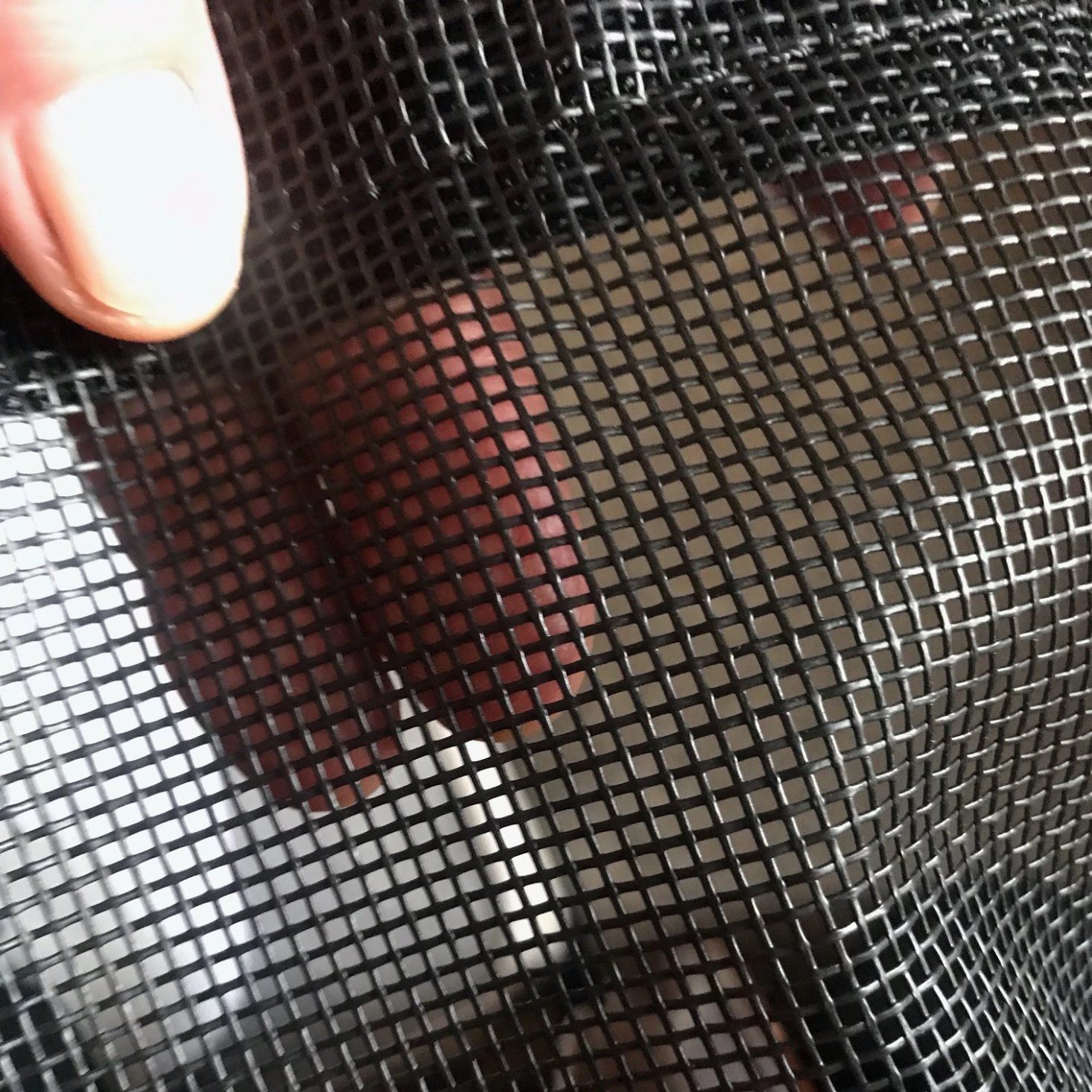
Construction work deserves a separate note, because the fabric there is usually a mesh rather than a solid sheet. An open PVC coated polyester mesh fabric gives the required airflow while keeping the flame spread, tear strength and UV performance that a temporary fence or safety barrier needs over a long site programme. If you want to compare the base materials first, this overview of what tarpaulin is usually made of is a useful starting point before you fix a specification.
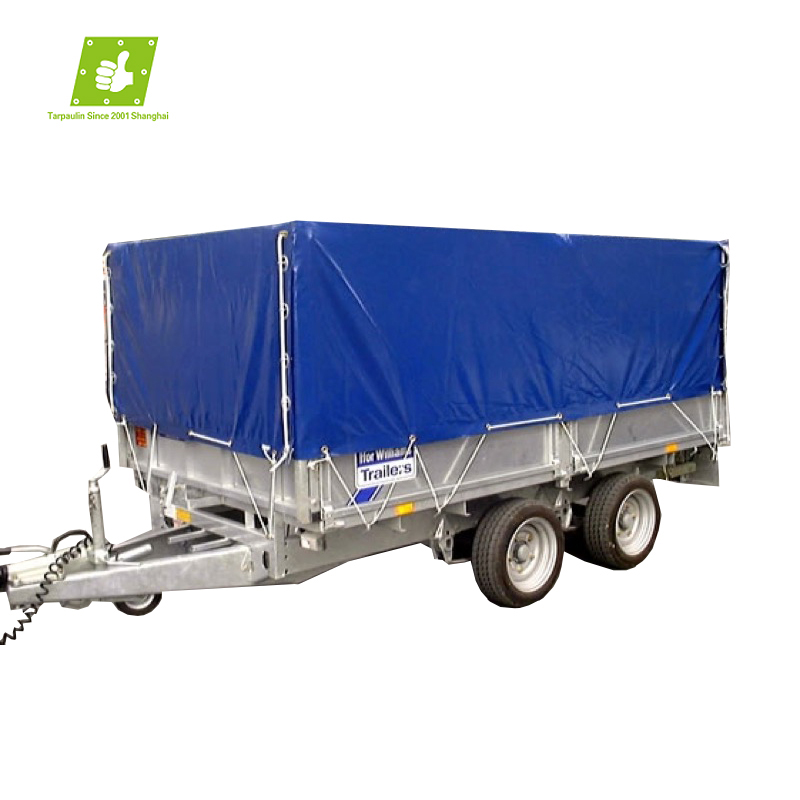 Waterproof Anti-UV Flame-Retardant PVC Coated Tarpaulin for Truck CoversCompare this heavy-duty PVC-coated tarpaulin for truck trailer covers, checking waterproof, UV, flame-retardant, pricing, and specification details before ordering.View Product →
Cost, MOQ and Delivery Questions Worth Asking
Fire retardant tarpaulin costs more than a standard sheet of the same weight, because the additive package is a real raw material cost and antimony and bromine based systems are volatile in price. A quotation that matches plain tarpaulin pricing should prompt questions about what is inside the compound. Before you commit, work through this list:
- Which standard does the roll pass, and can the report be matched to this weight and colour?
- What additive system is used, and how does the sheet behave at low temperature?
- What is the guaranteed weight tolerance per roll?
- How are seams joined on finished covers, and are the welded seams tested as well?
- Which roll widths are available, and can the width be set to your panel size to cut waste?
- What is the minimum order quantity per colour and per specification?
- What is the standard lead time, and what typically extends it?
- How is the finished product packed for sea freight, and is it protected from moisture and abrasion?
Storage, Cleaning and Repair Without Destroying the Rating
The FR chemistry in coated PVC sits inside the compound rather than on the surface, so it does not wash away the way a topical treatment on cotton canvas does. That said, abrasion, heat ageing and long UV exposure all reduce performance, and careless cleaning or repair can undo a good specification quickly.
- Clean with mild soap and water, rinse thoroughly and let the sheet dry completely before folding.
- Avoid solvent based cleaners, chlorinated products, strong acids and alkalis.
- Repair with the same FR material, welded or heat sealed, instead of a plain PVC patch fixed with adhesive.
- Store dry, off the ground and out of direct sun, and avoid folding along the same line every time.
Fire retardant tarpaulin is a specification decision, not a label. Decide which standard applies to your market, then fix the base cloth, the weight, the coating route, the seam method and the colour, and insist that the test report covers that exact combination. Get those five points onto one page and the price comparison becomes honest, because every supplier is quoting the same thing. If you want to move from a general enquiry to a workable offer, you can request a quote with the standard name, weight, size and destination port, and the technical review becomes far quicker for everyone involved.