
Call Us
+86-18962820095

 Español
Content
- 1 Match the Cover to the Component, Not to the Pallet
- 2 Five Failure Modes Behind Most Shipping Claims
- 3 How to Specify the Fabric
- 4 Fabric Weight by Component
- 5 UV, Heat and Time at the Port
- 6 Coated, Laminated or Woven Polyethylene
- 7 Blade Tips, Visibility and the Packing Sequence
- 8 What to Put in the Purchase Order
- 9 Practical Takeaway
A blade tip cap that costs less than a cup of coffee can still trigger a claim worth six figures if it fails at the wrong moment. Wind turbine components pass through at least four environments before they reach the site: the factory yard, an open air port, a sea crossing, and a marshalling area that may be gravel, sand or mud. Covers for wind turbine components during shipping therefore have a narrower job than general tarpaulins. They must resist wind flogging, shed water instead of trapping it, survive ultraviolet exposure for months rather than weeks, and stay in place without abrading the surface underneath.
For a nacelle, hub or gearbox the specification that satisfies all four conditions is usually 610 to 680 gsm PVC coated polyester with UV stabilization and flame treatment, cut and sewn to the component drawing instead of bought from a catalogue. The sections below show how that conclusion is reached, which components need which level of protection, and where cheap alternatives quietly fail.
Match the Cover to the Component, Not to the Pallet
A single blanket specification for a whole shipment is the most common source of overspending and under protection at the same time. A tower flange cap needs water shedding and little else, while a hub cover has to survive being dragged across a concrete quay. Splitting the shipment into protection levels keeps cost where it belongs.
- Blade tips: 300 to 400 gsm high visibility sleeve with foam padding and a reflective strip.
- Blade body and root: 550 to 610 gsm full length sock, vented at the top to release condensation.
- Hub and nacelle: 610 to 680 gsm tailored cover with reinforced tie down points.
- Tower sections and flanges: 610 to 680 gsm end caps closed with drawcords.
- Gearbox, generator and drivetrain: 650 to 700 gsm waterproof cover with lifting loops.
Cut size deserves the same attention. A cover that matches the component dimensions exactly will fail at the first gust, so most buyers specify an overlap of 150 to 200 mm at each open end and a finished size tolerance of plus or minus 2 percent. Anything beyond that either flaps or traps water in a fold.
Five Failure Modes Behind Most Shipping Claims
Damage reports from wind logistics rarely describe one dramatic event. They describe repeated small stresses that a cover was never designed to absorb. Knowing which mode dominates a route tells you which property of the fabric has to be raised.
The chart above summarizes how shipping and storage claims are typically distributed across causes. Abrasion from strapping and vibration is the largest single cause, which is why webbing contact points should be reinforced with a fabric patch rather than left bare. Water ingress and condensation together account for nearly a quarter of reported problems, and most of that water enters through an open end or an unsealed seam rather than through the coated face. Ultraviolet degradation is often missed because the cover still looks intact, while the surface has simply lost tensile strength during the wait for a vessel. Handling impact and salt spray complete the list, and both are strongly route dependent, with offshore marshalling yards seeing far more salt exposure than inland rail terminals. If a route scores high on two or more of these modes, the sensible response is a heavier coated fabric with welded or taped seams rather than extra layers of low grade material.
How to Specify the Fabric
Fabric selection comes down to four decisions: base cloth, coating weight, stabilization package and finishing. The base cloth sets the strength, the coating weight sets abrasion and water resistance, the stabilization package sets how long the cover lasts outdoors, and the finishing decides whether it stays on the component at highway speed.
| Specification Item | Typical Requirement | Why It Matters |
|---|---|---|
| Base Cloth | 1000D to 1300D polyester weave | Sets tear and puncture resistance |
| Coated Weight | 610 to 680 gsm | Abrasion life under constant vibration |
| Coating | PVC on both faces | Water shedding and weldability |
| UV Package | 1000 hours exposure, 80% tensile retention | Multi month port storage |
| Flame Treatment | Self extinguishing to NFPA 701 or equivalent | Container and warehouse rules |
| Cold Flex | No cracking at minus 30 C | Winter rail and air freight |
| Grommets | Metal, 500 to 600 mm spacing | Even load without tearing out |
| Seams | Double stitched lock stitch or welded | Holds shape under wind load |
Buyers who are unsure which base cloth suits a given component can start from a general explanation of how tarpaulin materials are classified and then narrow the choice by weight. In practice the difference between a 550 gsm and a 680 gsm cover is not only strength, it is also handling, because a heavier cover takes two people to lift on and off a hub.
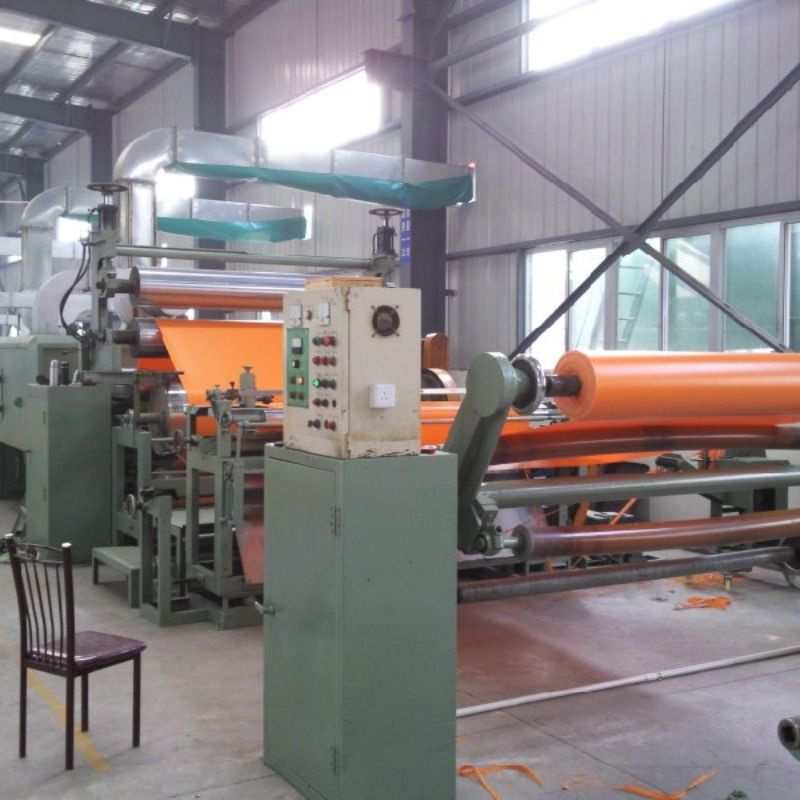 18oz 600gsm Waterproof Heavy Duty Vinyl Coated Polyester Tarp Fireproof Flame Retardant PVPVC coated tarpaulin is industrial grade for heavy-duty outdoors use. It is waterproof and has high abrasion and tear strength. It is effective against oil, acid, grea...View Product →
Fabric Weight by Component
Weight is the fastest way to compare two quotes, but only when both offers describe it the same way. Some suppliers quote the coated weight, others quote the base cloth weight, and the gap between the two can exceed 200 gsm on the same product.
The bars show the coated fabric weight normally specified for each component class. Blade tips sit at the light end because the sleeve has to be carried up a ladder and fitted by hand, and a 300 gsm high visibility material does that job better than a heavy one. Nacelle and gearbox covers sit at the heavy end because they are dragged, stacked and exposed to the highest wind load on deck. Tower section caps are close behind, since they must hold their shape around a flange and resist flapping against sharp edges. If a quotation offers the same weight for every component on the list, treat it as a sign that the supplier has not looked at the drawings. Weight alone does not guarantee performance, but a cover 100 gsm lighter than the figure in this chart will normally need replacing sooner on an exposed route.
WATERPROOF HEAVY DUTY BAG TENT CAMPING PILYESTER TARP 500D 840D 1000D 1300D PVC TARPAULIN PVC coated tarpaulin is industrial grade for heavy-duty outdoors use. It is waterproof and has high abrasion and tear strength. It is effective against oil, acid, grea...View Product →UV, Heat and Time at the Port
Port storage is the part of the journey that buyers control least and underestimate most. A component can wait three weeks on a quay in full sun before the vessel berths, and the cover absorbs that exposure on its behalf.
The chart compares tensile strength retention for UV stabilized PVC coated polyester and untreated woven polyethylene over 24 months outdoors. The coated fabric stays above the 80 percent threshold that many buyers use as a replacement trigger, while the untreated cover drops below it inside the first year. The shape of the decline matters as much as the end point, because stabilized PVC loses strength slowly and predictably, which makes planned replacement possible. Untreated polyethylene fails suddenly, usually as a split along a fold line, and that is exactly the failure that lets water reach a machined surface. Heat compounds the effect, since a dark cover over a steel surface can pass 70 C in summer, softening the coating and accelerating plasticizer migration. A light grey or white top surface, or a reflective stripe, lowers that peak temperature and extends service life at very little extra cost.
Coated, Laminated or Woven Polyethylene
Three material families appear in most tenders, and each has a legitimate place. The comparison below scores them on the properties that decide whether a cover survives a wind logistics route.
The radar chart scores three common cover materials from one to five across six properties. PVC coated polyester takes the highest scores on water shedding, tear strength, UV retention and reusability, which is why coated tarpaulin fabric dominates nacelle, hub and tower applications. Laminated PVC is close behind and slightly more flexible in cold weather, but its lower UV retention makes it a better fit for short domestic routes than for a 40 day sea crossing. Woven polyethylene scores well only on flexibility, and its low reusability means it is normally treated as a one way item rather than an asset that returns with the next project. The shape of each polygon is more useful than the total score, because a route that never freezes will not care about cold flexibility, while a route with two transshipments will care a great deal about tear strength. Buyers who reuse covers across three or four shipments usually find the coated option cheaper per trip even when it costs more per square meter.
Blade Tips, Visibility and the Packing Sequence
Blade tips deserve separate treatment because they are the most fragile and the most visible part of a shipment. A tip cover is really two products in one: impact padding that prevents gelcoat damage, and a visibility aid that reduces the chance of a yard vehicle clipping the blade. Bright color, reflective bands and clear orientation markings are worth more than extra thickness, because most tip damage happens during handling rather than during the sea crossing. A good cover still fails if the packing sequence is wrong, so the following order of work is worth writing into the method statement.
- Dry and clean the component surface, and photograph its condition before covering.
- Fit any desiccant or breather bag required by the specification, then seal internal openings.
- Place foam or rubber edge protection on sharp corners, flanges and lifting lugs.
- Fit the cover from the highest point downwards so water never runs into an open end.
- Close drawcords and vents, then tension webbing evenly by hand before final tightening.
- Apply a numbered seal at each closing point and record the numbers on the packing list.
Teams that prefer not to sew in house can order finished covers cut to the component drawing, with tie down points, vents, reflective striping and printing already applied, which removes most of the variation between one packing line and the next.
 Waterproof Heavy duty polyester tent awning fabric Finished tarp waterproof pvc truck traiFinished PVC tarpaulin is a large piece of waterproof material commonly used to protect things from damage. It is waterproof ,durable, affordable, and versatile, They ...View Product →
What to Put in the Purchase Order
A cover specification is only enforceable when it is written down. These are the items that most often cause a dispute when they are left out.
- Coated weight in gsm, with a tolerance of plus or minus 5 percent.
- Base cloth yarn count, for example 1000D, and the weave type.
- Finished dimensions plus the required overlap at each open end.
- Color, and whether the top surface must be light to reduce heat build up.
- UV retention target, with the test method and exposure hours.
- Flame test standard and the certificate that must accompany delivery.
- Grommet type, spacing and pull out requirement.
- Seam type and stitch density, or the welding method.
- Marking and printing, including serial numbers and orientation arrows.
Practical Takeaway
Wind turbine components are covered for weeks and inspected for years, so the cover is a small line in the budget with an outsized influence on the claim record. Decide the protection level component by component, write fabric weight, base cloth and stabilization requirements into the order, and check the finishing details that decide whether the cover stays on at sea. Buyers who do that usually spend about the same as before, on fewer covers that return for the next project instead of going into a skip at the port.