
Call Us
+86-18962820095

 Español
Content
A container tarpaulin rarely fails in the middle of the panel. It fails at the eyelet, along the hem, or at the welded seam where the fabric rubs a corner casting, and the cargo is wet before anyone notices. That pattern explains most of the decisions on this page. Choose fabric weight from handling and wind load, choose yarn count from the abrasion the cover will see, and treat hem, eyelet spacing and corner reinforcement as part of the specification rather than as accessories. Get those four things right and a cover survives several seasons of port handling instead of one monsoon.
What a Container Tarpaulin Has to Do
Container tarpaulin is a working term rather than a single product, and the job decides the specification. Four situations cover most orders:
- Open top and flat rack covers span a 20 ft or 40 ft opening at container height and flap at highway speed, which loads the eyelets far more than rain does.
- Flatbed and trailer covers are handled several times a day and dragged over steel edges.
- Side curtains on container carrying trailers stay fixed to the frame, so wear lands on the top rail instead of the corners.
- Static yard covers may sit for months, where UV stability matters more than handling strength.
All four need a watertight welded seam and reinforcement where fabric meets steel. They do not need the same weight, and that is where most over and under specification happens.
Fabric Construction: Reading 500D, 550 gsm and 18oz
Two numbers describe most of a container tarpaulin. The first is base yarn denier, written as 500D, 840D, 1000D or 1300D. The second is finished weight in grams per square metre, usually 550 to 680 gsm for container work. Heavier yarn builds a coarser scrim and raises tensile and tear strength, while heavier finished weight adds PVC, which improves hydrostatic resistance and UV shielding.
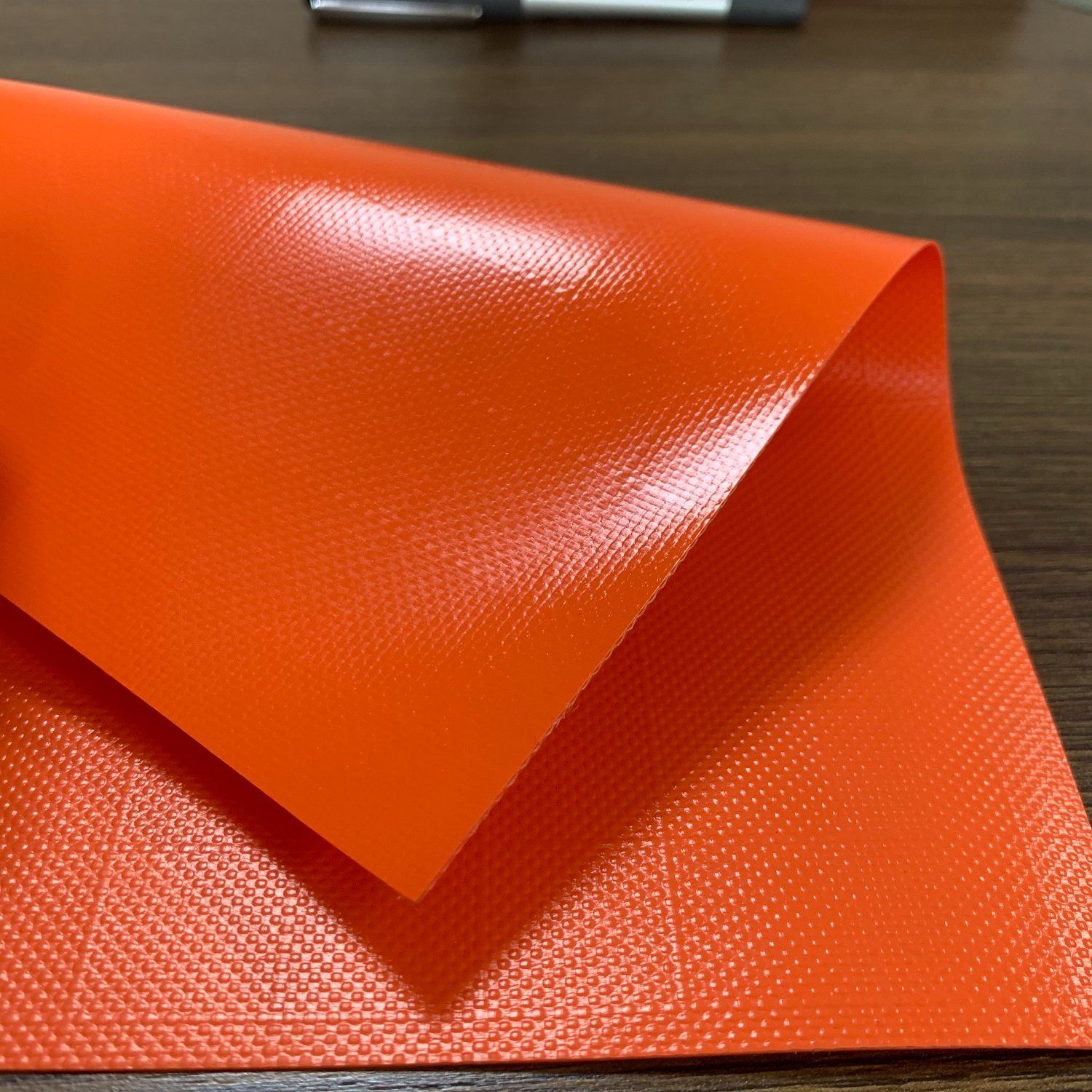
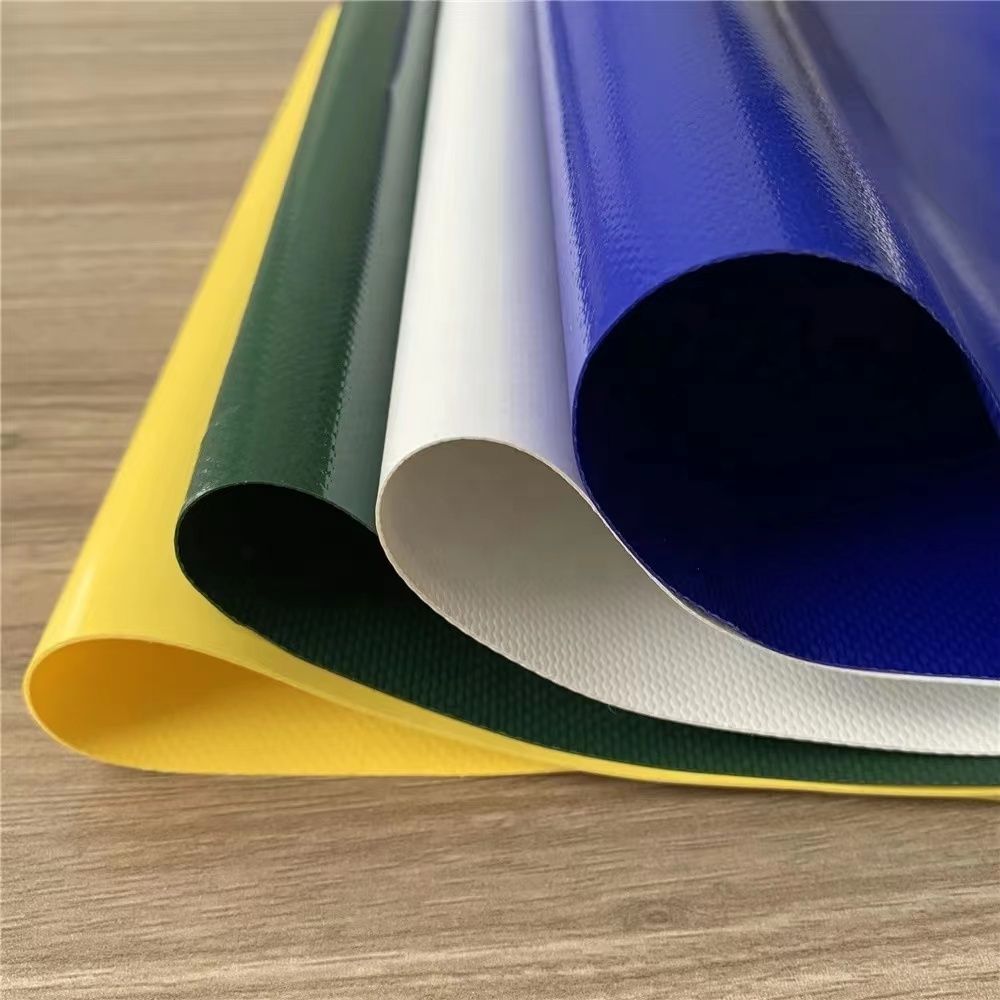
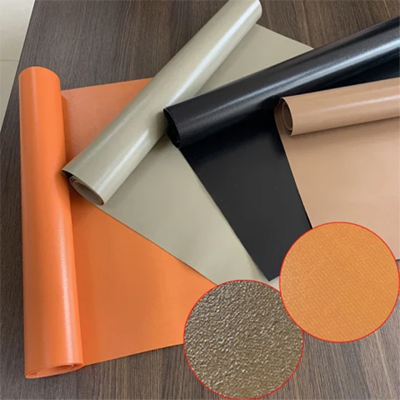
The base fabric is almost always woven polyester, coated or laminated with plasticised PVC. Coating presses PVC into the weave and gives a stiffer hand; lamination bonds film to each face and gives a softer fabric with a sharper print surface. Both are waterproof once the seam is welded, because stitching leaves needle holes that wick water. Our note on what container tarpaulin is usually made of explains those differences in more detail.
18oz is the common shorthand in North America and the Gulf and equals about 610 gsm. Confirm which unit a supplier is quoting, because 18oz and 610 gsm describe the same specification while 550 gsm and 650 gsm do not.
| Base Yarn | Finished Weight | Warp Tensile, Typical | Common Use | Handling Note |
|---|---|---|---|---|
| 500D | 500 to 550 gsm | 1100 to 1300 N/5 cm | Pallet covers, light yard covers | Light rolls, one person can handle a 20 ft sheet |
| 840D | 600 to 610 gsm | 1500 to 1700 N/5 cm | Container side curtains, trailer tops | Best balance of strength and drape |
| 1000D | 610 to 650 gsm | 2000 to 2300 N/5 cm | Flat rack and flatbed covers | Needs a reinforced hem and closer eyelets |
| 1300D | 650 to 680 gsm | 2500 to 2900 N/5 cm | Heavy haulage, mining, long reuse cycles | Stiffer and heavier, more freight per metre |
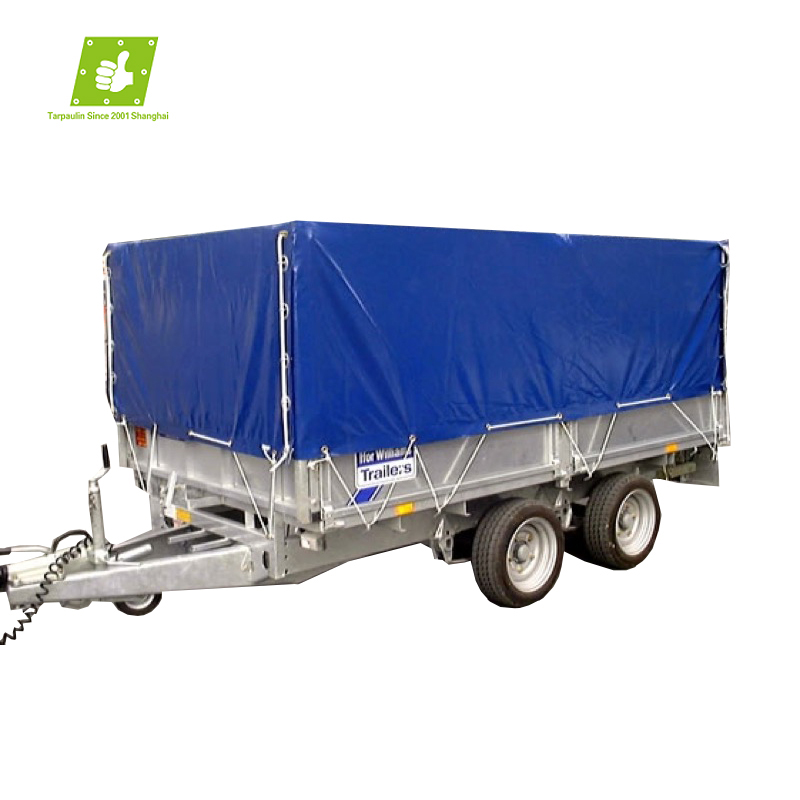 Waterproof Anti Uv Flame Retardant Heavy Duty Flexible High Strength Pvc Coated Tarpaulin PVC coated tarpaulin is industrial grade for heavy-duty outdoors use. It is waterproof and has high abrasion and tear strength. It is effective against oil, acid, grea...View Product →
Matching Fabric Weight to the Load
Tensile strength tracks yarn count more reliably than finished weight. Moving from 500D to 1000D roughly doubles warp breaking strength while finished weight rises by only about twenty percent, so two fabrics that feel similar in the hand behave very differently under wind load. For covers that flap, choose on yarn count first and weight second.
Typical warp breaking strength by yarn count
Values in N/5 cm, indicative for new PVC coated polyester tarpaulin.
The chart compares indicative warp breaking strength for four constructions that appear in container and trailer work. The 500D grade suits pallet covers and light yard use where the sheet is rarely handled. The 840D grade is the general purpose choice for container side curtains and trailer tops. The 1000D grade is what we normally recommend for flat rack and flatbed covers that get dragged across steel. The 1300D grade adds further margin but stiffens the fabric and increases roll weight, so confirm that the fixing hardware and the people handling the sheet can carry it. If a quotation lists weight but not denier, ask for the missing number before comparing prices.
Sunlight, Rain and Working Life
UV exposure is the slowest and most predictable failure mode. PVC is vulnerable to ultraviolet light, and mills add stabilisers and pigments to slow the reaction. The difference between stabilised and unstabilised fabric appears after the first year rather than the first month, so a UV claim should be tied to a tested exposure figure rather than to a colour.
Retained tensile strength over outdoor exposure
UV stabilised fabricUnstabilised fabric
Retained tensile strength, percentage of original value, for the same base construction.
The two lines show retained tensile strength over months of outdoor exposure for a stabilised and an unstabilised fabric of identical base construction. Both start at 100 percent, because new fabric is new fabric. After twelve months the unstabilised fabric has lost about a quarter of its strength while the stabilised fabric is still above 90 percent. The gap widens through the second year, and once retention drops below roughly 70 percent the sheet tears at the eyelet instead of stretching. That is why we ask buyers for the destination climate, since a cover specified for Rotterdam is not the same cover as one specified for Jebel Ali. Flame retardant and UV resistant grades are worth pricing together rather than separately.
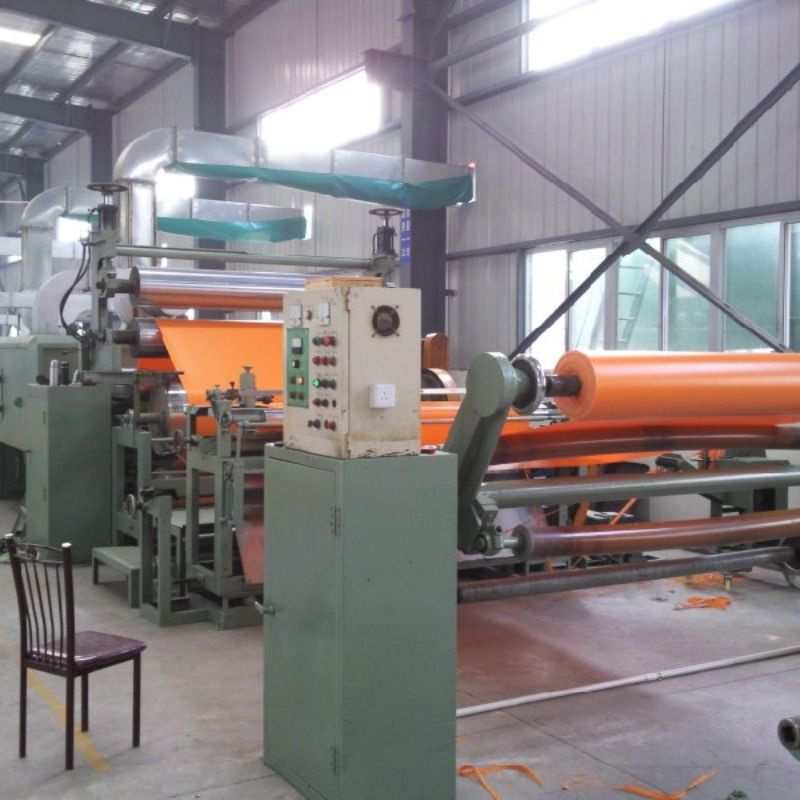 18oz 600gsm Waterproof Heavy Duty Vinyl Coated Polyester Tarp Fireproof Flame Retardant PVPVC coated tarpaulin is industrial grade for heavy-duty outdoors use. It is waterproof and has high abrasion and tear strength. It is effective against oil, acid, grea...View Product →
Two Grades Side by Side
Two grades that sit close in price can differ in ways that only appear after a season of use. Comparing them on five axes shows the trade offs more clearly than a single weight figure.
Relative profile: 550 gsm versus 650 gsm coated fabric
650 gsm coated550 gsm coated
Relative index from 0 to 100. Rings mark the 25, 50, 75 and 100 levels.
The radar compares a 550 gsm coated fabric with a 650 gsm coated fabric on a relative scale from zero to one hundred. The heavier grade leads clearly on tensile and tear strength, which is what matters when a cover is dragged over container corners. The lighter grade wins on cold flexibility and on cost efficiency, and it still carries enough UV protection for static yard use. Neither grade is better in absolute terms, because they simply answer different questions. If handling is frequent and manual, choose the lighter grade; if the sheet is machine lifted or exposed to constant abrasion, choose the heavier one. Flame retardant formulations add a further variable, since the additives that suppress flame spread slightly reduce tear strength at the same weight.
Sizing, Eyelets and Fixing Hardware
Sizing decides whether the cover protects cargo at all. A sheet that only spans the opening lets driving rain run under the edge, so allow at least 200 mm of overhang on each side and preferably 300 mm on a flat rack. Use the actual external dimensions of the container or trailer rather than the nominal size, because corner castings, twist locks and door hardware all add width.
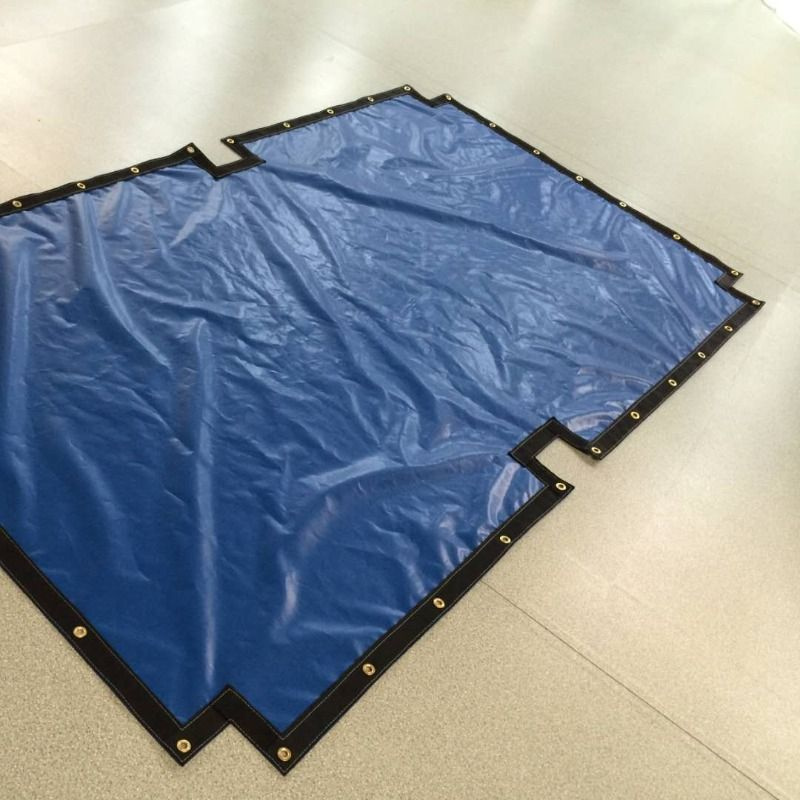
Reinforcement matters more than weight in this section. A double folded hem with a rope or webbing insert spreads load along the edge and stops eyelets tearing out. Eyelets at 500 to 600 mm spacing are standard for container work, and stainless steel or brass eyelets outlast plain aluminium in coastal air. Corner plates, D rings and tensioning straps are worth pricing at quotation stage, because retro fitting them later costs more than the original cover. Where a cover has to follow a non standard container or trailer, a finished cover cut and welded to size usually beats adapting a stock sheet.
 Waterproof Heavy duty polyester tent awning fabric Finished tarp waterproof pvc truck traiFinished PVC tarpaulin is a large piece of waterproof material commonly used to protect things from damage. It is waterproof ,durable, affordable, and versatile, They ...View Product →
Ordering Quantities, Packing and Inspection
Freight is part of the fabric price. A 20 ft container fills by volume rather than weight on most PVC tarpaulin orders, so a heavier fabric means fewer metres per load even when the invoice shows the same roll count. Plan on landed cost per square metre rather than cost per kilogram.
Relative metres per 20 ft load by finished weight
100
92
85
78
550 gsm600 gsm650 gsm680 gsm
Relative index, 550 gsm set at 100, for the same roll width and core size.
The columns show a relative load quantity index with 550 gsm set at 100. Moving to 600 gsm reduces the metres that fit in a standard 20 ft load by roughly eight percent, and 650 gsm reduces it by about fifteen percent. That difference is often larger than the price gap between the two grades, which is why a heavier fabric can look cheap per kilogram and expensive per square metre. Add packing, pallet height and any print or label work to the calculation before comparing quotations. Where a project mixes two weights, ordering them on separate purchase orders keeps the freight comparison readable. Our PVC tarpaulin range covers the standard constructions, and a single sample roll usually settles the grade question faster than a specification sheet.
Inspection is the last cheap step. Ask for warp and weft tensile figures, tear strength, finished weight with its tolerance, the UV test method and the eyelet spacing before approving a sample. Confirm hem construction and hardware grade in writing, and specify packing so rolls arrive without hard creases that become weak lines in service. A mill that answers those questions quickly will usually answer them again when a claim arrives.
A container tarpaulin is judged on the day it comes off, not on the day it arrives. Work back from the way the cover will be handled at the destination, pick the yarn count that matches the abrasion, add the UV and flame performance the route demands, and finish the specification with hem, eyelet and corner details. That sequence produces fewer surprises than choosing on price per kilogram, and it gives both buyer and mill a written basis for comparison.