
Call Us
+86-18962820095

 Español
Content
- 1 What Makes a Truck Tarp Commercial Grade
- 2 PVC Coated or PVC Laminated: Which Construction Fits Your Fleet?
- 3 Match the Tarp to the Truck: Weight and Denier
- 4 UV Exposure Is the Silent Killer of Truck Tarps
- 5 Seams, Hems, and Grommets Decide How Long the Cover Lasts
- 6 Cost per Trip, Not Price per Tarp
- 7 Custom Sizing: What to Send to the Factory
A logistics manager in a mid-size trucking fleet pulls a 6 by 8 meter PVC cover over a flatbed load two minutes before a storm cell arrives. Whether the cargo stays dry has already been decided weeks earlier, at the purchasing desk. The tarpaulin chosen for that trailer must survive heat, UV radiation, road vibration, and the daily pull-and-tighten cycle. If any one of those conditions overwhelms the material, water finds the gap.
The conclusion is simple: commercial tarps for trucking fail in a predictable order. The base fabric loses tear strength, the PVC glaze stiffens and cracks, then the hem and grommets give way. Buyers who order by weight alone, without checking the base denier and the coating method, pay for the mistake twice. This guide walks through the three specifications that separate a reliable truck tarp from a disposable cover: base fabric denier, finished GSM weight, and the PVC coating or lamination process.
What Makes a Truck Tarp Commercial Grade
A commercial truck tarp is not a retail cover with a higher price. It starts with a woven polyester base cloth, almost always measured in denier, and a PVC compound that is either coated onto that cloth or laminated onto it as a film. The two numbers that matter at the first stage of selection are the base denier and the finished weight per square meter, usually written as GSM.
Base fabric denier
Denier is the linear density of the polyester yarn. A 500D fabric is light and easy to fold, while 1000D or 1300D cloth delivers the puncture and tear resistance needed for abrasive loads such as gravel, scrap, or construction debris. Most flatbed operators find that 840D to 1000D gives the best balance between strength and daily handling.
The chart compares the relative tear strength of the four most common polyester base fabrics used in commercial truck tarps. Tear strength rises quickly with denier, which is why 1300D cloth is preferred for dump trailers and scrap haulers. A 500D fabric is lighter and easier to fold, which matters on flatbeds where drivers handle covers manually several times a day. The trade-off is a shorter service life against sharp or abrasive cargo. Most fleet operators settle on 840D to 1000D as the balanced zone because it keeps enough strength without turning the cover into a heavy bundle. These values are relative, not absolute, because final tear resistance also depends on PVC weight and weave density.
Finished weight in grams per square meter
The GSM number tells you how much PVC sits on the cloth. A 450 to 500 GSM tarp is fine for light boxes and occasional use. A 550 to 600 GSM cover handles flatbed freight in mixed weather. The 600 to 650 GSM range is the standard for dump trucks, containers, and any operation where the cover is dragged over rough surfaces. Always confirm that the supplier is quoting the weight of the finished composite, not just the PVC film.
PVC Coated or PVC Laminated: Which Construction Fits Your Fleet?
Both coated and laminated tarpaulins are waterproof, but the way the PVC bonds to the polyester base changes how the cover behaves in cold weather, how it folds, and where it fails first. Coated tarpaulin is made by spreading liquid PVC compound into the woven cloth and curing it, so the polymer locks around every yarn. Laminated tarpaulin is made by pressing a pre-cast PVC film onto the cloth with heat and pressure, which produces a smoother and more uniform surface.
| Comparison factor | PVC coated tarpaulin | PVC laminated tarpaulin |
|---|---|---|
| Production method | Liquid PVC cured into the woven base | Pre-made PVC film bonded with heat and pressure |
| Surface feel | Slightly textured with a matte finish | Smoother and more uniform |
| Cold weather flexibility | Usually stays more flexible as the compound penetrates the yarns | Can stiffen if the film formulation is not plasticized for low temperatures |
| Typical use in trucking | Flatbed covers, side curtains, machine covers | Dump bodies, container tops, printed covers |
| Main failure risk | Surface abrasion if the coating weight is low | Delamination if the film bond is weakened by heat |
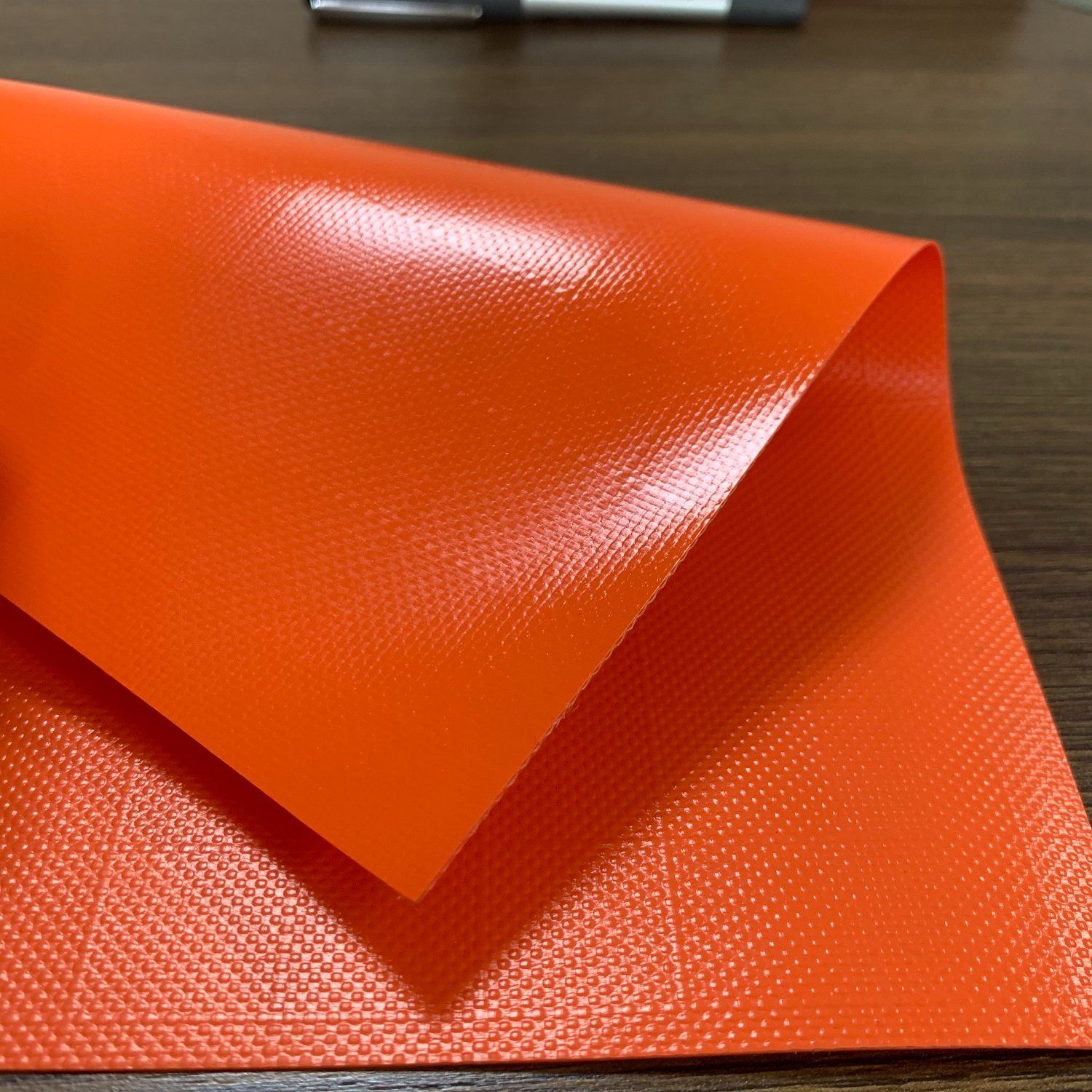
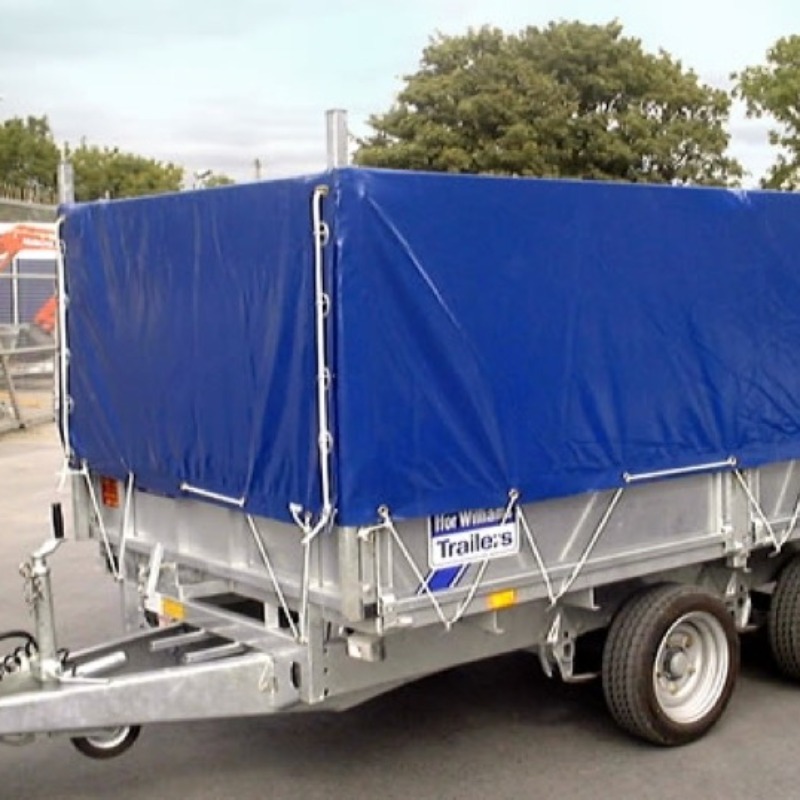
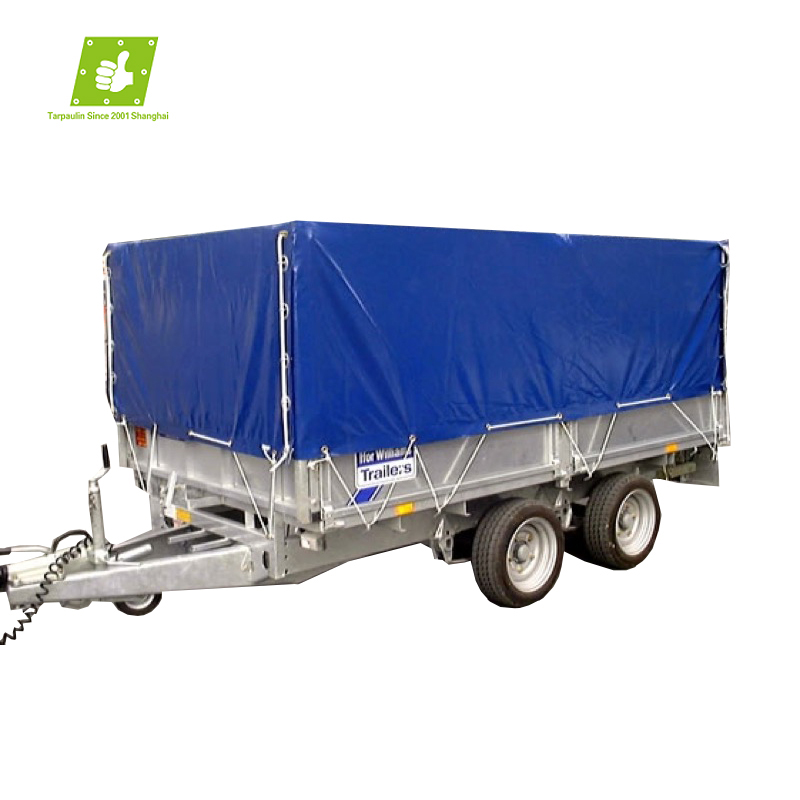 Flexible PVC Coated Heavy Duty Tarpaulin for Truck TrailersThis coated tarpaulin resists crease lines from repeated folding, making it a practical choice for flatbed operations where covers are cycled frequently on every load.View Product →
For flatbed operations where the cover is folded, pulled, and retied on every load, the coated construction usually wins because it does not develop the stiff crease lines that laminated film shows after repeated folding. The PVC coated heavy-duty tarpaulin combines a flexible coating with high tear resistance for this exact duty. If the trailer only opens a few times a week, a laminated cover offers a cleaner look and a very even waterproof layer.
Match the Tarp to the Truck: Weight and Denier
There is no universal truck tarp. A 500D cover at 450 GSM is acceptable for a box truck carrying clean cartons on short urban routes. A 1300D cover at 650 GSM is the realistic minimum for a tipper hauling recycled metal or demolition waste. Fleets that standardize on a single specification usually overpay on light routes and under-protect the heavy ones, which is an expensive combination.
The column chart compares realistic service life for four truck tarpaulin specifications under continuous outdoor service. The jump from 840D to 1000D is significant because the heavier weave resists the repeated flexing and edge abrasion that kill a cover on gravel roads. The 1300D heavy-duty construction reaches about four and a half years in the same conditions. These figures assume a UV-stabilized formulation; without it, every column in this chart loses about a third of its value. Route frequency matters as well. A cover opened and closed once a week will last longer than a dump cover cycled several times per day.
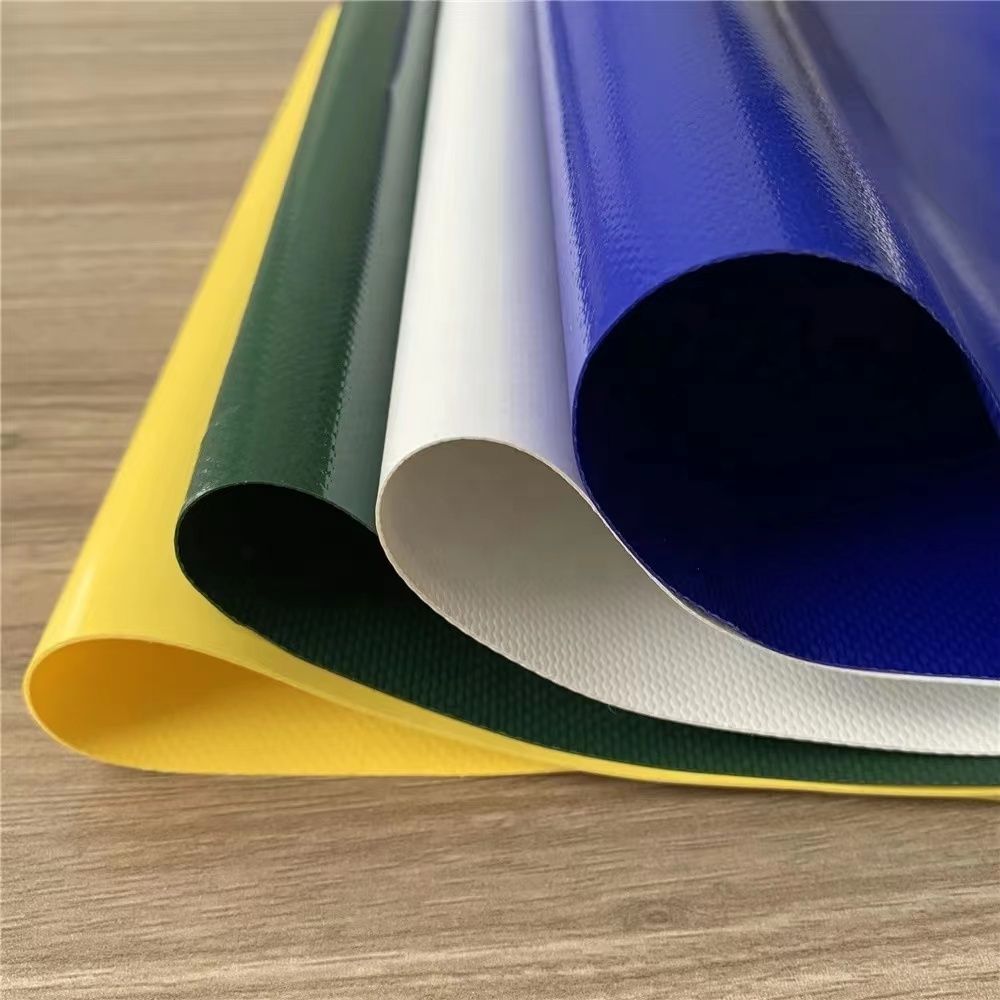
 High Strength Polyester PVC Canvas for Humid Coastal RoutesWith UV-treated, waterproof construction and strength suited for international trucking, this fabric suits routes with high humidity and frequent cover handling.View Product →
When the route is a long coastal corridor with high humidity, the winning formula is a high-strength waterproof polyester truck cover fabric with UV treatment. Do not mix grams and ounces when comparing international suppliers. An 18 oz per square yard cover is roughly equal to 600 GSM, and confusing the two units is a common cause of unexpectedly thin tarps.
UV Exposure Is the Silent Killer of Truck Tarps
Rain usually takes the blame, but sunlight does the first damage. Ultraviolet light breaks down the plasticizers in PVC, the compounds that keep the film soft. As plasticizers migrate to the surface and evaporate, the tarp stiffens, becomes chalky, and cracks along fold lines. After that, water wicks into the exposed polyester scrim and the cover fails from the inside out.
The line chart shows how tensile strength retention falls during 36 months of continuous outdoor exposure. The unstabilized PVC line drops below 50 percent of its original strength by month 24. The UV-stabilized line remains near 80 percent in the same period. That gap explains why a cheap tarp can fail during its second rainy season while a stabilized cover keeps working into its fourth year. Heat accelerates the same degradation, so tarps on dark-colored truck bodies age faster than those on lighter surfaces. When you request the specification, ask for UV stabilizers in the PVC compound itself, not only a UV-resistant top coat.
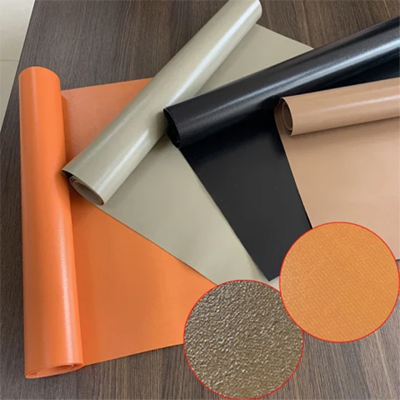
UV Stabilized Heavy Duty Vinyl Tarpaulin for Long-Term Outdoor UseThis PVC tarpaulin is built to retain tensile strength during prolonged sun exposure, relevant for fleets needing reliable performance through multiple seasons.View Product →
For fleets that operate in desert climates or at high altitude, UV life belongs in the written specification. Ask the factory which UV test method they follow, for example a cyclic xenon exposure standard, and what tensile strength retention they guarantee after 2000 hours. A supplier who cannot answer that question has probably never measured it. The visual check is just as reliable: if a one-year-old tarp feels tacky or looks chalky, the formulation lacks adequate stabilization.
Seams, Hems, and Grommets Decide How Long the Cover Lasts
The flat area of a tarp is rarely the first point of failure. The hem, the grommets, and the seam are. A factory-quality truck tarp should include the following details:
- Double-folded hems with a minimum 20 mm fold on all four sides.
- A rope-reinforced hem on dump truck covers to spread the load when straps are tightened.
- Corner patches made from two or three extra layers of PVC to resist the highest stress points.
- Grommets spaced at 25 to 30 cm for flatbed covers and 30 to 50 cm for dump covers.
- Brass or stainless steel grommets with an inner diameter of at least 12 mm so standard hooks fit without prying.
- Welded seams instead of simple stitched seams on any cover that must keep water out after hours of highway rain.
Before placing a bulk order, ask for a sample corner with the finished hem, one grommet, and a representative seam. Fold it, wet it, and pull it with your own hands. That physical sample tells you more about sewing quality and material consistency than any datasheet. The same sample also lets you confirm the actual GSM and the feel of the coating.
Cost per Trip, Not Price per Tarp
A 550 GSM tarp that fails in 14 months can cost more than a 650 GSM tarp that lasts 42 months. If the lighter cover costs USD 38 and the heavier one costs USD 61, the light cover costs USD 2.71 per month of service while the heavy cover costs USD 1.45 per month. The higher invoice price is the cheaper purchase once the actual service life is included.
Add labor to the calculation. Every unscheduled re-cover consumes driver time, replacement straps, and perhaps a rejected delivery. When comparing quotes, review the complete tarpaulin product range on our site and ask suppliers to state their expected service life for your specific route profile. The cheapest cover in the catalog is rarely the cheapest cover in the fleet.
Custom Sizing: What to Send to the Factory
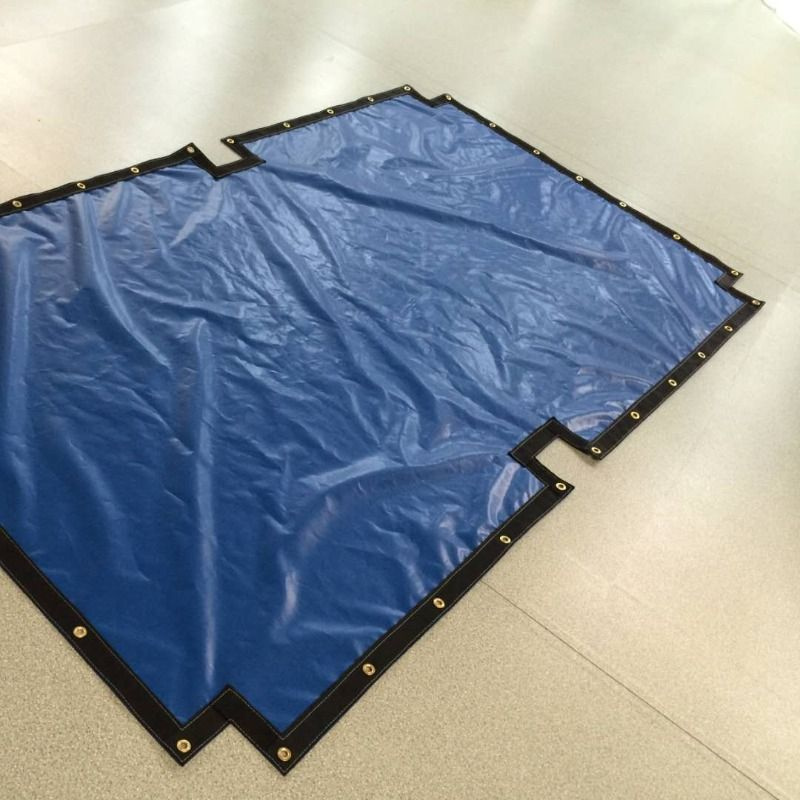
Few fleets use exactly the same cover on every trailer, and a standard size rarely fits a lowboy, a step deck, and a dump body with the same efficiency. Custom fabrication is where a manufacturer adds the most value. When you request a quote, provide the trailer deck length and width, the required drop and overhang on each side, the preferred fold direction, the number and spacing of grommets, the hem style, and the color.
Economy grade (500D 450g) Standard grade (840D 550g) Heavy-duty grade (1000D 600g)
The radar chart compares three typical truck tarpaulin specifications across five operating factors. The economy grade wins on handling flexibility and cost efficiency, but its weak UV life forces a much shorter replacement cycle. The heavy-duty grade dominates tear resistance, abrasion resistance, and UV life, while suffering in handling and initial cost. The standard grade sits between the two and represents the most common choice for mixed fleets. A balanced polygon with no deep inward corners indicates a more predictable service record. Use this comparison to align the specification with the actual routes and cargo mix instead of the price list alone.
Also describe the operating condition when you contact the factory. A tarp that will sit on a vibrating dump body needs a different reinforcement pattern than one that rides on a smooth flatbed. If you want to understand how the base material is selected before you send the order, our guide to the most common tarpaulin raw materials explains the trade-offs in plain language. Send the factory a sample or a sketch of your current cover, and ask for a pre-production sample before you standardize the specification across the fleet.
Commercial tarps for trucking are a specification decision, not a commodity purchase. Select the base denier to match the abrasiveness of the cargo, choose coated or laminated construction to match the way drivers handle the cover, demand UV-stabilized PVC when trucks work under strong sun, and verify the hem and grommet details on a physical sample. Do this once, standardize the specification, and the tarp becomes the most reliable and least expensive part of the load security system.