
Call Us
+86-18962820095

 Español
Content
- 1 What a Commercial Awning Fabric Has to Survive
- 2 The Material Options at a Glance
- 3 Why PVC-Coated Polyester Works for Commercial Installations
- 4 The Specifications That Predict Real-World Durability
- 5 Match the Fabric to the Specific Installation
- 6 Installation and Maintenance Mistakes That Shorten Fabric Life
- 7 The Bottom Line
A storefront owner in a coastal city had to replace her awning fabric twice within five years. The first material was an inexpensive cotton canvas that rotted where rainwater pooled at the seams. The second was a low-grade vinyl that turned stiff, cracked along the folds, and faded unevenly under direct sun. The third installation, a PVC-coated polyester fabric with UV inhibitors, has now completed its third season without visible wear. That experience is common across commercial properties, because the fabric is often asked to carry loads it was never designed for. The solution is not a more expensive brand, but a deliberate match between the material specification and the site conditions.
What a Commercial Awning Fabric Has to Survive
Commercial awnings are different from residential ones in several concrete ways. They cover larger spans, which puts more wind load on every panel. They stay in position for long daytime hours, so ultraviolet light has more time to break down polymers. They are often mounted over doorways and sidewalks, which makes water runoff and ice formation a liability issue. In many municipalities, a commercial canopy must also meet a flame-spread standard, which eliminates several plain fabrics.
Those conditions translate into five properties you should be able to confirm before ordering: waterproofness, UV resistance, flame resistance, tear strength, and dimensional stability. A fabric that scores well on only two or three of these will typically fail within a few years of installation.
The Material Options at a Glance
Most commercial awnings fall into one of three families: cotton canvas, solution-dyed acrylic, and PVC-coated or PVC-laminated polyester. Their prices overlap, but their behavior under weather, cleaning, and fire codes does not.
| Fabric Type | Typical Weight | Water Resistance | UV Resistance | Flame Behavior | Expected Life | Best Use |
|---|---|---|---|---|---|---|
| Cotton canvas | 10 to 12 oz/sq yd | Low unless treated | Fair | Burns slowly | 3 to 5 years | Decorative low-exposure canopies |
| Solution-dyed acrylic | 9 to 11 oz/sq yd | Good, needs re-proofing | Excellent | Melts | 5 to 8 years | Color-critical street-facing awnings |
| PVC-coated polyester | 13 to 17 oz/sq yd | Excellent | Good | Self-extinguishing with additives | 7 to 10 years | High-wind and heavy-duty commercial work |
| PVC-laminated polyester | 14 to 18 oz/sq yd | Excellent | Good | Self-extinguishing with additives | 7 to 10 years | Structures needing a smooth sealed surface |
The expected life figures above assume the fabric is mounted correctly, with proper slope and tension. A well-made installation can push any material toward the top of its range, and a poor installation can cut it in half.
The chart above shows the difference in service life among the most common awning materials. Cotton canvas can look charming on a small storefront, but its life expectancy rarely passes four years under daily sun and rain. Cotton-polyester blends improve slightly, yet they still need regular re-proofing to avoid water penetration. Solution-dyed acrylic performs well in sunny climates where color fading is the main concern. PVC-coated and PVC-laminated polyester lead the group with seven to ten years of service when the coating layer is not physically damaged. For a commercial owner who wants to minimize unplanned replacement costs, this difference is usually decisive.
Why PVC-Coated Polyester Works for Commercial Installations
Coated polyester is the workhorse of the commercial awning industry for a structural reason: the base fabric provides the tensile strength, and the PVC layer provides the weather barrier. When the coating is applied to both sides and cured properly, the result is a dense surface that does not wick water, does not support mold, and can be welded at the seams instead of stitched.
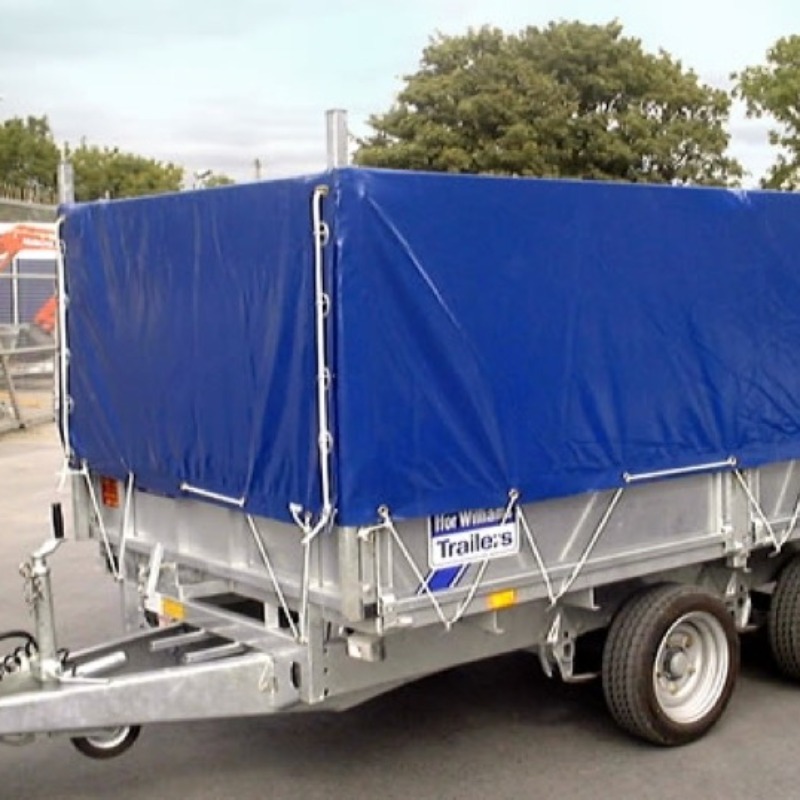
Compared with acrylic, coated polyester is more forgiving in high-wind sites. The yarn grid carries the load, so small punctures and frayed edges do not propagate quickly across the panel. This is why truck covers, warehouse curtains, and loading dock shelters are almost always made from the coated tarpaulin range rather than from woven acrylic.
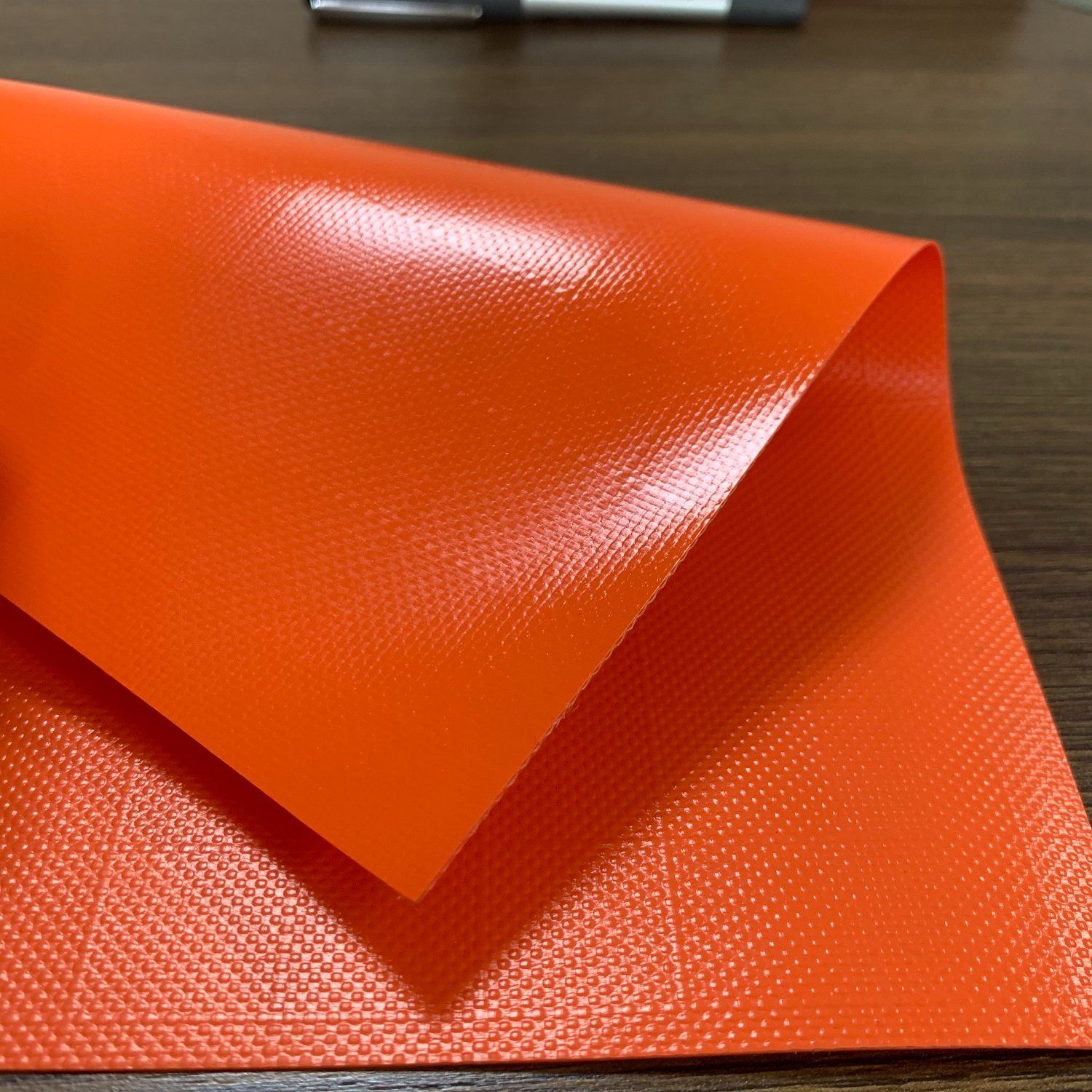
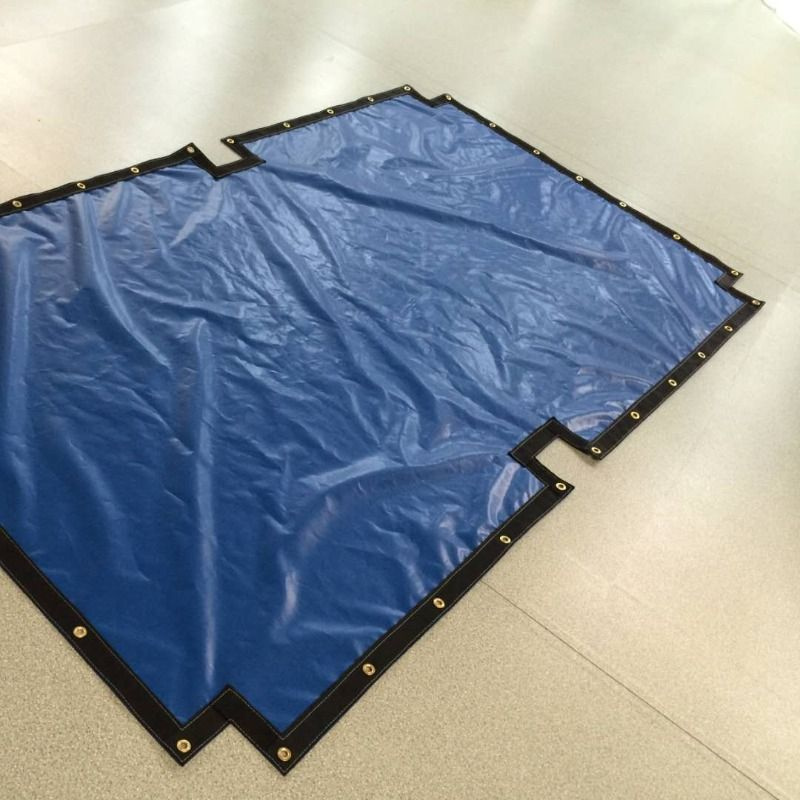
 Waterproof Heavy-Duty PVC-Coated Polyester Tarpaulin for Truck and Outdoor UseThis finished PVC tarpaulin suits truck covers, warehouse curtains, and loading dock shelters. Its coated polyester construction handles high wind and resists tearing, making it a reliable choice for demanding commercial applications.View Product →
When you look at the property profile of a quality coated polyester, the radar comparison below is typical. It underlines why the fabric survives commercial duty that would destroy a lighter textile within a season.
The radar comparison shows why coated polyester is rarely the weakest link on a commercial building. Its water resistance and tear strength are the highest of the three materials, which matters when awnings span loading bays or entryways. It also cleans well, so grease stains from city traffic do not become permanent. Where it does not win is color retention, because sunlight gradually dulls the plasticized surface. Acrylic fabric holds color longest, which explains its continued presence in projects where appearance is the top priority. In short, you are choosing between structural toughness and color stability, and the site conditions should decide which one matters more.
The Specifications That Predict Real-World Durability
When you receive a fabric sample or a technical data sheet, four numbers matter: the yarn denier, the finished weight, the coating construction, and the additive package.
- Denier measures the linear density of the polyester yarn. A 500D fabric is lighter and more flexible; 1000D and 1300D fabrics have a tighter, tougher base that resists punctures and seam tear-out.
- Finished weight in grams per square meter or ounces per square yard tells you how much polymer is layered on the base. Lighter weights are easier to sew and ship but flex more in wind.
- Coating construction separates calendered coatings from laminated films. Laminated PVC film offers a smoother face, while calendered coating bonds more tightly into the yarn texture.
- The additive package includes UV stabilizers, flame retardants, and anti-fungal agents. Two fabrics with the same weight can differ by years of service if one has a complete additive set and the other does not.
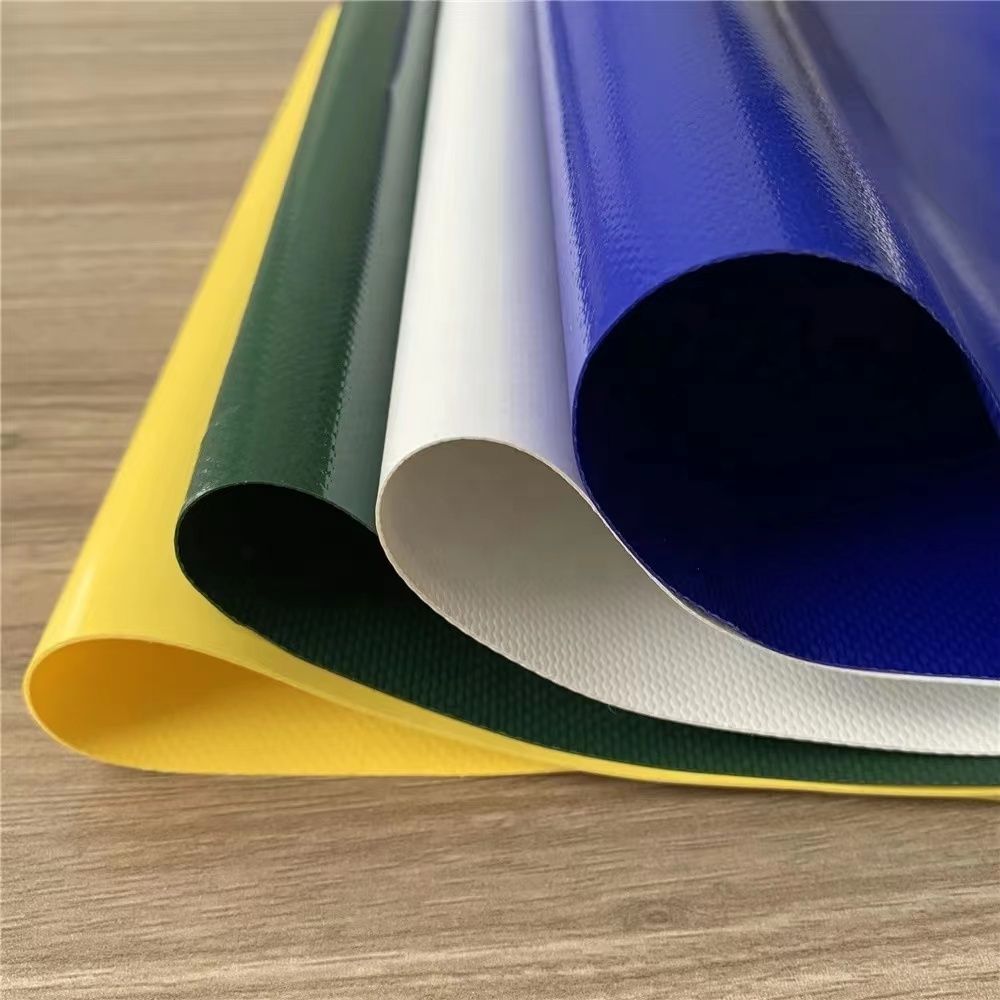
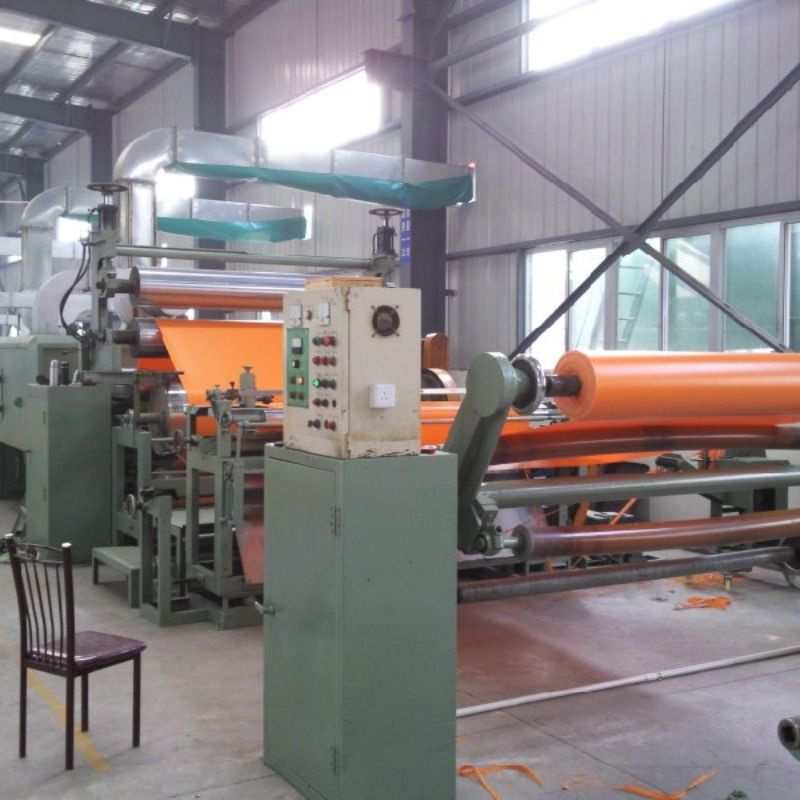 Heavy-Duty PVC-Coated Polyester Canvas Tarpaulin with Flame Retardant OptionsThis industrial-grade tarpaulin offers waterproofing, abrasion resistance, and tear strength, with optional flame retardant and anti-UV features. Ideal for trucking, agriculture, and construction, it supports weights from 300 to 1500 gsm.View Product →
The relationship between fabric weight and service life is not linear. The line chart below shows a typical curve for coated polyester in an open commercial location.
The line chart plots the expected service life of coated polyester awning fabric against its weight per square meter. A 300 gsm fabric is light enough to flutter in strong wind, which accelerates fatigue at the seams. The curve rises steeply between 400 and 500 gsm, where the coating layer becomes thick enough to resist abrasion. Beyond 550 gsm the gains begin to flatten, because a heavier substrate adds stiffness but not proportionally more protection. Most commercial installers specify 550 to 650 gsm for permanent awnings in exposed positions. That range sits around 16 to 19 ounces per square yard and represents the practical sweet spot between handling ease and longevity.
Match the Fabric to the Specific Installation
There is no single best commercial awning fabric, only a fabric that fits the failure mode of each site. The checklist below comes from common problems seen on real buildings.
| Installation | Most Likely Cause of Failure | Recommended Fabric | Key Property |
|---|---|---|---|
| Street-facing storefront canopy | UV fading, wind flap | 13 to 15 oz/sq yd PVC-coated polyester | UV stabilizers, good flex life |
| Outdoor restaurant seating | Fire code, grease, frequent cleaning | 600 gsm flame-retardant PVC-coated | Flame resistance, easy washdown |
| Loading dock shelter | Abrasion from trucks, impacts | 650 gsm PVC-laminated polyester | Tear strength, abrasion resistance |
| Atrium or skylight shading | Heat buildup, condensation | 550 gsm translucent coated polyester | Light diffusion, waterproofness |
Notice that the same coating chemistry appears in most rows. The difference is the base yarn and the finished weight, which is why a single supplier with a wide production range is easier to work with than a supplier that only offers one grade.
This chart compares the typical finished weight of the main awning fabric families. Cotton canvas and acrylic fabrics sit in the 9 to 12 ounce range, which keeps them easy to sew and mount on lightweight frames. Coated polyester arrives at 13 to 17 ounces, with some laminated versions going higher. The extra weight comes from the PVC layer that provides waterproofing and abrasion resistance. Heavier fabric needs stronger frames and closer-spaced rafters, so the design team has to account for the added load. Choosing a heavy fabric without upgrading the structure is a common cause of early awning failure.
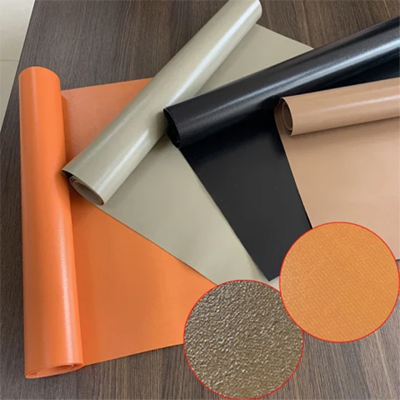
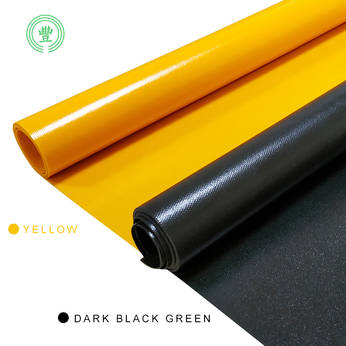
UV-Resistant Vinyl-Coated Polyester Tarpaulin for Truck and Barrier CoversThis heavy-duty vinyl-coated polyester tarpaulin adds UV resistance and anti-mildew protection to waterproofing and abrasion resistance. Suitable for truck covers, barrier applications, and other industrial outdoor uses, with customizable finishes.View Product →Installation and Maintenance Mistakes That Shorten Fabric Life
A quality fabric still fails early if the installation works against it. The most common errors seen in the field are:
- Sewing a coated fabric instead of welding it. Stitched needles leave holes that wick water into the polyester base, and the thread rots long before the fabric does. Coated PVC should be high-frequency welded or heat-sealed at the seams.
- Using plain galvanized hardware. Rusting screws and washers stain the fabric and accelerate local degradation. Use stainless steel or coated fittings.
- Over-tensioning the panel at installation. A drum-tight fabric looks neat but cannot absorb thermal movement, so it tears at the webbing pockets in summer heat.
- Cleaning with solvents or abrasive brushes. Strong solvents strip the plasticizer from the PVC surface and leave the fabric stiff and prone to cracking. Clean with mild soap and water.
- Ignoring ponding water. If a frame sags after heavy rain, correct it immediately. The weight of standing water can stretch and permanently deform a coated polyester panel overnight.
Most of these issues are preventable with a clear specification sheet and a simple maintenance routine twice a year.
The Bottom Line
For a commercial awning that must survive wind, sun, rain, and the occasional scrape from a delivery truck, the evidence points consistently toward PVC-coated polyester in the 550 to 650 gsm range. It does not hold color as long as acrylic, which makes solution-dyed acrylic the better choice for awnings where the brand image depends entirely on a precise shade. It does not match the classic look of cotton canvas, which remains an option for protected decorative areas. But when you weigh tear strength, waterproofness, cleanability, fire behavior, and replacement cost over a ten-year period, a properly specified coated polyester is the lowest-risk decision.
Start with the failure mode of your site, confirm the denier and finished weight, check that the additive package includes UV stabilizers and flame retardants, and require welded seams from your fabricator. You can learn more about how the base material behaves in demanding outdoor roles from the guide to what makes PVC canvas stand out.