
Call Us
+86-18962820095

 Español
Content
- 1 What Makes an Awning Fabric Durable in Extreme Weather
- 2 The Main Contenders: Material by Material
- 3 Quick Comparison Table
- 4 How Materials Age Under Extreme Weather
- 5 Performance Under Specific Weather Threats
- 6 Overall Performance Profile: PVC-Coated Polyester vs. Acrylic
- 7 Buying Checklist for Extreme Weather Awnings
- 8 Final Verdict
If you need one answer up front, PVC-coated polyester is the best durable fabric awning material for extreme weather. It outscores every other common material on UV resistance, waterproofing, tear strength, and wind performance, while remaining cost-effective. Solution-dyed acrylic is a close second for sun-dominated climates, but it falls behind when rain, snow, and wind enter the picture. Uncoated canvas and basic olefin should be avoided for any awning that must perform through extreme conditions. The rest of this guide explains how these conclusions were reached and what specifications you should ask for. If your project involves awnings, canopies, or large tarpaulin covers, the same evaluation logic applies across all of them.
What Makes an Awning Fabric Durable in Extreme Weather
Durability is not one number. It is a combination of base fiber, coating system, fabric weight, UV stabilization, and construction quality. A 600 gram per square meter coated polyester fabric will outperform a 300 gram coated fabric even when both carry the same material name. Likewise, a fabric coated with UV-stabilized PVC will last years longer than an identical-looking sheet without the stabilizer. Buyers should evaluate materials on six criteria: UV resistance, waterproofing, tear strength, wind load tolerance, mold resistance, and maintenance cost. Each of these criteria matters more depending on the specific type of extreme weather in your region.
The Overall Durability Ranking
The chart below ranks the five most common awning materials on a 100-point durability score. The score combines the six criteria mentioned above and weights them for extreme weather exposure.
This horizontal bar chart compares the overall durability score of five awning materials on a 100-point scale. The score combines UV resistance, waterproofing, tear strength, and wind performance into one index. PVC-coated polyester reaches 92, the highest score among all common awning materials. PVC-laminated polyester follows at 88, making it a strong option for extreme weather applications as well. Solution-dyed acrylic sits at 78, which is respectable but clearly behind PVC-based materials. Olefin manages 65, but it is rarely engineered for severe storms. Cotton canvas scores only 42, confirming that natural fibers cannot handle extreme weather exposure. The visible gap between coated synthetics and uncoated natural fabrics is why coating technology matters so much.
The Main Contenders: Material by Material
PVC-Coated Polyester
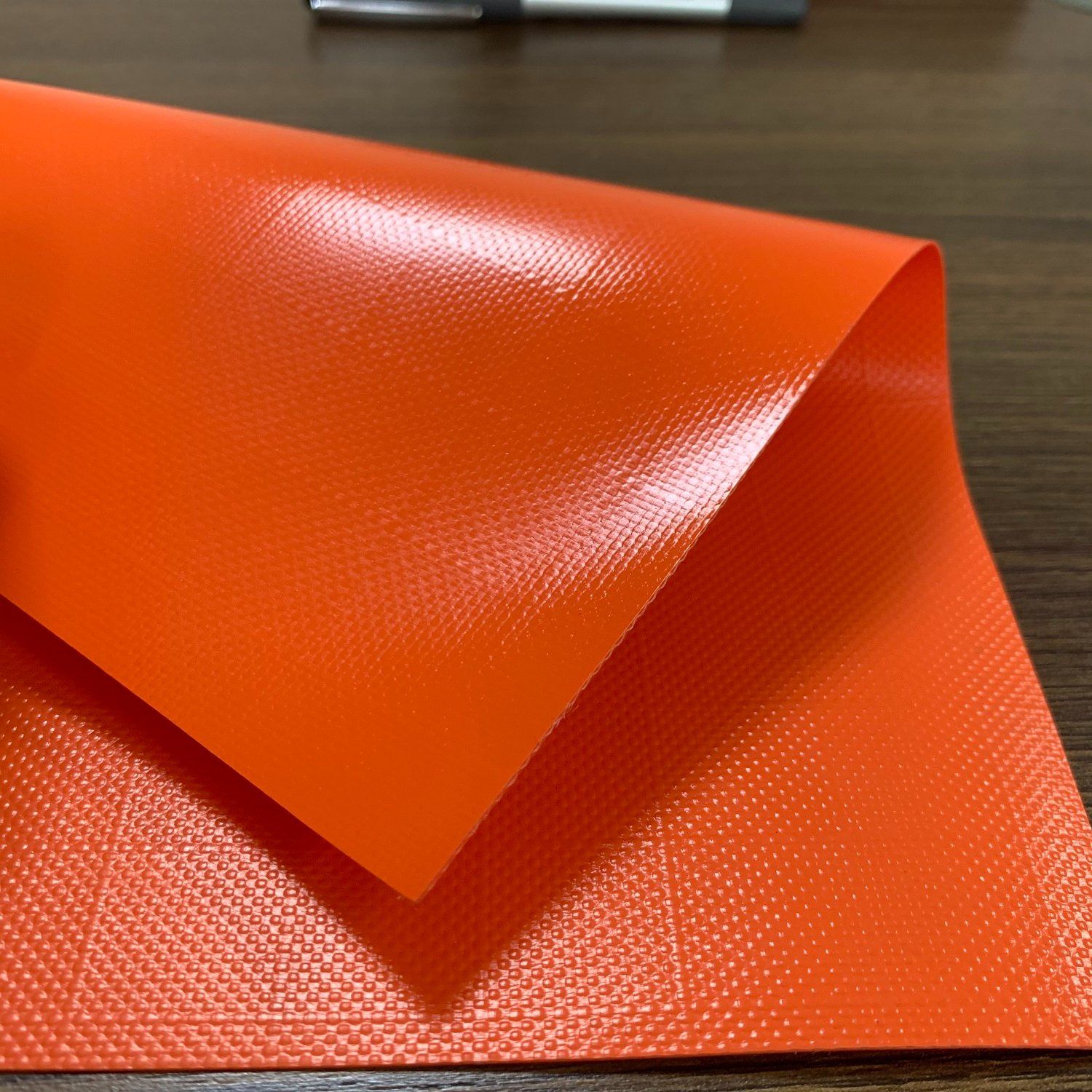
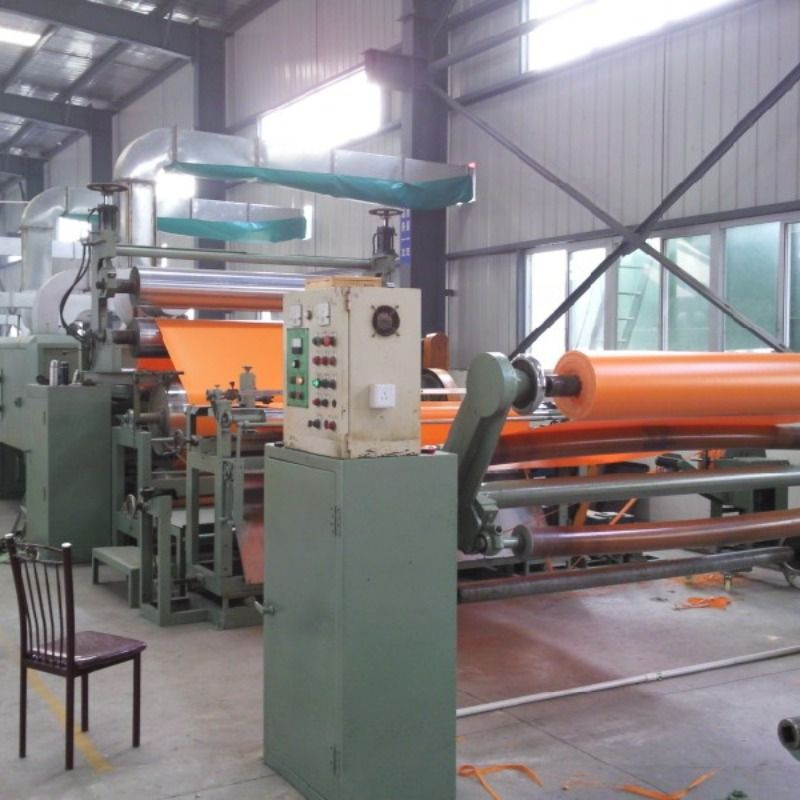
PVC-coated polyester starts with a woven polyester base fabric, usually in 500D, 840D, 1000D, or 1300D yarn, and then receives a liquid PVC coating on one or both sides. The coating locks in water resistance, blocks UV radiation, and gives the fabric a tough surface that resists tearing and abrasion. This construction is the industry standard for heavy-duty tarpaulins, truck covers, and industrial awnings. It performs well across all six durability criteria, which is rare in any awning material. For buyers that need a proven balance of cost and performance, a waterproof anti-UV flame-retardant flexible PVC coated tarpaulin is a direct answer. It can be fabricated into fixed awnings, retractable canopies, or large shade structures without changing the core material specification.
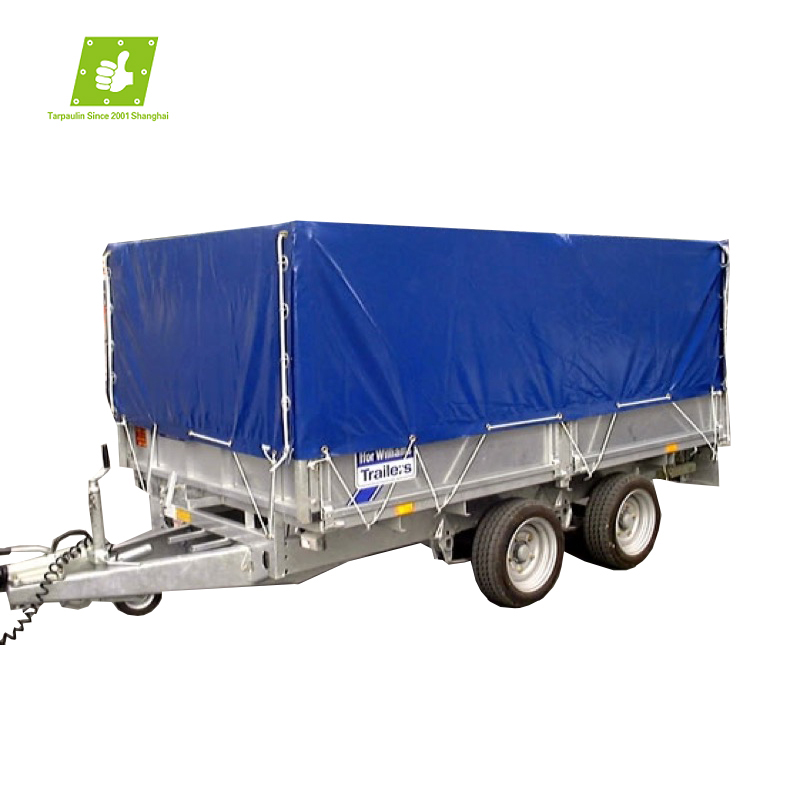 Wholesale Waterproof Anti Uv Flame Retardant Heavy Duty Flexible High Strength PQidong Good Tarpaulin Co., Ltd is top China wholesale Waterproof Anti Uv Flame Retardant Heavy Duty Flexible High Strength Pvc Coated Tar...View Product →
PVC-Laminated Polyester
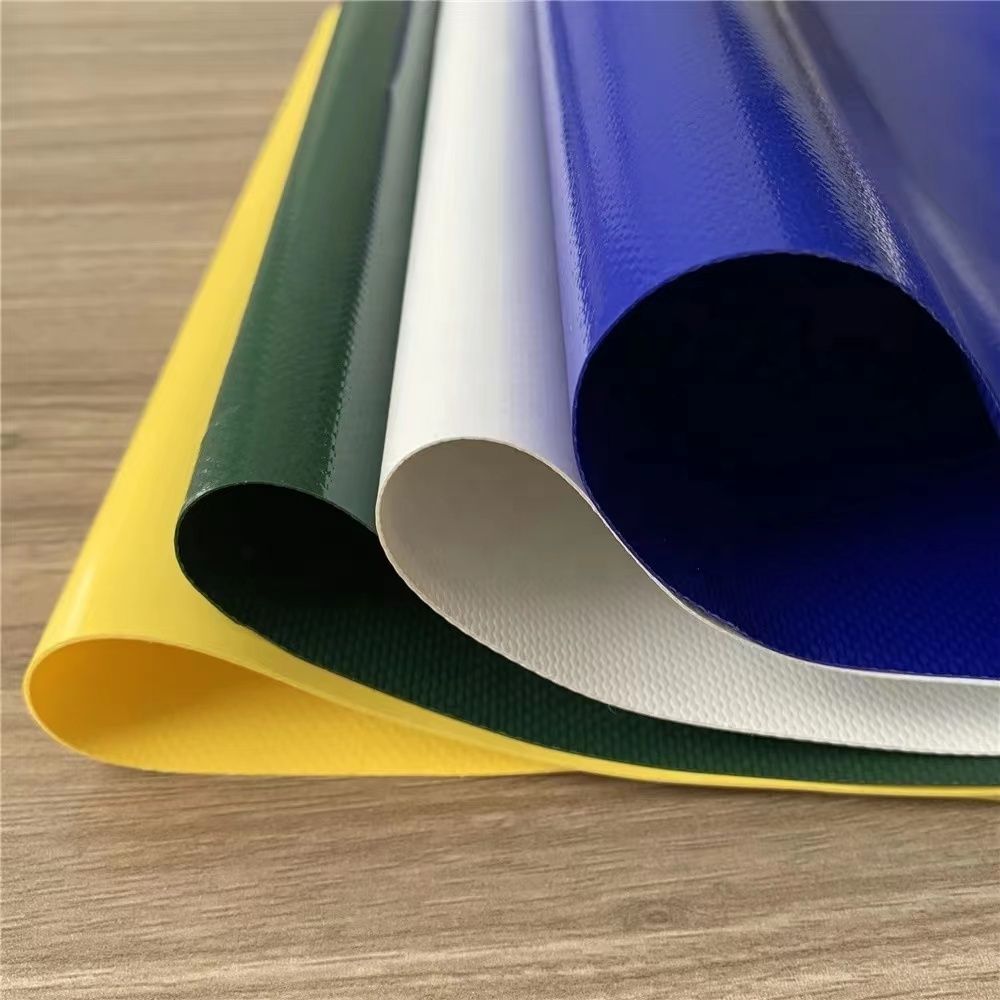
PVC-laminated polyester is built differently. Instead of coating the fabric with liquid PVC, a finished PVC film is laminated onto the polyester base under heat and pressure. The result is a smoother surface, a softer hand feel, and very consistent thickness across the sheet. Laminated fabrics tend to feel less stiff than coated fabrics, which makes them easier to sew and weld into complex awning shapes. They still deliver excellent waterproofing and UV resistance, though slightly lower tear strength than equivalent coated materials. For camping awnings, tent canopies, and lightweight commercial shading, a high-strength soft waterproof PVC laminated tarp is an ideal specification. The trade-off between coating and lamination should be decided by your application.
 Wholesale Waterproof UV Resistant Flame Retardant High strength Soft Tent CampinQidong Good Tarpaulin Co., Ltd is top China wholesale Waterproof UV Resistant Flame Retardant High strength Soft Tent Camping Awning Poly...View Product →
Solution-Dyed Acrylic
Solution-dyed acrylic is a woven fabric where the color pigment is added to the acrylic solution before the fiber is extruded. This gives outstanding colorfastness under intense sun. Acrylic fabrics are breathable, which reduces condensation on the underside of an awning, and they resist mildew well. However, acrylic is not naturally waterproof. Water will pass through uncoated acrylic, and heavy rain can penetrate the weave. It is a specialist material for regions where sun is the main threat and rain is less frequent. For mixed extreme weather, it ranks below PVC-based fabrics.
Olefin and Cotton Canvas
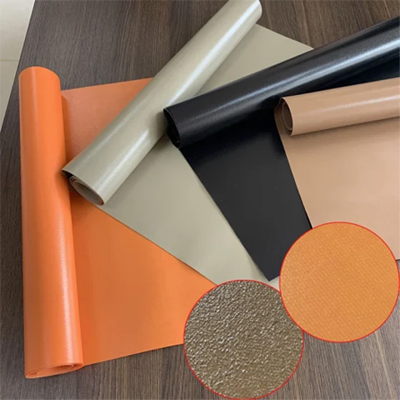
Olefin is a budget synthetic that resists moisture and mildew but has poor UV stability and moderate tear strength. Cotton canvas looks traditional but absorbs water, rots, fades, and loses strength quickly under extreme conditions. Neither material is recommended for awnings in areas that see hail, high wind, or heavy snow. If budget constraints force their use, plan on shorter replacement cycles and more frequent maintenance. If you want the canvas look with modern durability, an anti-UV flame retardant waterproof durable PVC canvas provides the same visual texture with PVC-grade protection.
Wholesale Heavy Duty Anti UV Flame retardant Waterproof Durable PVC CANVAS TARPAQidong Good Tarpaulin Co., Ltd is top China wholesale Heavy Duty Anti UV Flame retardant Waterproof Durable PVC CANVAS TARPAULIN For Truc...View Product →Quick Comparison Table
The table below summarizes how the five materials compare across the six criteria. Use it as a shortlist filter before requesting samples or quotes.
| Material | UV Resistance | Waterproofing | Tear Strength | Wind Performance | Expected Life | Maintenance |
|---|---|---|---|---|---|---|
| PVC-Coated Polyester | Excellent | Excellent | Excellent | Excellent | 8 to 12 years | Low |
| PVC-Laminated Polyester | Excellent | Excellent | Very Good | Excellent | 8 to 12 years | Low |
| Solution-Dyed Acrylic | Excellent | Fair | Good | Good | 6 to 10 years | Moderate |
| Olefin | Fair | Good | Fair | Fair | 4 to 7 years | Moderate |
| Cotton Canvas | Poor | Poor | Fair | Poor | 2 to 4 years | High |
For background on how these materials are manufactured, read this guide to what tarpaulin is usually made of. Understanding the base cloth and coating steps helps you spot weak specifications early.
How Materials Age Under Extreme Weather
No awning fabric lasts forever, but the rate of degradation differs enormously. The line chart below projects functional condition over ten years for three materials exposed to the same extreme weather environment.
This line chart shows how awning materials degrade over ten years under extreme weather exposure. The vertical axis represents remaining functional condition as a percentage of new material. PVC-coated polyester retains about 95 percent of its condition after two years and approximately 50 percent after ten years. Solution-dyed acrylic drops faster, especially after year six, because ultraviolet radiation gradually embrittles the fiber surface. Cotton canvas is the fastest to degrade, losing half of its functional strength within the first four years. Uncoated natural fibers also become a breeding ground for mildew once water penetrates the weave. The takeaway is clear, a coated synthetic fabric returns more years of service for every dollar spent. Most manufacturers back this performance with warranties that reflect the extended lifespan.
Performance Under Specific Weather Threats
Extreme weather is not one event. It is a combination of threats, and different materials react differently to each one. The column chart below compares PVC-coated polyester and solution-dyed acrylic across five common extreme weather threats.
This grouped column chart compares PVC-coated polyester and solution-dyed acrylic under five weather threats. For UV radiation, both materials score above 85, so either one can handle intense sun. The gap becomes dramatic under heavy rain, where PVC-coated polyester scores 96 against acrylic's 68. High wind and snow load also favor PVC-coated polyester by more than ten points each. Hail impact is the closest category because both materials can be damaged by large hailstones depending on fabric weight and denier. Overall, PVC-coated polyester is the safer choice when a region experiences multiple weather threats in a single season. If your site is exposed to wind-driven rain or snow accumulation, the column height difference tells the real story.
Overall Performance Profile: PVC-Coated Polyester vs. Acrylic
To see the full picture, compare the two leading materials across all six decision criteria on one radar chart. The outer ring represents a perfect score, and each axis measures one property.
This radar chart compares the overall performance profiles of PVC-coated polyester and solution-dyed acrylic. The PVC-coated polygon fills a larger area on nearly every axis. Waterproofing, tear strength, wind resistance, and cost efficiency are all clearly in favor of the coated fabric. Acrylic matches or slightly beats PVC-coated polyester on UV resistance and mold resistance. Cost efficiency is the biggest differentiator, with PVC-coated polyester offering a lower cost per square meter and a longer expected lifespan. For a buyer evaluating awning materials for hurricane-prone coasts or heavy-snow regions, this chart summarizes the decision visually. The area of the polygon is a direct visual proxy for total value under extreme weather.
Buying Checklist for Extreme Weather Awnings
Once you have chosen a material family, use this checklist to compare quotes and samples. It will help you separate high-quality options from products that only look similar on paper.
- Confirm the base fabric denier. For extreme weather, 840D or 1000D polyester is preferable over 500D.
- Check the coating weight. Heavy-duty fabrics of 550 GSM to 650 GSM resist tearing and puncture better than lighter versions.
- Verify that the PVC coating includes UV stabilizers. Without them, the coating becomes brittle within a few years.
- Look for flame-retardant treatment if your building code requires it. Many certified awning fabrics meet relevant flammability standards.
- Ask for a welded or high-frequency sewn seam sample. Water leaks more often through seams and anchor points than through the fabric body.
- Request colorfastness data. Darker colors last longer under intense sun because they absorb less UV damage, but they also get hotter.
If you are moving from a generic specification to a proven one, review why PVC canvas stands out among coated fabrics before you commit. It explains the construction details that separate long-lasting materials from disposable ones. For large orders, source directly from a manufacturer that can supply PVC tarpaulin rolls in multiple weights, widths, and custom finishes so you can control quality at the source.
Final Verdict
The best durable fabric awning material for extreme weather is PVC-coated polyester, with a minimum weight of 550 GSM and a UV-stabilized coating. It wins on every major weather threat except pure color retention, where solution-dyed acrylic still excels under constant sun. If your region experiences a mix of sun, rain, wind, and snow, the choice is not close. PVC-coated polyester delivers more years of service, lower maintenance, and a better cost-per-year ratio than any alternative. Pair it with a reliable manufacturer, verify the specification with samples, and your awning structure will stand up to the weather your site actually receives.