
Call Us
+86-18962820095

 Español
Content
- 1 How PVC Laminated Tarpaulin Is Made: The Manufacturing Process
- 2 Key Performance Properties of PVC Laminated Tarpaulin
- 3 Understanding Denier, Weight, and Thickness Specifications
- 4 Common Applications of PVC Laminated Tarpaulin Across Industries
- 5 PVC Laminated Tarpaulin vs. Other Tarpaulin Materials
- 6 Fabrication Methods: Welding, Cutting, and Finishing PVC Tarpaulin
- 7 Flame Retardancy and Safety Standards for PVC Tarpaulin
- 8 Maintenance, Cleaning, and Extending the Service Life of PVC Tarpaulin
- 9 Environmental Considerations and Sustainable Alternatives
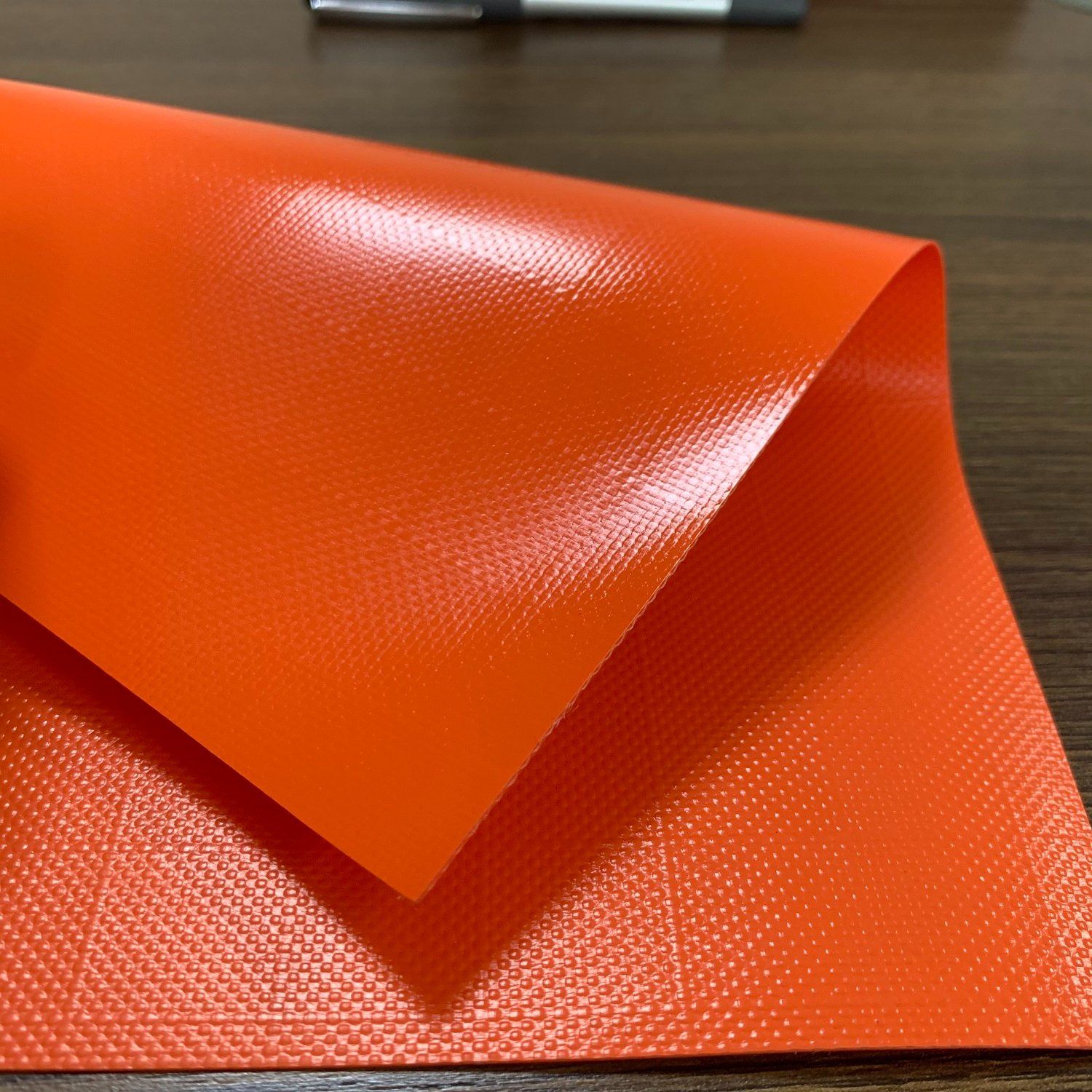
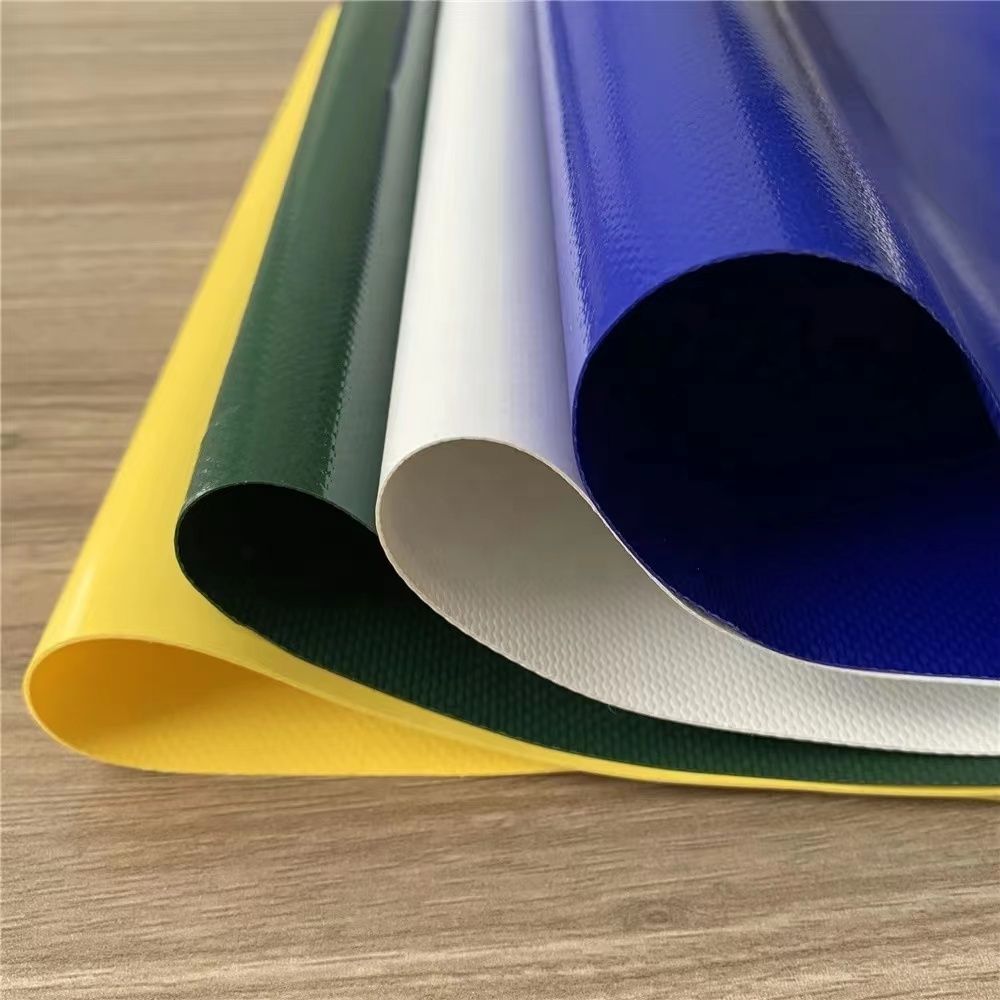
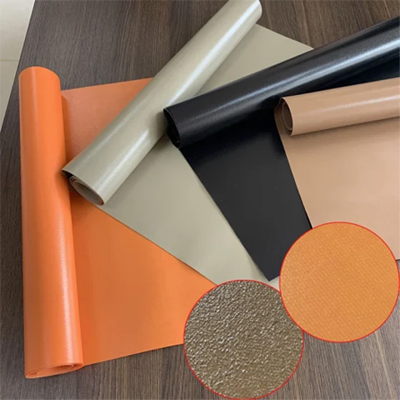
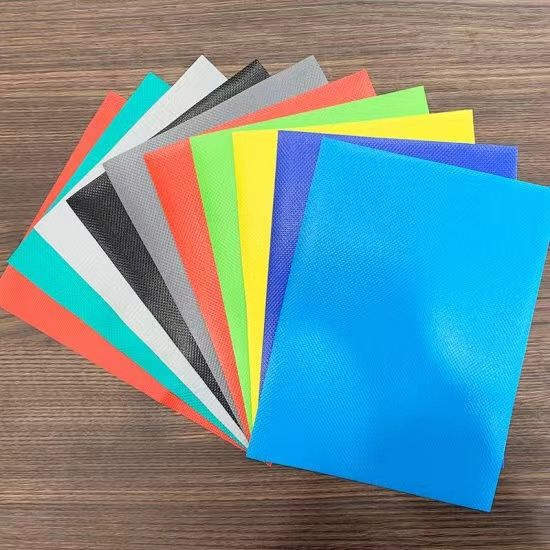
PVC laminated tarpaulin is a composite industrial fabric made by bonding one or more layers of polyvinyl chloride (PVC) compound onto a woven substrate — typically high-tenacity polyester or nylon yarn — to create a material that combines the mechanical strength of the woven base with the waterproofing, UV resistance, and chemical protection of the PVC surface layers. The result is a heavy-duty, flexible sheet material used across transportation, construction, agriculture, military, and event industries wherever a covering must simultaneously resist water, sunlight, wind, abrasion, and physical stress over extended periods.
Unlike single-layer woven tarps that rely on tight weave alone for water resistance, or pure plastic films that lack structural strength, PVC laminated tarpaulin achieves both properties by design — the woven grid carries tensile loads while the PVC coating creates a continuous waterproof membrane across the entire surface. This engineered structure is why PVC laminated tarpaulin has become the material of choice for truck curtainsiders, large frame tents, industrial curtains, agricultural covers, and hundreds of other demanding applications around the world.
How PVC Laminated Tarpaulin Is Made: The Manufacturing Process
Understanding how PVC laminated tarpaulin is manufactured helps clarify why its properties are so different from simpler tarp materials and why the manufacturing process choices have a direct impact on product quality and service life.
Step 1 — Weaving the Base Fabric
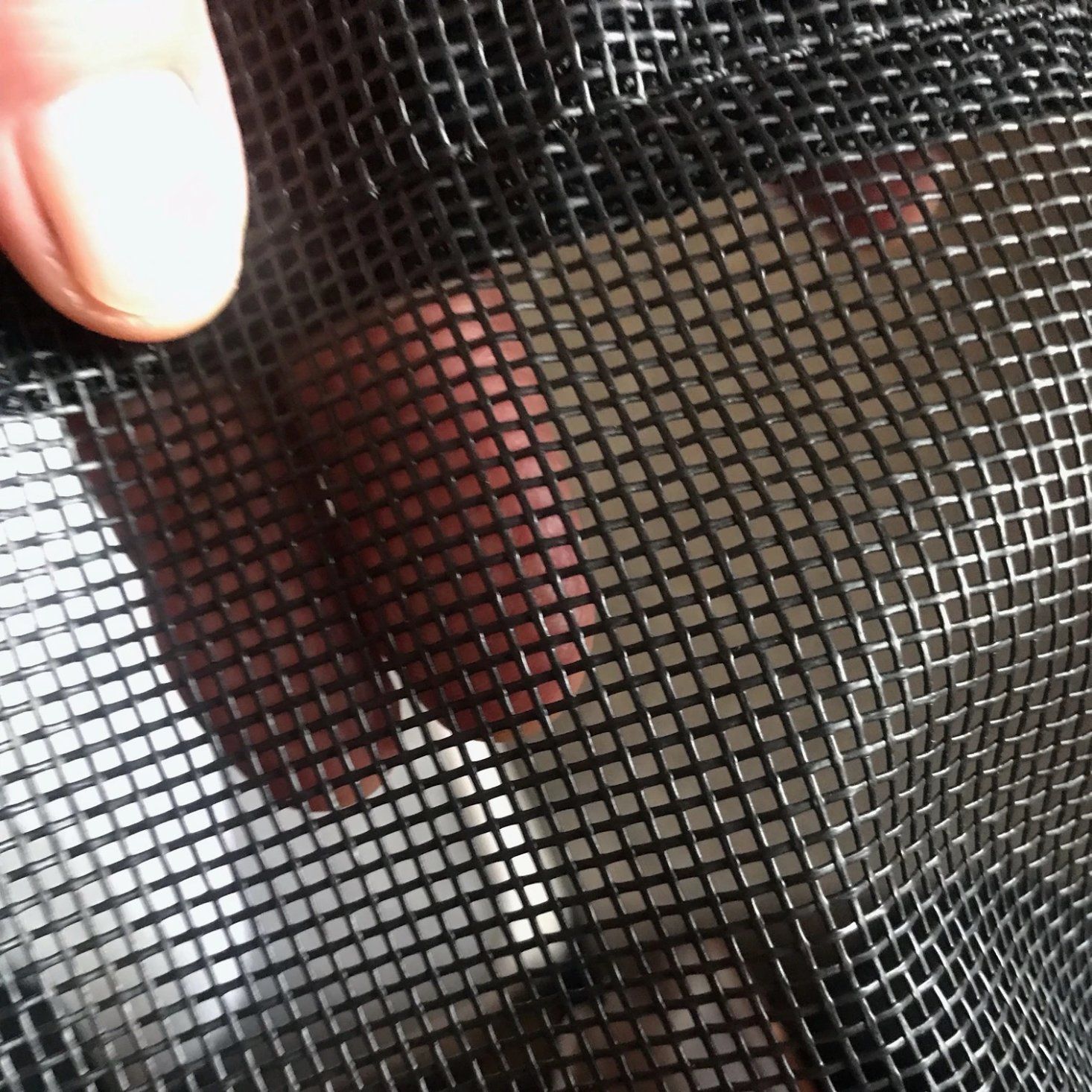
The manufacturing process begins with weaving the substrate fabric on industrial looms. High-tenacity polyester yarns — most commonly drawn from polyethylene terephthalate (PET) multifilament — are woven into a plain or basket weave grid. The yarn count and weave density determine the denier rating of the finished fabric. Standard commercial tarpaulin fabrics range from 300D (lightweight, approximately 200 g/m²) to 1,000D (heavy industrial, approximately 650 g/m²) or higher for specialized applications. The woven scrim at this stage is dimensionally stable but completely permeable to water and UV radiation — it provides structural reinforcement only.
Step 2 — Preparing the PVC Compound
The PVC coating compound is formulated by blending PVC resin with plasticizers (to achieve the required flexibility), stabilizers (to prevent thermal and UV degradation during both manufacturing and service), pigments, fillers, and flame retardant additives where required. The specific formulation determines the flexibility at low temperatures, UV resistance life, color retention, and flame spread rating of the finished product. Premium tarpaulin grades use higher concentrations of quality UV stabilizers and thermal stabilizers, producing materials that maintain physical properties for 10 or more years in outdoor exposure, versus lower-cost formulations that may degrade visibly within 3 to 5 years.
Step 3 — PVC Lamination onto the Woven Substrate
The PVC compound is applied to the woven substrate by one of three primary processes, each producing slightly different performance characteristics:
- Knife-over-roll (spread coating): Liquid PVC paste (plastisol) is spread onto the moving fabric web by a precision doctor blade at controlled thickness. Multiple coating passes build up the total PVC thickness. This method produces excellent adhesion between PVC and fabric but limits coating thickness per pass. It is the most common method for mid-weight commercial tarpaulin.
- Calendering: The PVC compound is pressed into a sheet between heated calendar rolls and then laminated onto the fabric under heat and pressure. Calendered coatings tend to be more uniform in thickness and are used for high-weight premium products. The bond strength between the calendered PVC film and the fabric depends critically on the surface treatment of the fabric and the lamination temperature and pressure.
- Extrusion coating: Molten PVC is extruded directly onto the fabric substrate through a slot die. Extrusion coating achieves very high coating weights in a single pass and produces excellent adhesion due to the mechanical penetration of molten PVC into the weave interstices before solidification.
Step 4 — Surface Finishing and Quality Control
After lamination, the coated fabric passes through finishing operations that may include surface embossing (to create a non-slip texture or specific visual appearance), lacquer topcoat application (to enhance UV resistance, chemical resistance, or printability), heat setting (to stabilize dimensions), and edge trimming to standard widths. Quality control checks at this stage typically include coating weight verification, tensile and tear strength testing, hydrostatic pressure testing for waterproofness, and peel strength testing of the PVC-to-fabric bond.
Key Performance Properties of PVC Laminated Tarpaulin
The combination of woven polyester substrate and PVC laminate delivers a set of performance properties that explain why this material has displaced canvas, simple woven poly tarps, and other covering materials in most demanding applications.
Waterproofing and Hydrostatic Resistance
The continuous PVC membrane on both surfaces of the woven substrate creates a completely impermeable barrier to liquid water. Quality PVC laminated tarpaulin achieves hydrostatic pressure resistance of 3,000 to over 10,000 mm H₂O — far exceeding the 1,500 mm minimum typically considered waterproof for outdoor use. The PVC layer prevents water from wicking through the woven structure, which is the failure mechanism of simple woven tarps that are only water-resistant rather than waterproof. Even after years of outdoor exposure, the waterproofing performance of a quality PVC laminate remains substantially intact, provided the surface is not mechanically abraded through the PVC layer to the fabric beneath.
Tensile Strength and Tear Resistance
The polyester woven substrate provides the tensile and tear strength that allows PVC tarpaulin to withstand the mechanical stresses of wind loading, cargo restraint, tensioned installation, and physical handling. High-quality 500D PVC laminated fabric typically achieves tensile strength of 2,500 to 3,500 N per 5 cm strip in the warp direction, and tear strength of 300 to 500 N. Heavy-duty 1,000D grades used in truck curtainsider applications can achieve tensile strength exceeding 5,000 N/5 cm. These properties remain largely stable throughout the service life of the material because the polyester yarns are protected from UV degradation and moisture by the encapsulating PVC coating.
UV Resistance and Color Stability
Unprotected PVC degrades rapidly under ultraviolet radiation — it becomes brittle, chalky, and loses mechanical properties within 1 to 2 years of outdoor exposure. PVC laminated tarpaulin addresses this through the incorporation of UV absorbers and hindered amine light stabilizers (HALS) in the PVC compound formulation. Premium-grade PVC tarpaulin retains at least 80% of its original tensile strength after 3,000 hours of accelerated UV weathering (equivalent to approximately 5 to 7 years of outdoor exposure), and maintains color without significant fading over the same period. Lower-cost products with minimal UV stabilization may show significant color fading and surface crazing within 2 to 3 years.
Temperature Performance Range
The plasticizer content of the PVC compound determines how the material behaves across the temperature range it encounters in service. Standard PVC tarpaulin remains flexible and workable from -20°C to +70°C — adequate for most temperate and tropical applications. Cold-climate grades formulated with higher plasticizer content remain pliable at -30°C or below, important for truck covers and agricultural applications in northern latitudes where PVC that becomes stiff and brittle in winter cold is a handling and performance hazard. At the high-temperature end, PVC tarpaulin can tolerate short-term exposure to 70°C to 80°C without deformation, but should not be used as a heat barrier or in sustained contact with high-temperature surfaces.
Chemical and Biological Resistance
PVC offers excellent resistance to a wide range of chemicals including dilute acids, alkalis, oils, and many organic solvents — making PVC laminated tarpaulin suitable for use in agricultural chemical storage, industrial liquid containment, and other chemically demanding applications. The material is also inherently resistant to mold, mildew, and bacterial growth — a significant advantage over canvas, which requires regular biocide treatment to prevent biological degradation in humid conditions. Anti-fungal and anti-bacterial additives can be incorporated into the PVC compound for applications with particularly demanding hygiene requirements.
Understanding Denier, Weight, and Thickness Specifications
PVC laminated tarpaulin is specified using a combination of denier rating, fabric weight (g/m²), and total thickness (mm) — three interrelated but distinct measurements that together define the performance grade of the material. Understanding the relationship between these specifications is essential for selecting the right tarpaulin for a specific application.
Denier (D) measures the linear mass density of the yarn used in the woven substrate — specifically, the weight in grams of 9,000 meters of a single yarn filament. A 500D yarn weighs 500 grams per 9,000 meters of length. Higher denier yarns are thicker and heavier, producing a stronger woven base fabric. Common denier ratings for commercial PVC tarpaulin range from 300D for lightweight grades to 1,000D for heavy industrial products, with 500D and 600D being the most widely used middle grades for general-purpose applications.
However, denier alone does not fully describe the finished product because the weight and thickness of the PVC coating are independent variables. A 500D base fabric with a heavy PVC coating will have a higher total weight and better waterproofing than the same 500D base with a thin coating, but comparable tensile strength. The following table illustrates the typical relationship between denier, total weight, and common applications:
| Denier Grade | Typical Weight (g/m²) | Typical Thickness (mm) | Primary Applications |
|---|---|---|---|
| 300D | 200 - 280 | 0.25 - 0.35 | Light tent fabrics, temporary banners, seasonal covers |
| 500D | 350 - 480 | 0.40 - 0.55 | General-purpose tarps, awnings, small agricultural covers |
| 600D | 450 - 600 | 0.50 - 0.65 | Truck covers, frame tents, industrial curtains |
| 900D | 580 - 750 | 0.60 - 0.80 | Truck curtainsiders, large event structures, swimming pool covers |
| 1000D | 650 - 900 | 0.75 - 1.00 | Heavy truck applications, mining covers, containment liners |
| 1200D+ | 900 - 1,200+ | 1.00 - 1.50+ | Extreme industrial, military, liquid containment, permanent structures |
When selecting PVC laminated tarpaulin, always request the full specification sheet including denier, weight per square meter, tensile strength, tear strength, and hydrostatic resistance — not just the denier rating alone. A 600D tarpaulin from one manufacturer may have very different physical properties from a 600D product from another, depending on the coating weight, PVC compound quality, and manufacturing process used.
Common Applications of PVC Laminated Tarpaulin Across Industries
The combination of waterproofing, mechanical strength, UV resistance, flexibility, and ease of fabrication (cutting, welding, and eyeleting) makes PVC laminated tarpaulin the material specified across an extraordinarily wide range of applications. The following are the most significant end uses by industry sector.
Transportation and Logistics
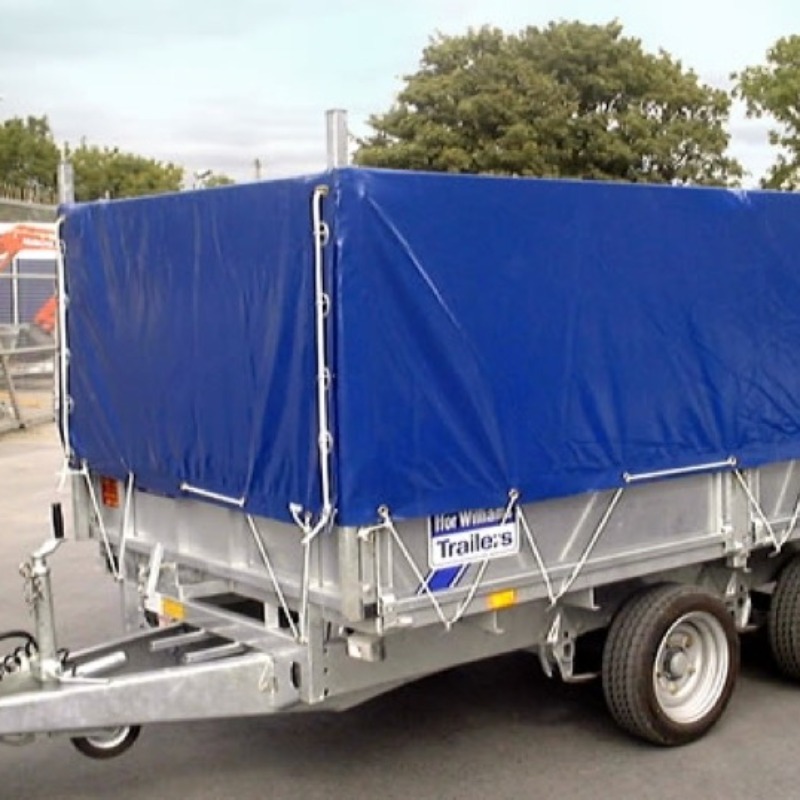
The transportation industry is the largest single end market for PVC laminated tarpaulin. Truck curtainsider side curtains — the sliding fabric panels on the sides of flatbed trailers — are almost universally made from PVC laminated fabric of 650 to 900 g/m² weight, typically meeting EN 14492 or equivalent standards for tear strength, tensile strength, and weathering resistance. These curtains must withstand highway wind speeds of 120 km/h or higher, resist water ingress during rain, maintain flexibility in temperatures from -25°C to +60°C, and survive repeated sliding operation over service lives of 5 to 10 years. Freight container top sheets, flatbed cargo covers, and barge covers represent additional high-volume transportation applications.
Tents and Temporary Structures
Frame tents, marquees, military field shelters, disaster relief shelters, and exhibition halls all rely on PVC laminated fabric for the tent roof and sidewall panels. The material's combination of waterproofing, light weight relative to canvas, dimensional stability under tension, and ability to be heat-welded into large seamless panels without stitching (which would create water ingress points) makes it far superior to canvas for all but the most aesthetically demanding applications. Event industry tent fabrics typically use 500 to 680 g/m² material with flame-retardant certification to DIN 4102 B1, NFPA 701, or equivalent standards — a regulatory requirement for public assembly structures in most countries.
Agriculture and Horticulture
Grain storage covers, hay bale wraps, greenhouse cladding panels, silage pit covers, and crop protection tunnels represent a major agricultural application segment. Agricultural PVC tarpaulins prioritize UV stability (to prevent premature degradation from continuous outdoor exposure), high puncture resistance (for covers dragged across rough surfaces or impacted by machinery), and resistance to agricultural chemicals and fertilizers. Light-diffusing or light-blocking variants are available for greenhouse and crop protection applications where controlling the light environment inside the covered area is important.
Construction and Civil Engineering
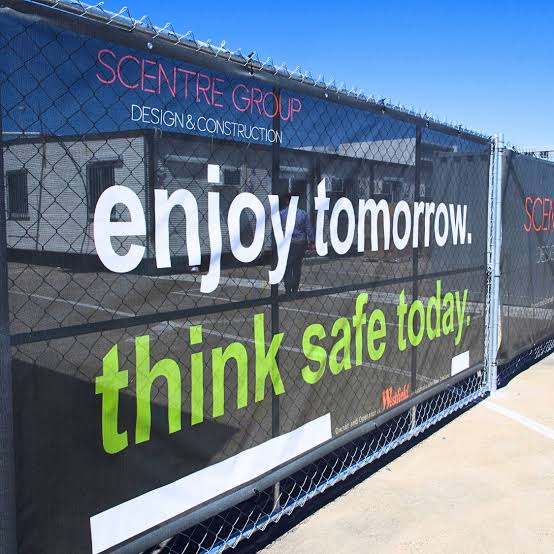
Construction hoarding, scaffolding wraps, debris netting backing, temporary weather protection covers for buildings under construction, and concrete curing blankets are important construction-sector applications. Construction-grade PVC tarpaulin must resist wind uplift forces, UV degradation over construction project timelines (typically 12 to 36 months), and physical abuse from tools and materials. Printed PVC banners on scaffolding wraps serve the dual purpose of weather protection and project advertising, requiring additional printability surface treatment and high color retention specifications.
Industrial and Environmental Containment
Liquid containment berms for oil and chemical spill response, hazardous material storage covers, industrial pond liners, and flexible water storage tanks use heavy-duty PVC laminated fabric of 900 g/m² and above. These applications demand maximum waterproofing integrity, high chemical resistance, and weld seam strength approaching that of the base fabric. Military applications include fuel bladders, water storage tanks, and vehicle camouflage nets, all manufactured from specialized PVC laminated fabrics meeting military performance specifications.
Advertising and Signage
Large-format printed banners, billboard coverings, building wraps, and event backdrops use PVC laminated fabric as the base material for wide-format digital and screen printing. The smooth, consistent PVC surface accepts inks uniformly, and the dimensional stability of the woven substrate prevents the stretching and distortion that would occur on a pure film. Banner and signage fabrics are typically produced in widths of 2.5 to 5 meters and are specified for print quality (surface smoothness and ink adhesion) as well as the standard physical properties.
PVC Laminated Tarpaulin vs. Other Tarpaulin Materials
To fully understand what PVC laminated tarpaulin is and what it offers, it is useful to compare it directly with the main alternative tarpaulin materials used in similar applications.
| Property | PVC Laminated | PE Woven Tarp | Canvas (Cotton) | HDPE Knitted Shade Cloth |
|---|---|---|---|---|
| Waterproofing | Excellent — fully impermeable | Good — water-resistant, not fully waterproof | Moderate — requires wax or DWR treatment | Poor — permeable by design |
| Tensile strength | Excellent | Good | Good (heavy grades) | Moderate |
| UV resistance | Excellent (stabilized grades) | Moderate — degrades within 2-4 years | Poor — rapid UV degradation without treatment | Good (UV-stabilized grades) |
| Mold and mildew resistance | Excellent — inherently resistant | Good | Poor — highly susceptible | Good |
| Service life (outdoor) | 7 - 15 years (premium grades) | 2 - 5 years | 3 - 8 years (treated) | 5 - 10 years |
| Weldability (heat/HF) | Excellent — strong, waterproof seams | Limited — requires stitching or tape | No — stitching only | Limited |
| Weight for equivalent strength | Moderate | Light | Heavy | Light |
| Cost per unit area | Moderate to high | Low | Moderate to high | Low to moderate |
| Environmental impact | Moderate — recyclable PVC; plasticizer concerns | Moderate — non-biodegradable | Low — biodegradable natural fiber | Moderate — non-biodegradable |
The comparison clearly illustrates why PVC laminated tarpaulin dominates in applications where long service life, waterproofing integrity, and seam performance are primary requirements. The lower initial cost of PE woven tarps or knitted shade cloth is typically offset by their shorter replacement cycles in demanding outdoor applications.
Fabrication Methods: Welding, Cutting, and Finishing PVC Tarpaulin
One of the most important practical advantages of PVC laminated tarpaulin over alternative materials is its fabricability — the ease and reliability with which it can be cut, joined, and finished into custom-sized and shaped covers, curtains, and structures. The PVC surface allows strong, waterproof seams to be created by heat welding — eliminating the needle holes and potential water ingress points that stitched seams create in waterproof applications.
Hot Air Welding
Hot air welding uses a precisely controlled stream of hot air (typically 300°C to 600°C at the nozzle, depending on the fabric weight and weld speed) to simultaneously soften the PVC surfaces of two overlapping fabric pieces, which are then pressed together by a roller to fuse the softened PVC into a continuous bond. Hot air welding is performed by hand-held tools for small-scale fabrication and by bench-mounted or gantry-mounted automatic welding machines for high-volume production. Weld seam strength of 80 to 95% of the parent fabric tensile strength is achievable with correctly calibrated equipment and properly trained operators, producing a seam that is both stronger and more waterproof than any stitched alternative.
High-Frequency (HF) Welding
High-frequency welding uses electromagnetic energy at 27.12 MHz to heat the PVC material from within through dielectric loss — the PVC molecules vibrate in response to the alternating electromagnetic field, generating heat internally rather than from an external source. This produces extremely consistent, fast welds with well-defined edge geometry, making HF welding the preferred method for precision-dimensioned components such as inflatable boat tubes, advertising banners with accurate hems, and medical device covers. HF welding requires that the material contains sufficient PVC in its composition to absorb the high-frequency energy — pure polyester or polyethylene materials cannot be HF welded.
Eyeleting and Edge Reinforcement
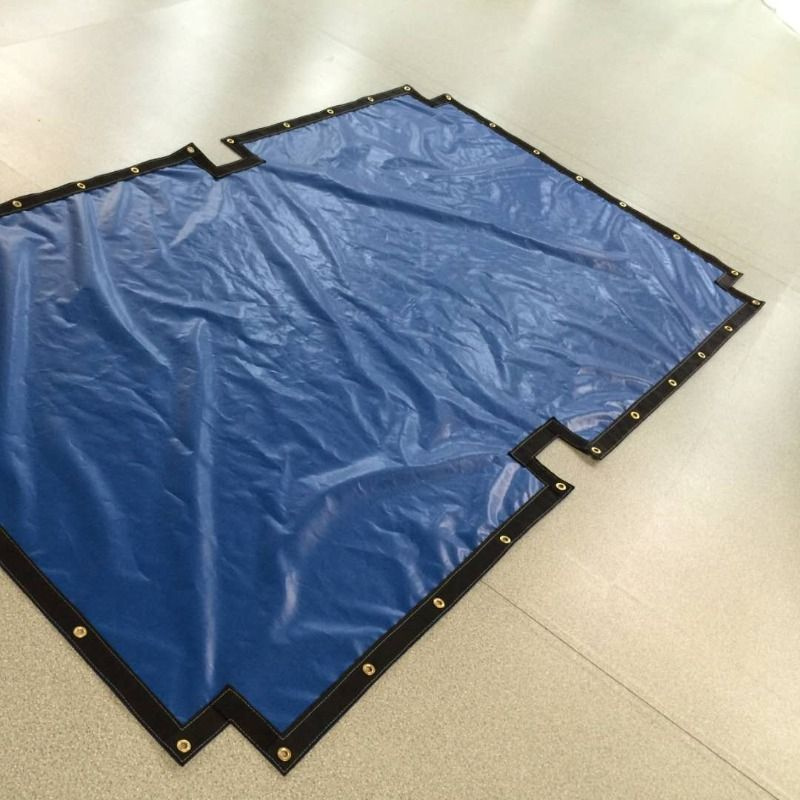
Finished tarpaulin panels are typically fitted with metal or plastic grommets (eyelets) along their edges, through which ropes or straps are threaded to secure the tarpaulin in use. For heavy-duty applications, the tarpaulin edge is reinforced with a folded hem or a sewn-in rope binding before eyeleting to distribute the tensile loads from tie-down points over a wider area of fabric. Eyelet spacing is typically 50 cm for standard applications and 30 cm for high-tension or high-wind-load installations. The eyelet material must be compatible with the service environment — stainless steel eyelets for marine and chemical exposure applications; heavy-duty aluminum or brass for general outdoor use.
Flame Retardancy and Safety Standards for PVC Tarpaulin
Many applications for PVC laminated tarpaulin — particularly in the event industry, public assembly structures, transportation, and construction — require the material to meet specific flame spread and fire resistance standards. PVC itself has inherently better fire resistance than polyethylene or polypropylene alternatives because the chlorine in the PVC polymer releases hydrogen chloride gas when heated, which suppresses combustion. However, the plasticizers and other additives in standard PVC compounds can reduce this inherent flame resistance, and additional flame retardant additives are required to meet formal certification standards.
The most commonly referenced flame retardancy standards for PVC tarpaulin include:
- DIN 4102 B1 (Germany): The German standard for building materials, widely referenced across Europe for tent and temporary structure fabrics. B1 classification requires that the material does not sustain combustion after the test flame is removed.
- NFPA 701 (USA): The American standard for flame propagation of textiles and films, required for tents, canopies, and awnings used in public assembly applications in most US jurisdictions.
- BS 7837 / EN 13501 (UK/Europe): The European classification system for the reaction of construction products to fire, increasingly referenced for tent and temporary structure materials.
- M2 (France): French classification for textiles used in public buildings and events, equivalent to the DIN B1 requirement in terms of flame spread restriction.
Always verify flame retardancy certification when purchasing PVC tarpaulin for public assembly, transportation, or construction applications — non-certified material may be significantly less expensive but could create legal liability and safety hazards if used in applications where certification is required by regulation or building code.
Maintenance, Cleaning, and Extending the Service Life of PVC Tarpaulin
PVC laminated tarpaulin requires minimal maintenance compared to canvas or other natural fiber materials, but correct storage, cleaning, and handling practices extend its service life significantly and help identify developing damage before it becomes a failure.
Cleaning
Clean PVC tarpaulin with warm water and a mild detergent solution, applied with a soft brush or sponge. Do not use solvent-based cleaners, abrasive pads, or high-concentration bleach solutions — solvents attack the plasticizers in the PVC, causing accelerated aging and surface cracking; abrasives scratch the UV-protective surface layer; and strong bleach oxidizes and degrades the PVC compound. After washing, rinse thoroughly with clean water to remove all detergent residue, which can leave a film that attracts dirt and potentially affects the surface chemistry of the PVC.
Storage
When not in use, PVC tarpaulin should be stored clean and dry, loosely rolled or folded, in a cool, dry location away from direct sunlight and heat sources. Avoid storing PVC tarpaulin in tight contact with sharp metal edges, oil products, or solvents — even short-term contact can cause surface damage or chemical degradation. Long-term storage under compression (heavy stacking) can cause the PVC surfaces to stick together (block) — rolling rather than folding, and using tissue paper or fabric interleaving between layers, prevents blocking in stored rolls.
Damage Repair
Minor tears and punctures in PVC laminated tarpaulin can be repaired with PVC repair patches, available as self-adhesive sheets or applied with PVC contact cement. For repairs on structural components such as truck curtains or tent panels, heat-welded patches provide stronger, more durable repairs than adhesive patches. Inspect tarpaulins for developing damage — small tears that grow, seam delamination, eyelet cracking — at the beginning and end of each season, and repair promptly before small damage becomes irreparable failure during use.
Environmental Considerations and Sustainable Alternatives
PVC laminated tarpaulin offers excellent functional performance and long service life, but its environmental profile raises legitimate considerations that are increasingly important to buyers and specifiers.
The primary environmental concerns associated with conventional PVC tarpaulin are:
- Plasticizer migration: Conventional PVC compounds use phthalate plasticizers, some of which are classified as endocrine disruptors and are restricted in several applications by European REACH regulation. Premium and food-contact PVC tarpaulins now use phthalate-free plasticizers (adipates, citrates, or polymeric plasticizers) that offer improved environmental profiles.
- End-of-life recyclability: PVC tarpaulin is technically recyclable — the PVC can be mechanically recycled into lower-grade applications and the polyester scrim can be separated and recovered. In practice, collection and recycling infrastructure for end-of-life tarpaulin is limited in most markets, and the material frequently enters landfill or incineration streams at end of life.
- Chlorine chemistry in production and incineration: PVC manufacturing and incineration generates chlorine-containing byproducts. Modern incineration with flue gas treatment largely mitigates the incineration-related concerns, but the production-phase chlorine chemistry remains a concern for lifecycle assessment purposes.
In response to these concerns, alternative laminated technical fabrics using thermoplastic polyurethane (TPU) or polyolefin (PE) coatings on polyester substrates are available for some applications. These materials offer comparable waterproofing and mechanical strength without chlorine chemistry, and some grades are fully recyclable in standard polyester/polyolefin recycling streams. However, TPU and PE-laminated fabrics carry significant cost premiums and do not yet match PVC in high-frequency weldability, low-temperature flexibility, or flame retardancy in standard grades — making PVC laminated tarpaulin likely to remain the dominant technical fabric in demanding outdoor applications for the foreseeable future, even as the industry works toward more sustainable formulations.