
Call Us
+86-18962820095

 Español
Content
- 1 What a Freight Tarp Actually Has to Do
- 2 The Specification Sheet Is the Product
- 3 Matching Fabric to the Load
- 4 Coated or Laminated, Two Different Routes
- 5 Hardware and Edge Construction Decide Service Life
- 6 Where Freight Tarps Fail First
- 7 An Ordering Checklist for Bulk Buyers
- 8 Custom Sizes, Regional Requirements and Lead Time
- 9 The Bottom Line for Freight Tarp Buyers
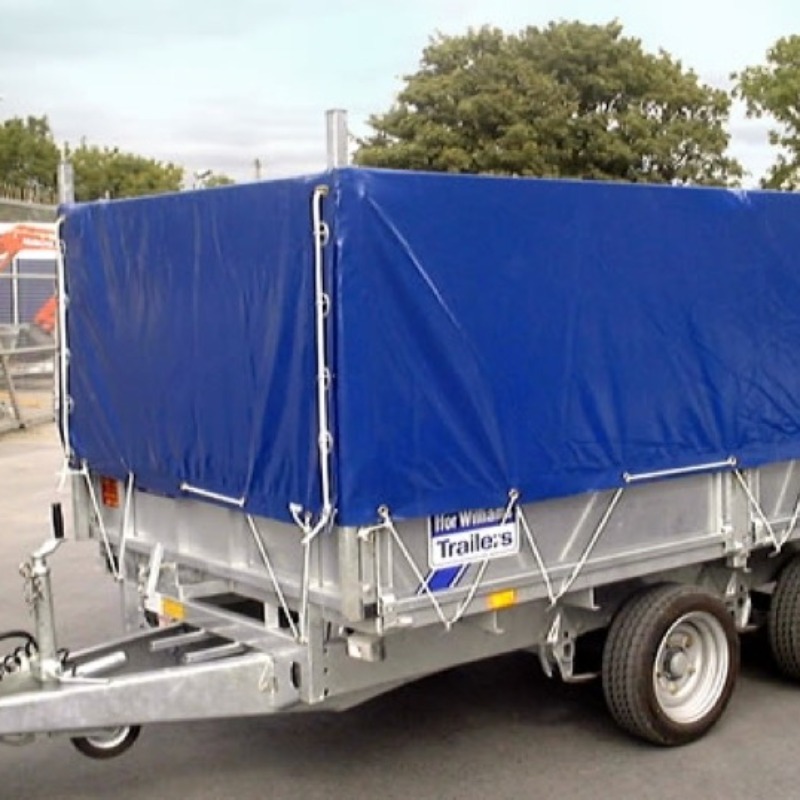
Picture a flatbed trailer leaving a factory gate with bagged fertilizer stacked two meters high and a new 6 by 8 meter cover lashed down over it. Four hundred kilometers later the driver stops and finds water pooled in one corner and a split in the hem at the third grommet. Nothing was wrong with the load and nothing was wrong with the driver. The tarp had been ordered by size alone, with no consideration given to the fabric inside it.
Freight tarps cannot really be bought by the square meter. Two covers that both measure 6 by 8 meters can differ by a factor of three in tear strength and by years in service life, depending on base fabric, coating route, edge reinforcement and grommet hardware. The specification, not the price list, decides whether a cover survives a season or a week. The conclusion first: buy freight tarps on a written specification sheet, verify it with a sample, and treat dimensions as only one line of that sheet.
What a Freight Tarp Actually Has to Do
A cover for cargo has four jobs, and they pull against one another.
- Keep water out of the load, including rain driven sideways at highway speed and condensation forming underneath.
- Survive wind flutter, which is a fatigue load rather than a single impact, repeated thousands of times per trip.
- Resist chafing against pallet corners, steel strapping, timber edges and rough machinery.
- Stay handleable, because a crew has to lift, fold and stow it on a cold morning without tearing it.
Add months of UV exposure on an open dock, plus flame retardant requirements on some rail, port and welding-adjacent jobs, and the variables multiply quickly. A heavier fabric helps with three of those jobs and makes the fourth harder. That trade-off is the reason the specification conversation matters more than the quotation.
The Specification Sheet Is the Product
Base fabric and denier
Nearly all industrial freight covers use a woven polyester base fabric. Denier describes the linear mass of the yarn, and 500D, 840D, 1000D and 1300D are the common grades. A 1000D yarn carries roughly twice the mass per unit length of a 500D yarn, which usually translates into higher tear strength and better puncture resistance. Denier alone does not tell the full story. Weave density, expressed as yarns per inch or per centimeter, changes tightness at the same denier, so a tightly woven 500D fabric can outlast a loosely woven 840D fabric in abrasion. Our note on what tarpaulin fabric is usually made of explains how these layers fit together.
Weight per unit area
Cover weights are quoted either in grams per square meter or in ounces per square yard, and the two are mixed up constantly. One ounce per square yard equals about 34 grams per square meter, so an 18 oz fabric sits near 610 g/m2 rather than exactly 600. For freight work a practical range runs from 550 g/m2 for general cargo, through 600 g/m2 for repeated long-haul use, up to 650 g/m2 and above where abrasion is severe.
Coating and additives
Coating weight, measured in grams per square meter of compound, controls how much waterproofing and abrasion resistance lives on the surface. UV stabilizers slow plasticizer migration and prevent the film from turning brittle on a sun-facing dock. Flame retardant additives are compounded into the PVC rather than sprayed on afterwards, so the rating survives washing, folding and wear.
Matching Fabric to the Load
The specifications below are indicative starting points. Final selection depends on span, wind exposure, how often the cover is handled, and whether it stays outdoors between trips.
| Freight application | Typical base fabric | Weight range | Properties to confirm |
|---|---|---|---|
| Pallets, bagged goods, general flatbed | 500D polyester | 550 to 600 g/m2 | Waterproof coating, UV treatment, reinforced hem |
| Long haul, repeated reuse | 840D to 1000D | 600 to 650 g/m2 | Tear strength, cold flexibility, grommet pull-out |
| Scrap, machinery, sharp edges | 1000D to 1300D | 650 g/m2 and above | High tear resistance, extra hem, wear strips |
| Rail, port, welding adjacent zones | 1000D | 600 g/m2 and above | Flame retardant compound, anti-static options |
| Grain, feed, fertilizer | 500D to 840D | 550 to 600 g/m2 | Waterproof, mildew resistant, cleanable surface |
 Heavy-Duty PVC Tarps and Truck Trailer CoversWaterproof vinyl tarps in 550g, 600g and 650g weights for equipment, vehicles and structures; custom sizing and colors suit varied freight and outdoor covering needs.View Product →
Coated or Laminated, Two Different Routes
The same polyester base can be finished in two ways, and the choice affects freight tarps more than most buyers expect.
Coated construction
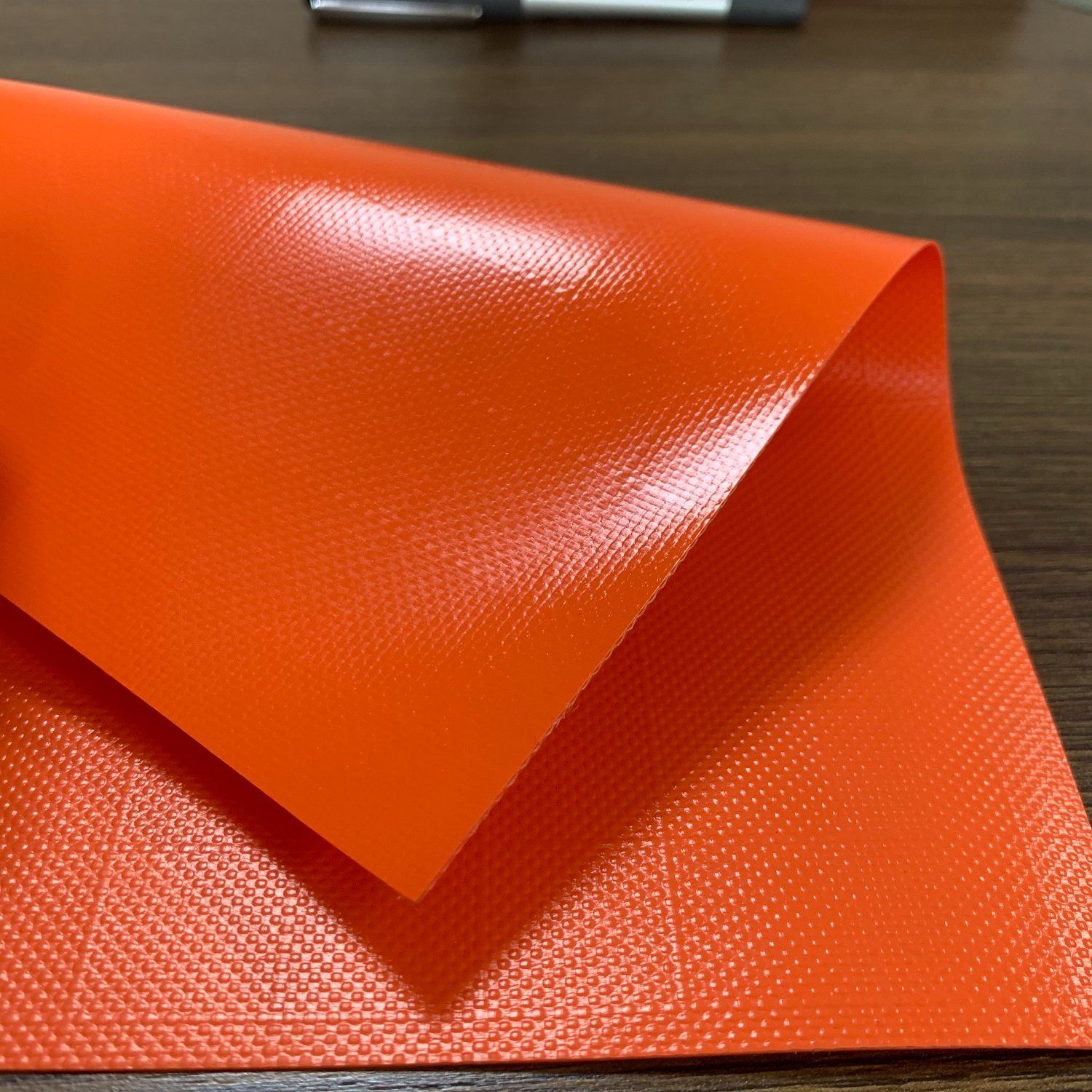
Liquid PVC paste is applied to the woven base and cured, so the compound penetrates between the yarns and keys into the weave mechanically. The result is a slightly textured surface with strong resistance to edge fraying and abrasion, which is why coated fabric is usually the safer default for cargo covers that drag across pallets and trailer decks.
Laminated construction
A pre-made PVC film is bonded to the base under heat and pressure. Laminated fabric is generally smoother, more flexible, folds more tightly and accepts printing well. The trade-off is that the bond line, not the film, becomes the weak point under repeated flexing and contact with sharp edges.
Many freight programs use coated fabric for the outer cover and laminated material where flexibility or a smooth printable surface matters. A material built for heavy covering duty while keeping a soft hand, such as this range of 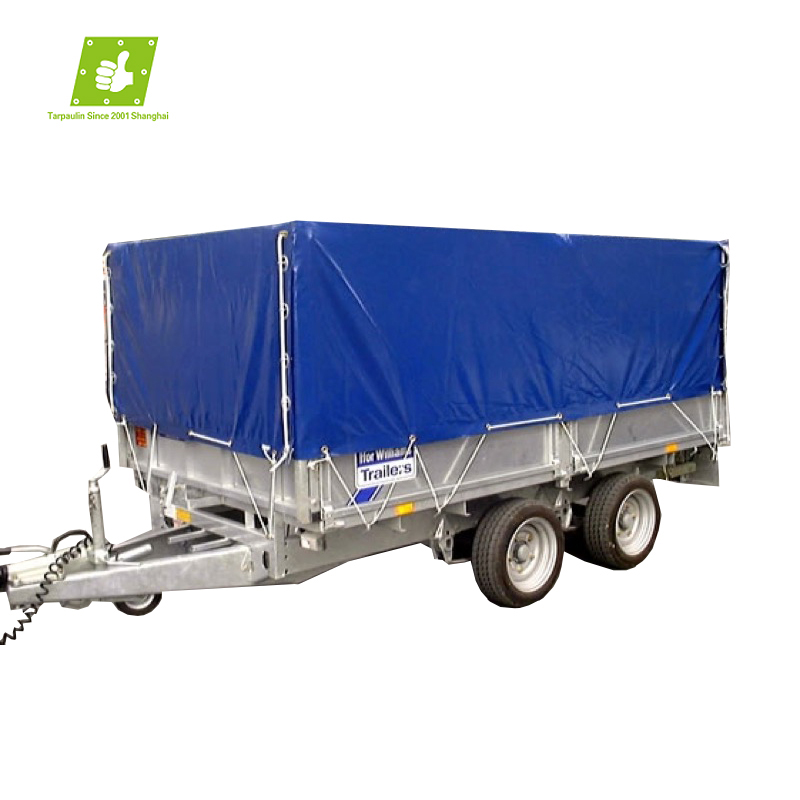 PVC-Coated Polyester Tarpaulin Range for Freight CoversIndustrial-grade coated fabric for truck trailer covers, available in 300–1500 gsm with waterproof, UV-resistant and flame-retardant options for exposed transport duty.View Product →, is often the practical compromise.
Hardware and Edge Construction Decide Service Life
Most failures on freight tarps start at the edge, not in the middle of the panel. The following details deserve a line on the specification sheet.
- Hem width: a folded hem of at least 50 mm, welded or double stitched, resists tearing far better than a single stitched edge.
- Grommet spacing: 500 to 900 mm between eyelets is typical; tighter spacing reduces flutter but adds cost and weight.
- Grommet material: brass resists corrosion, aluminum is lighter and cheaper, stainless steel is the safe choice for coastal and port use.
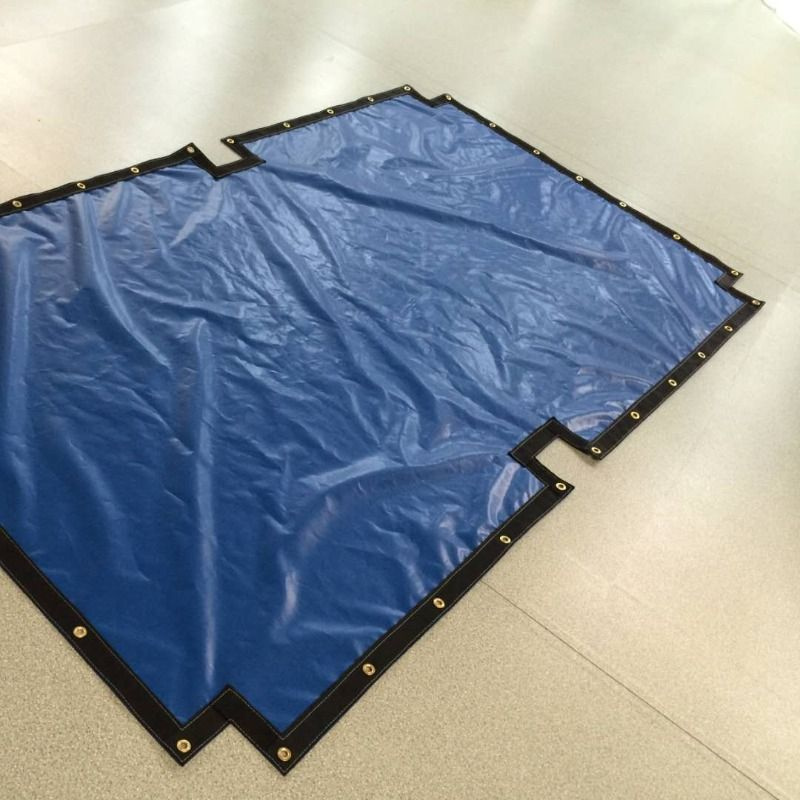
- Corner reinforcement: a second patch of fabric or a heat welded plate at each corner spreads the load where tension concentrates.
- Tie-down options: webbing loops and D-rings allow rope or bungee tensioning without stressing the eyelets.
Ask for the pull-out force per grommet if your crew tensions the cover hard. A tarp rated at 1000D with weak eyelets fails earlier than a lighter cover with properly reinforced hardware.
Where Freight Tarps Fail First
- Grommet tear-out, usually caused by over-tensioning or by a hem that is too narrow.
- Hem separation along the long edge, driven by flutter fatigue on an uncovered flatbed run.
- Corner splits, where wind load concentrates on the smallest area of the cover.
- Stitching breakdown from UV exposure, when polyester thread is used without UV protection.
- Abrasion holes above sharp cargo, which appear within weeks if no wear strip is fitted.
- Mildew and trapped moisture, common when a cover is folded damp and stored in a humid warehouse.
None of these failures are random. Each one maps to a specific line on the specification sheet, and each can be designed out at the ordering stage.
An Ordering Checklist for Bulk Buyers
- Measure the covered span and add the overhang you need, typically 200 to 300 mm per side for tie-down clearance.
- State the base fabric denier and the target weight in g/m2, and confirm which unit the supplier is quoting.
- Specify the coating route, coated or laminated, and the coating weight per square meter.
- Confirm UV stabilization and, where relevant, flame retardant performance for rail or port handling.
- Fix the grommet material, spacing, and the hem width in millimeters.
- Agree on packaging, whether folded, rolled, or palletized, since freight cost often turns on volume.
- Request a pre-shipment sample or third-party inspection before the full order ships.
- Keep a retained sample from each batch to compare against future deliveries.
Custom Sizes, Regional Requirements and Lead Time
Freight tarps are rarely a stock item for long. Sizes get adjusted between shipments, grommet spacing changes with the trailer fleet, and printing requirements shift. A supplier who manufactures the base fabric and finishes the cover in one facility can usually handle those changes faster than a trading company assembling components from several sources.
Regional conditions also change the brief. Buyers in Malaysia and Thailand deal with year-round humidity and need mildew resistance plus reliable drainage at the low corner. Buyers in Saudi Arabia face intense UV and high surface temperatures, so heat resistance and flexibility at low folding temperatures both matter. For heavy industrial covering, our heavy duty PVC tarpaulin range covers the specification band most often requested for trailer and machine covers.
Where a fire rating is part of the tender, the compound itself has to carry the additive rather than a surface treatment. A vinyl coated polyester fabric built to hold its rating through repeated folding and washing, such as this 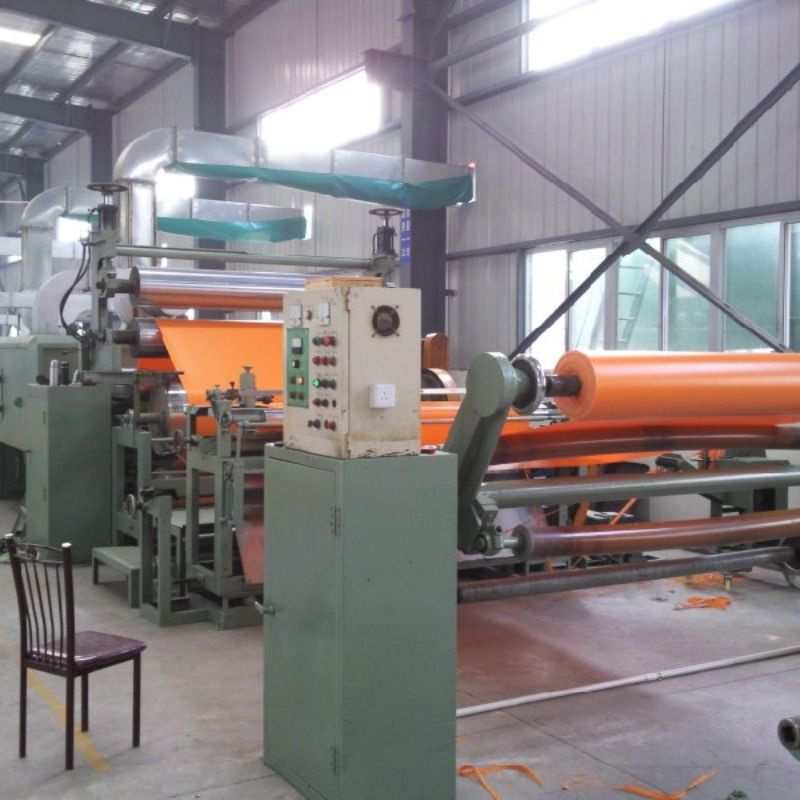 18oz 600gsm Flame-Retardant Vinyl-Coated Polyester TarpHeavy-duty PVC-coated polyester cover for truck trailer curtains and outdoor use, offering waterproof protection, flame-retardant performance and customizable dimensions.View Product →, is the type of material to request in that case.
The Bottom Line for Freight Tarp Buyers
Freight tarps are an engineered textile, not a dimension. Denier, weave density, coating route, coating weight, UV stabilization, hem width and grommet hardware each influence how long a cover lasts under real transport conditions. A buyer who writes those values into a purchase order gets a cover that can be compared fairly against another quote, and gets a defensible answer when something fails in the field. Start with the load, work backwards to the fabric, and leave the price negotiation until the specification is fixed.